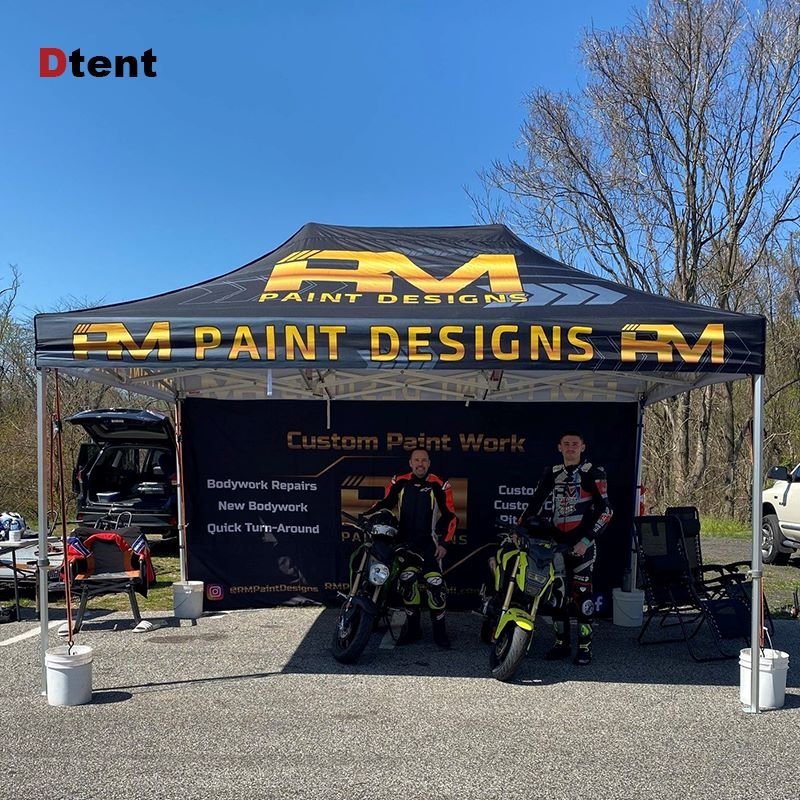

Pourquoi votre auvent pliable prend-il l'eau alors que d'autres restent secs ?
A Auvent escamotable Conçue pour fournir un abri rapide lors d'événements en plein air, de salons professionnels, de compétitions sportives, de marchés de producteurs, d'interventions d'urgence et d'opérations promotionnelles, cette structure est idéale pour les opérations de promotion commerciale. Les acheteurs s'attendent généralement à ce que leur chapiteau résiste à la pluie comme au soleil. Pourtant, l'une des plaintes les plus fréquentes reçues par les distributeurs et les sociétés de location est étonnamment simple :
“ Notre auvent pliable prend l’eau lors de pluies modérées, même s’il était présenté comme étanche. ”
Parfois, l'eau s'infiltre à travers la toile du toit.
Parfois, il y a des fuites au niveau des coutures.
Parfois, l'eau s'infiltre par le sommet.
Parfois, la pluie s'accumule sur le toit jusqu'à ce qu'elle se déverse soudainement sur les personnes qui se trouvent en dessous.
Ces problèmes endommagent non seulement le matériel et les supports promotionnels, mais peuvent également nuire à l'image professionnelle d'une marque.
La vérité est que Les fuites d'eau sont rarement causées par un seul problème.. En réalité, il s'agit généralement du résultat de multiples facteurs d'ingénierie, notamment la qualité du tissu, les revêtements imperméables, la construction des coutures, la tension du toit, la géométrie de la structure et la précision de fabrication.
En tant que professionnel fabrique d'auvents pop up, Dtent possède plus de 10 ans d'expérience dans la conception et la fabrication de chapiteaux pliables, de tentes événementielles, de tentes d'exposition et d'abris promotionnels sur mesure pour des marques internationales. Depuis notre usine de 6 000 m², nous avons aidé des clients en Amérique du Nord, en Europe, en Australie et en Asie à résoudre leurs problèmes d'étanchéité grâce à une ingénierie performante, bien plus efficace que de simples arguments marketing.
Ce guide explique pourquoi les auvents pliables fuient, comment les fabricants professionnels préviennent les fuites et quels critères les acheteurs doivent prendre en compte pour choisir un modèle fiable. fabricant de tentes pliantes.

Que signifie réellement le terme " étanche " ?
De nombreux acheteurs supposent que tous les auvents extérieurs sont totalement étanches.
Malheureusement, le mot “ étanche ” est souvent utilisé à tort et à travers.
Un professionnel fabricant de tentes pliantes distingue plusieurs niveaux de performance.
Résistant à l'eau
Convient pour une bruine légère.
Le tissu retarde la pénétration de l'eau mais n'est pas conçu pour une pluie continue.
Imperméable à l'eau
Le tissu possède un revêtement imperméable et une construction étanche capables de résister à des pluies prolongées.
Étanchéité commerciale
Conçu pour une utilisation répétée en extérieur avec :
- Pression hydrostatique élevée
- Coutures thermosoudées ou scotchées
- Techniques de couture étanches
- Tension de toiture optimisée
- Géométrie de drainage appropriée
Pour une étanchéité de qualité commerciale, l'ensemble du système de canopée doit être étanche, et pas seulement le tissu imperméable.
Comprendre le chemin de la fuite d'eau
L'eau de pluie suit toujours la gravité.
Cependant, il en découle également :
- trous de couture
- plis du tissu
- Points faibles
- Canaux de discussion
- espaces de connexion
- perforations à l'aiguille
L'ingénierie professionnelle vise à éliminer toute voie d'eau possible.


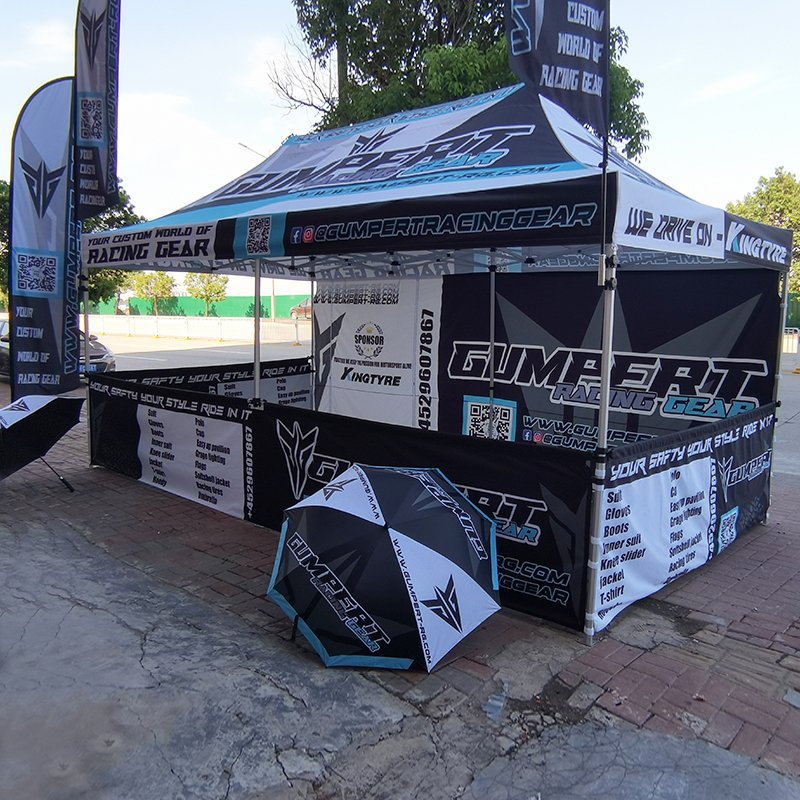
Cause 1 : Tissu de mauvaise qualité
La cause la plus fréquente des fuites est la piètre qualité du tissu.
De nombreuses tentes bon marché font de la publicité pour :
- Polyester 420D
- Polyester 600D
Mais le denier ne mesure que l'épaisseur du fil.
Cela ne donne que très peu d'informations sur l'étanchéité.
Les acheteurs professionnels doivent également évaluer :
- densité du tissu
- Nombre de fils
- Qualité du tissage
- Épaisseur du revêtement
- Cohérence de la lamination
Un tissu tissé haute densité avec un revêtement de qualité supérieure offre des performances nettement supérieures à celles d'un tissu tissé lâche de même denier.
Cause 2 : Revêtement imperméable insuffisant
Le revêtement constitue la principale barrière étanche.
Les options de revêtement courantes comprennent :
Revêtement PU
Avantages :
- Léger
- Flexible
- Économique
Inconvénients :
- Hydrolyse progressive
- Durée de vie réduite en climat humide
Revêtement PVC
Avantages :
- Excellente étanchéité
- Haute durabilité
- résistance supérieure à l'abrasion
Adapté aux tentes événementielles commerciales.
Revêtement en silicone
Fournit :
- Excellente flexibilité
- Bonne étanchéité
- construction légère
Plus fréquentes dans les tentes de camping haut de gamme.
Professionnel usines d'auvents pop up Choisir les systèmes de revêtement en fonction de l'application prévue plutôt que de simplement minimiser les coûts des matériaux.
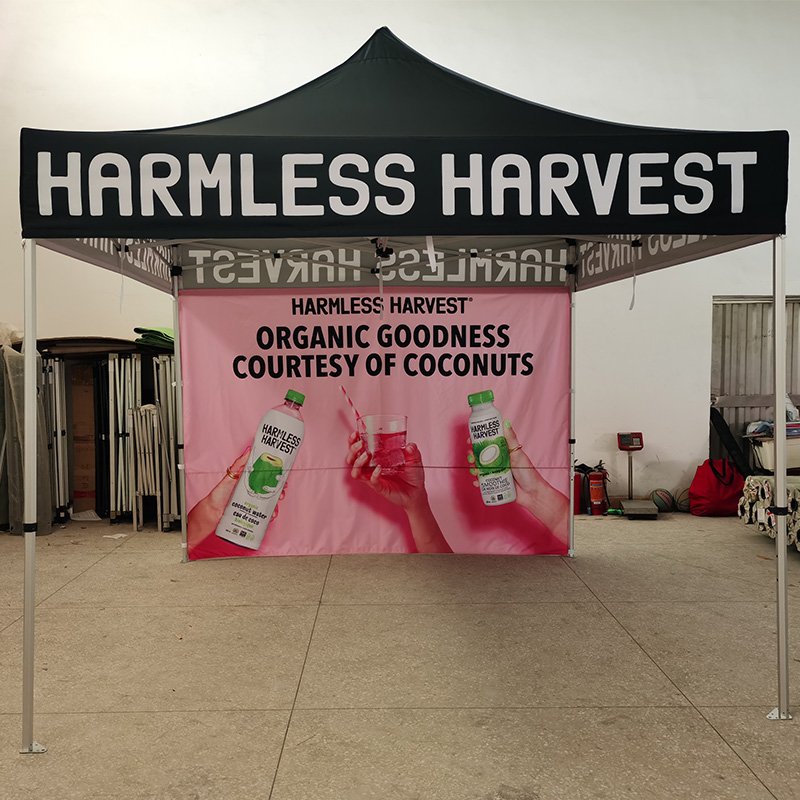
Cause 3 : Trous de couture non scellés
Chaque point de couture crée un minuscule trou.
La toiture d'un auvent peut contenir des dizaines de milliers de trous d'aiguilles.
Sans protection des coutures, l'eau de pluie finit par s'infiltrer par ces ouvertures.
Les solutions professionnelles comprennent :
- Bande de couture
- thermoscellage
- Composés d'étanchéité imperméables pour coutures
- Construction à coutures double couche
L'étanchéité des coutures fait souvent la différence entre une toile véritablement étanche et une toile qui prend l'eau après la première tempête.
Cause 4 : Mauvaise tension de la toiture
Même un tissu imperméable peut laisser passer l'eau si la toiture est mal fixée.
Lorsque le toit s'affaisse, l'eau de pluie s'accumule dans les zones basses.
Cela crée deux problèmes :
Accumulation d'eau
L'eau stagnante augmente considérablement la pression sur le tissu et les coutures.
Finalement, l'eau finit par s'infiltrer par les points faibles.
Extension de toiture
Le poids de l'eau étire le tissu.
Avec le temps, une déformation permanente se développe, créant des poches d'eau encore plus grandes.
Professionnel fabricants de tentes pliantes Calculer avec précision la géométrie du toit et la tension de la charpente afin de garantir un écoulement adéquat des eaux.
Cause 5 : Tension de crête du pôle incorrecte
La forme du toit est déterminée par le point culminant.
Si la tension maximale du ressort est insuffisante :
- Le toit devient plat.
- L'eau ne peut pas s'écouler correctement.
- Un regroupement se forme autour du centre.
Les auvents commerciaux haut de gamme utilisent des systèmes de ressorts de faîtage optimisés pour maintenir la tension du toit même après des milliers de cycles d'ouverture.
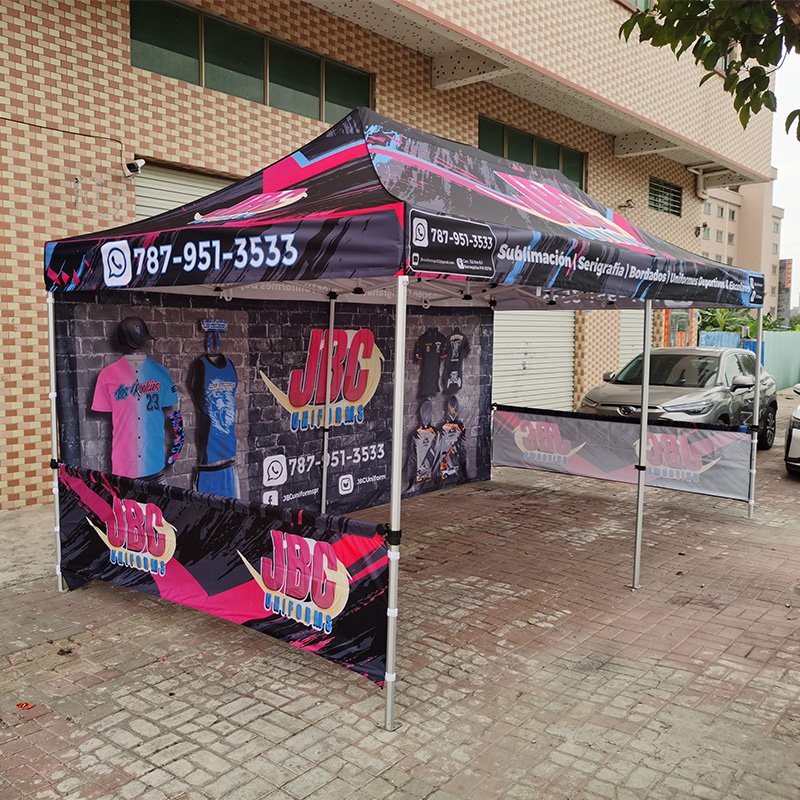
Cause 6 : Mauvaise qualité de couture
Même les matériaux haut de gamme peuvent fuir si la qualité des coutures est médiocre.
Les problèmes rencontrés sont les suivants :
- Espacement irrégulier des points
- mailles sautées
- tension du fil lâche
- Pénétration excessive de l'aiguille
- Coutures mal alignées
Les usines professionnelles utilisent des équipements de couture informatisés et un contrôle qualité rigoureux pour garantir une intégrité constante des coutures.
Cause 7 : Revêtement imperméable endommagé
Un nettoyage inadéquat élimine progressivement les revêtements protecteurs.
Les erreurs courantes comprennent :
- Eau de Javel
- Solvants puissants
- Nettoyage à haute pression
- brosses abrasives
Ces méthodes réduisent la durée de vie de l'étanchéité.
Utilisez plutôt :
- Savon doux
- Éponge douce
- eau propre
- séchage à l'air
Cause 8 : Vieillissement des tissus
Le rayonnement ultraviolet dégrade lentement les revêtements.
Au fil du temps:
- Les revêtements se fissurent.
- L'étanchéité diminue.
- La surface devient crayeuse.
- L'eau commence à pénétrer.
Les stabilisateurs UV prolongent considérablement la durée de vie.
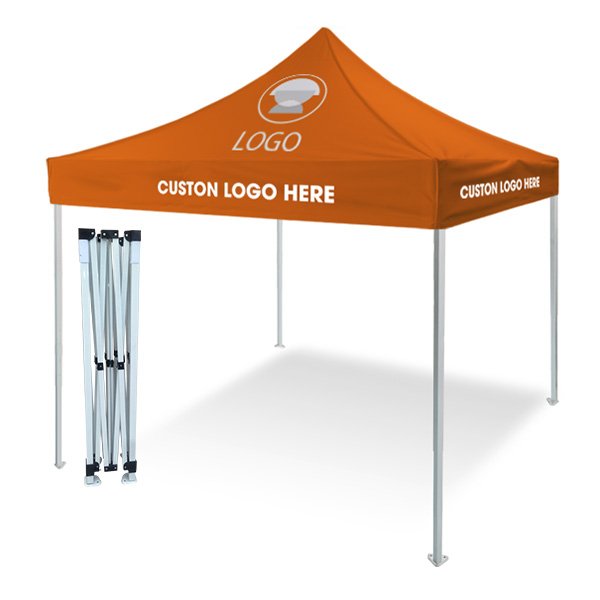
Cause 9 : Géométrie du cadre incorrecte
Nombreux sont les acheteurs qui incriminent le tissu alors que le problème réside en réalité dans la structure.
Une charpente correctement conçue assure une tension constante du toit.
Les cadres mal conçus peuvent souffrir de :
- Longueurs de fermes inégales
- Twisted joints
- Bent Auvent escamotable à pieds hexagonaux
- Misaligned connectors
These issues prevent the roof from maintaining its designed shape.
Cause 10: Worn Connectors and Hardware
Loose frame joints allow the roof geometry to change under load.
Professional manufacturers specify:
- Precision-machined connectors
- Reinforced corner brackets
- High-strength rivets
- Systèmes de verrouillage stables
to maintain structural integrity throughout the canopy’s service life.
Why Water Pools on the Roof
One of the most misunderstood problems is roof pooling.
Water pooling occurs when three conditions exist simultaneously:
- Low roof tension
- Flat roof angle
- Heavy rainfall
Even small amounts of standing water can weigh hundreds of pounds on a large canopy.
This extra load accelerates:
- Fabric stretching
- Frame deformation
- Seam leakage
Proper engineering eliminates pooling before it begins.
Understanding Hydrostatic Head
Professional waterproof performance is measured using hydrostatic head, which indicates the water pressure a fabric can withstand before leaking.
Typical classifications are:
| Hauteur hydrostatique | Performance |
|---|---|
| Below 800 mm | Water-resistant only |
| 1,000–1,500 mm | Light rain protection |
| 2,000–3,000 mm | General outdoor waterproof use |
| 3,000 mm+ | Heavy-duty commercial applications |
Hydrostatic head should always be considered alongside seam construction and roof design.
How a Professional Pop Up Canopy Factory Prevents Leaks
Reliable waterproof performance requires every component to work together.
High-Density Fabric
Premium woven polyester improves strength while reducing water penetration.
Premium Waterproof Coatings
Commercial-grade PU or PVC coatings provide long-term weather protection.
Precision Roof Pattern Design
Computer-aided cutting ensures consistent roof tension and efficient water runoff.
Heat-Sealed Seams
Critical seams receive waterproof sealing to eliminate needle-hole leakage.
Reinforced Peak Structure
Proper spring tension maintains roof shape throughout repeated deployment.
Strong Frame Engineering
Stable Auvent escamotable à pieds hexagonaux, reinforced truss bars, and precision connectors keep the roof under consistent tension.
Comprehensive Waterproof Testing
Professional factories simulate rainfall before shipment to verify waterproof performance.
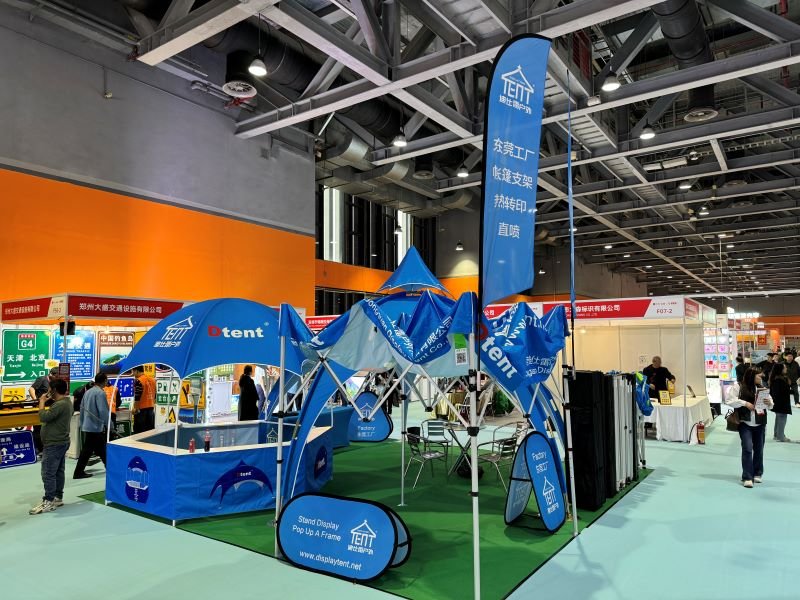
How Buyers Can Evaluate Waterproof Quality
Before placing an OEM order, request:
Material Specifications
Ask about:
- Fabric weight
- Type de revêtement
- Hydrostatic head
- Résistance aux UV
Seam Construction
Ask whether seams are:
- Sewn only
- Seam taped
- Heat sealed
Tests d'étanchéité
Professional suppliers should provide test reports or demonstrate controlled water-spray testing.
Roof Tension Inspection
Fully assemble the canopy.
The roof should appear smooth and taut with no visible sagging.
Common Buyer Mistakes
Avoid these common errors:
Choosing the Lowest Price
Low-cost canopies often reduce waterproof performance by using thinner coatings and skipping seam sealing.
Ignoring Maintenance
Proper cleaning and storage significantly extend waterproof life.
Storing the Canopy Wet
Trapped moisture encourages mold growth and coating degradation.
Always dry the canopy completely before storage.
Using Incorrect Replacement Parts
Non-original roof fabrics may not match the frame geometry, reducing roof tension and increasing the risk of leaks.
Why Dtent Canopies Stay Dry
At Dtent, waterproof performance is engineered into every canopy—not added as an afterthought.
Our manufacturing process includes:
Premium Waterproof Fabrics
Carefully selected commercial-grade materials with excellent hydrostatic performance.
Precision Roof Pattern Engineering
Optimized panel geometry ensures proper roof tension and efficient rainwater runoff.
Advanced Seam Construction
Critical seams are reinforced and sealed to minimize water penetration.
Heavy-Duty Frame System
Our reinforced Auvent escamotable à pieds hexagonaux, precision truss bars, and engineered connectors maintain consistent structural geometry even after repeated use.
Contrôle qualité rigoureux
Chaque lot de production est soumis à des contrôles visant à vérifier :
- Fabric quality
- Waterproof coating
- Sewing accuracy
- Roof tension
- Assemblage du cadre
- Functional deployment

Frequently Asked Questions about pop up canopy
Why does my canopy leak even though the fabric is waterproof?
The most common causes are unsealed seams, poor roof tension, or incorrect frame geometry rather than the fabric itself.
Can waterproof spray fix a leaking canopy?
Waterproof sprays may temporarily improve surface repellency but cannot repair damaged seams, worn coatings, or structural design problems.
Why does water collect in the center of the roof?
Pooling usually indicates insufficient peak tension or improper roof geometry, allowing water to accumulate instead of draining.
How long does a waterproof coating last?
With proper care, commercial-grade coatings can remain effective for many years, although lifespan depends on UV exposure, climate, and maintenance practices.
Pop Up Canopy Factory Explains the Causes and Solutions
A leaking pop up canopy is rarely the result of a single defect. Waterproof performance depends on the integration of high-quality fabrics, durable waterproof coatings, properly sealed seams, precise roof pattern engineering, optimized peak tension, and a rigid frame supported by strong Auvent escamotable à pieds hexagonaux and reliable connectors.
Un professionnel fabrique d'auvents pop up understands that true waterproofing is achieved through engineering rather than marketing claims. Every stage—from material selection and cutting to sewing, frame manufacturing, assembly, and quality testing—must be carefully controlled to ensure long-term performance in real outdoor conditions.
With more than 10 years of experience, a modern 6,000㎡ manufacturing facility, and extensive OEM expertise for global brands, Dtent designs and manufactures commercial-grade pop up canopies that provide dependable protection in challenging weather. By combining premium materials, advanced manufacturing processes, and rigorous quality control, we help our customers deliver products that stay dry, protect their brand image, and perform reliably event after event.
Vous êtes une société commerciale ou un fabricant ?
Nous sommes un fabricant spécialisé dans les tentes pliantes, les parapluies d'extérieur, les drapeaux de plage et les bannières publicitaires.
Pouvez-vous réaliser un design à partir de mes idées ou de mes dessins ?
Oui, nous avons des concepteurs expérimentés et notre propre usine de moulage. En fonction de vos besoins, nous pouvons concevoir ou ouvrir des moules à des prix compétitifs.
Combien de temps dure l'échantillonnage ?
Les échantillons seront prêts dans un délai de 5 à 7 jours, en fonction de vos exigences en matière d'impression et de matériaux.
Quel est votre avantage ?
Efficacité des coûts ; prix bas ; Efficacité des délais : nous nous engageons à effectuer les livraisons de masse dans les 30 jours Efficacité des services : nos vendeurs s'engagent à répondre à votre demande dans les 12 heures : Nos vendeurs s'engagent à répondre à votre demande dans les 12 heures. whatsapp 86 180 3827 3926