
Why Do your Pop Up Canopy Leak While Others Stay Dry?
A pop up canopy is designed to provide quick shelter for outdoor events, trade shows, sports competitions, farmers’ markets, emergency response, and commercial promotions. Buyers usually expect their canopy to withstand rain as well as sunlight, yet one of the most common complaints received by distributors and rental companies is surprisingly simple:
“Our pop up canopy leaks during moderate rain, even though it was advertised as waterproof.”
Sometimes the water drips through the roof fabric.
Sometimes it leaks along the seams.
Sometimes water enters around the peak.
Sometimes rain collects in the roof until it suddenly pours onto the people underneath.
These issues not only damage equipment and promotional materials but can also negatively affect a brand’s professional image.
The truth is that water leakage is rarely caused by one single problem. Instead, it is usually the result of multiple engineering factors including fabric quality, waterproof coatings, seam construction, roof tension, frame geometry, and manufacturing precision.
As a professional pop up canopy factory, Dtent has more than 10 years of experience designing and manufacturing custom pop up canopies, event tents, exhibition tents, and promotional shelters for international brands. Operating from our 6,000㎡ manufacturing facility, we have helped customers across North America, Europe, Australia, and Asia solve waterproofing challenges through better engineering rather than marketing claims.
This guide explains why pop up canopies leak, how professional manufacturers prevent leakage, and what buyers should look for when selecting a reliable pop up canopy manufacturer.

What Does "Waterproof" Really Mean?
Many buyers assume that every outdoor canopy is completely waterproof.
Unfortunately, the word “waterproof” is often used too loosely.
A professional pop up canopy manufacturer distinguishes between several performance levels.
Water-Resistant
Suitable for light drizzle.
Fabric delays water penetration but is not designed for continuous rain.
Waterproof
Fabric has a waterproof coating and sealed construction capable of handling prolonged rainfall.
Commercial Waterproof
Designed for repeated outdoor use with:
- High hydrostatic pressure rating
- Heat-sealed or taped seams
- Waterproof stitching techniques
- Optimized roof tension
- Proper drainage geometry
Commercial-grade waterproof performance requires the entire canopy system—not just waterproof fabric.
Understanding the Water Leakage Path
Rainwater always follows gravity.
However, it also follows:
- Stitch holes
- Fabric wrinkles
- Low points
- Thread channels
- Connector gaps
- Needle perforations
Professional engineering aims to eliminate every possible water path.


Cause 1: Low-Quality Fabric
The most common reason for leakage is inexpensive fabric.
Many low-cost canopies advertise:
- 420D Polyester
- 600D Polyester
But denier only measures yarn thickness.
It says very little about waterproof performance.
Professional buyers should also evaluate:
- Fabric density
- Thread count
- Weave quality
- Coating thickness
- Lamination consistency
A high-density woven fabric with a premium coating performs significantly better than a loosely woven fabric of the same denier.
Cause 2: Insufficient Waterproof Coating
The coating is the primary waterproof barrier.
Common coating options include:
PU Coating
Advantages:
- Lightweight
- Flexible
- Economical
Disadvantages:
- Gradual hydrolysis
- Reduced lifespan in humid climates
PVC Coating
Advantages:
- Excellent waterproofing
- High durability
- Superior abrasion resistance
Suitable for commercial event tents.
Silicone Coating
Provides:
- Excellent flexibility
- Good waterproofing
- Lightweight construction
More common in high-end camping tents.
Professional pop up canopy factories select coating systems based on the intended application rather than simply minimizing material costs.
Cause 3: Unsealed Stitch Holes
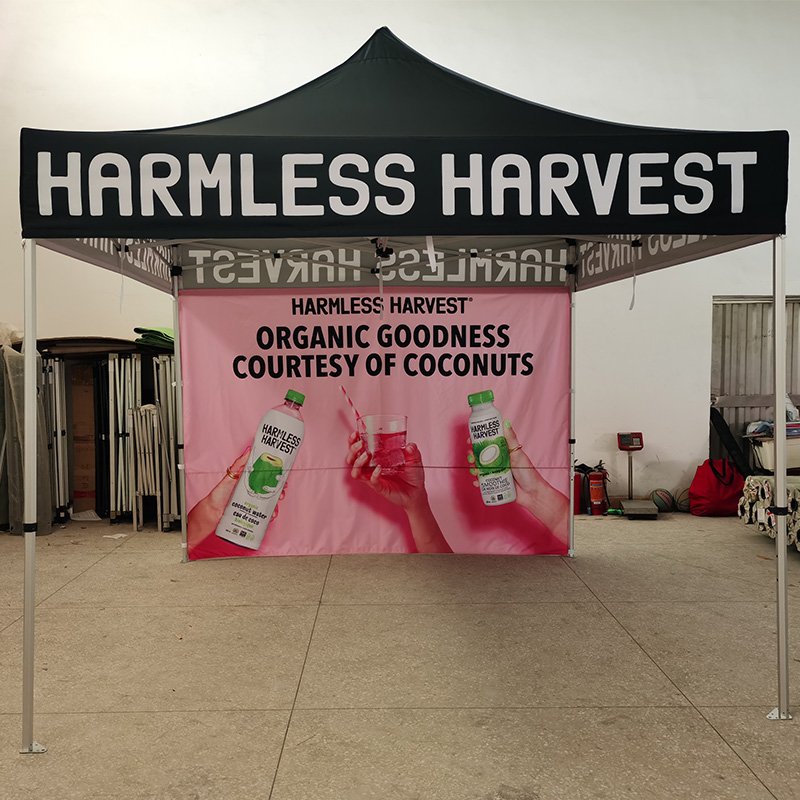
Every stitch creates a tiny hole.
A canopy roof may contain tens of thousands of needle holes.
Without seam protection, rainwater eventually penetrates through these openings.
Professional solutions include:
- Seam tape
- Heat sealing
- Waterproof seam sealing compounds
- Double-layer seam construction
Seam sealing is often the difference between a truly waterproof canopy and one that leaks after the first storm.
Cause 4: Poor Roof Tension
Even waterproof fabric can leak if the roof is loose.
When the roof sags, rainwater accumulates in low areas.
This creates two problems:
Water Pooling
Standing water dramatically increases pressure on the fabric and seams.
Eventually water forces its way through weak points.
Roof Stretching
Water weight stretches the fabric.
Over time, permanent deformation develops, creating even larger water pockets.
Professional pop up canopy manufacturers carefully calculate roof geometry and frame tension to maintain proper water runoff.
Cause 5: Incorrect Peak Pole Tension
The center peak determines roof shape.
If the peak spring tension is insufficient:
- Roof becomes flat.
- Water cannot drain efficiently.
- Pooling develops around the center.
Premium commercial canopies use optimized peak spring systems to maintain roof tension even after thousands of opening cycles.
Cause 6: Poor Sewing Quality
Even premium materials can leak if sewing quality is poor.
Problems include:
- Uneven stitch spacing
- Skipped stitches
- Loose thread tension
- Excessive needle penetration
- Misaligned seams
Professional factories use computerized sewing equipment and strict quality control to ensure consistent seam integrity.
Cause 7: Damaged Waterproof Coating
Improper cleaning gradually removes protective coatings.
Common mistakes include:
- Bleach
- Strong solvents
- Pressure washing
- Abrasive brushes
These methods shorten waterproof lifespan.
Instead, use:
- Mild soap
- Soft sponge
- Clean water
- Air drying
Cause 8: Fabric Aging
Ultraviolet radiation slowly degrades coatings.
Over time:
- Coatings crack.
- Waterproof performance declines.
- Surface becomes chalky.
- Water begins penetrating.
UV stabilizers significantly extend service life.
Cause 9: Improper Frame Geometry
Many buyers blame the fabric when the actual problem lies in the frame.
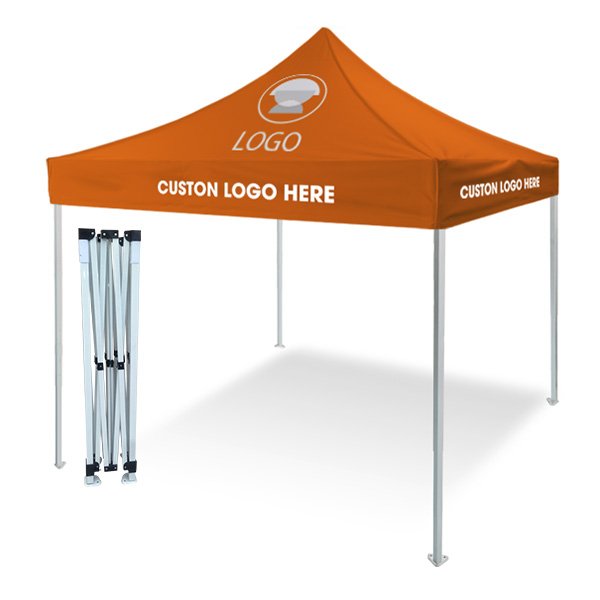
A properly engineered frame maintains consistent roof tension.
Poorly designed frames may suffer from:
- Uneven truss lengths
- Twisted joints
- Bent pop up canopy hexagonal legs
- Misaligned connectors
These issues prevent the roof from maintaining its designed shape.
Cause 10: Worn Connectors and Hardware
Loose frame joints allow the roof geometry to change under load.
Professional manufacturers specify:
- Precision-machined connectors
- Reinforced corner brackets
- High-strength rivets
- Stable locking systems
to maintain structural integrity throughout the canopy’s service life.
Why Water Pools on the Roof
One of the most misunderstood problems is roof pooling.
Water pooling occurs when three conditions exist simultaneously:
- Low roof tension
- Flat roof angle
- Heavy rainfall
Even small amounts of standing water can weigh hundreds of pounds on a large canopy.
This extra load accelerates:
- Fabric stretching
- Frame deformation
- Seam leakage
Proper engineering eliminates pooling before it begins.
Understanding Hydrostatic Head
Professional waterproof performance is measured using hydrostatic head, which indicates the water pressure a fabric can withstand before leaking.
Typical classifications are:
| Hydrostatic Head | Performance |
|---|---|
| Below 800 mm | Water-resistant only |
| 1,000–1,500 mm | Light rain protection |
| 2,000–3,000 mm | General outdoor waterproof use |
| 3,000 mm+ | Heavy-duty commercial applications |
Hydrostatic head should always be considered alongside seam construction and roof design.
How a Professional Pop Up Canopy Factory Prevents Leaks
Reliable waterproof performance requires every component to work together.
High-Density Fabric
Premium woven polyester improves strength while reducing water penetration.
Premium Waterproof Coatings
Commercial-grade PU or PVC coatings provide long-term weather protection.
Precision Roof Pattern Design
Computer-aided cutting ensures consistent roof tension and efficient water runoff.
Heat-Sealed Seams
Critical seams receive waterproof sealing to eliminate needle-hole leakage.
Reinforced Peak Structure
Proper spring tension maintains roof shape throughout repeated deployment.
Strong Frame Engineering
Stable pop up canopy hexagonal legs, reinforced truss bars, and precision connectors keep the roof under consistent tension.
Comprehensive Waterproof Testing
Professional factories simulate rainfall before shipment to verify waterproof performance.
How Buyers Can Evaluate Waterproof Quality
Before placing an OEM order, request:
Material Specifications
Ask about:
- Fabric weight
- Coating type
- Hydrostatic head
- UV resistance
Seam Construction
Ask whether seams are:
- Sewn only
- Seam taped
- Heat sealed
Waterproof Testing
Professional suppliers should provide test reports or demonstrate controlled water-spray testing.
Roof Tension Inspection
Fully assemble the canopy.
The roof should appear smooth and taut with no visible sagging.
Common Buyer Mistakes
Avoid these common errors:
Choosing the Lowest Price
Low-cost canopies often reduce waterproof performance by using thinner coatings and skipping seam sealing.
Ignoring Maintenance
Proper cleaning and storage significantly extend waterproof life.
Storing the Canopy Wet
Trapped moisture encourages mold growth and coating degradation.
Always dry the canopy completely before storage.
Using Incorrect Replacement Parts
Non-original roof fabrics may not match the frame geometry, reducing roof tension and increasing the risk of leaks.
Why Dtent Canopies Stay Dry
At Dtent, waterproof performance is engineered into every canopy—not added as an afterthought.
Our manufacturing process includes:
Premium Waterproof Fabrics
Carefully selected commercial-grade materials with excellent hydrostatic performance.
Precision Roof Pattern Engineering
Optimized panel geometry ensures proper roof tension and efficient rainwater runoff.
Advanced Seam Construction
Critical seams are reinforced and sealed to minimize water penetration.
Heavy-Duty Frame System
Our reinforced pop up canopy hexagonal legs, precision truss bars, and engineered connectors maintain consistent structural geometry even after repeated use.
Strict Quality Control
Every production batch undergoes inspections for:
- Fabric quality
- Waterproof coating
- Sewing accuracy
- Roof tension
- Frame assembly
- Functional deployment

Frequently Asked Questions about pop up canopy
Why does my canopy leak even though the fabric is waterproof?
The most common causes are unsealed seams, poor roof tension, or incorrect frame geometry rather than the fabric itself.
Can waterproof spray fix a leaking canopy?
Waterproof sprays may temporarily improve surface repellency but cannot repair damaged seams, worn coatings, or structural design problems.
Why does water collect in the center of the roof?
Pooling usually indicates insufficient peak tension or improper roof geometry, allowing water to accumulate instead of draining.
How long does a waterproof coating last?
With proper care, commercial-grade coatings can remain effective for many years, although lifespan depends on UV exposure, climate, and maintenance practices.
Pop Up Canopy Factory Explains the Causes and Solutions
A leaking pop up canopy is rarely the result of a single defect. Waterproof performance depends on the integration of high-quality fabrics, durable waterproof coatings, properly sealed seams, precise roof pattern engineering, optimized peak tension, and a rigid frame supported by strong pop up canopy hexagonal legs and reliable connectors.
A professional pop up canopy factory understands that true waterproofing is achieved through engineering rather than marketing claims. Every stage—from material selection and cutting to sewing, frame manufacturing, assembly, and quality testing—must be carefully controlled to ensure long-term performance in real outdoor conditions.
With more than 10 years of experience, a modern 6,000㎡ manufacturing facility, and extensive OEM expertise for global brands, Dtent designs and manufactures commercial-grade pop up canopies that provide dependable protection in challenging weather. By combining premium materials, advanced manufacturing processes, and rigorous quality control, we help our customers deliver products that stay dry, protect their brand image, and perform reliably event after event.
Are you a Trading Company or Manufacturer?
We are a manufacturer specialized in Folding tents, Outdoor umbrellas, Beach flags, Advertising Banners
Can you do design for my ideas or drawing?
Yes, we have experienced designers and our own molding factory. According to your requirements, we can design or open mold which has a competitive price.
How long does sample take?
Sample will be ready within 5-7 days, depends on your printing and material requirements.
What is your advantage?
Cost effective; with low price; Time effective: we promise to make the mass delivery within 30 days Service effective: Our sales people promise to reply your enquiry within 12 hours.Contact whatsapp 86 180 3827 3926