

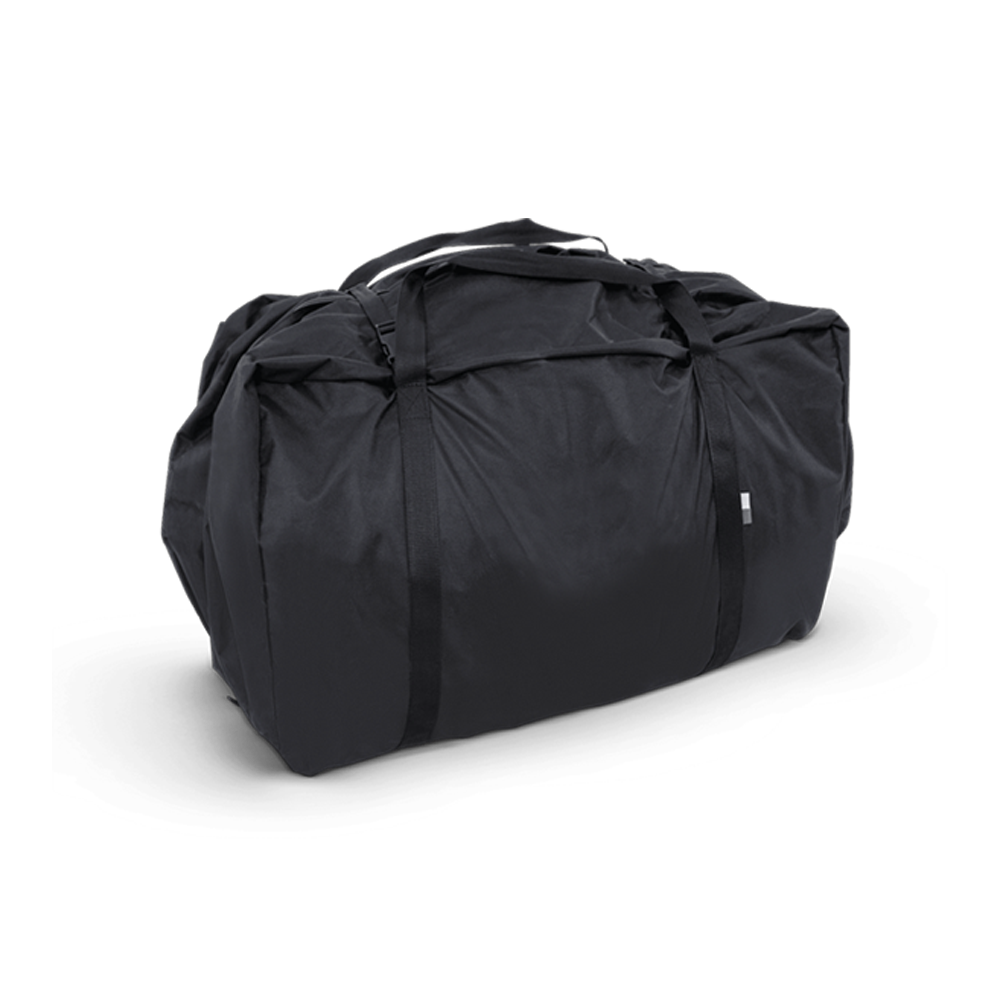
In the event tent industry, the roller bag is often treated as a secondary accessory—something included for convenience rather than engineered for durability. Yet in real-world usage, especially for frequent travel, trade shows, and rental operations, the roller bag becomes a critical protection system.
A common complaint from buyers is:
“Why does my ‘professional’ tent roller bag rip at the wheels after just one or two trips—especially after airport handling?”
This is not an isolated issue. It is a widespread result of material misrepresentation, weak structural design, and cost-driven manufacturing shortcuts.
In this article, we will break down:
- Why most tent roller bags fail prematurely
- The truth behind “1680D ballistic nylon” claims
- Key structural weaknesses (especially around wheels)
- What specifications actually matter for durability
- How to source a roller bag that survives real-world logistics
Nous expliquons également comment des fabricants expérimentés comme Dtent approach durable transport solutions.
1. Why Tent Roller Bags Fail So Quickly
The Real-World Use Case
A tent roller bag must endure:
- Dragging across rough surfaces
- Repeated loading/unloading
- Airport conveyor belts and drops
- Concentrated stress at wheels and base
Yet most bags are designed for:
Light, occasional use—not industrial handling
The Weakest Point: Wheel Area Failure
Common Failure Symptoms
- Fabric tearing around wheel housing
- Wheel detachment
- Base deformation
- Stitching failure
Why This Happens
The wheel area experiences:
- Maximum load concentration
- Continuous impact stress
- Abrasion against hard surfaces
If not properly reinforced, failure is inevitable.
2. The Myth of “1680D Ballistic Nylon”
What Does 1680D Actually Mean?
Denier (D) refers to:
- Yarn thickness—not fabric strength
So “1680D” simply indicates:
- Thick yarn fibers
Why 1680D ≠ Durability
Two 1680D fabrics can differ drastically in:
- Thread density
- Weave structure
- Qualité du revêtement
- Backing reinforcement
Aperçu clé
Denier is only one variable—not a guarantee of durability
What Is “Ballistic Nylon”?
Originally developed for military use, true ballistic nylon:
- Uses high-density weave
- Has exceptional abrasion resistance
- Includes reinforced backing
However, in the tent bag market:
- “Ballistic nylon” is often used loosely
- Many products are actually standard polyester with coating
3. Structural Design Flaws in Low-Quality Roller Bags
3.1 Lack of Base Reinforcement
Many bags:
- Use fabric-only bottoms
- Have no rigid support
Result:
- Load stress transfers directly to fabric
- Leads to tearing
3.2 Weak Wheel Mounting
Common issues:
- Wheels stitched directly to fabric
- No internal support plate
- Low-grade plastic brackets
Result:
- Wheels rip out under stress
3.3 Poor Stitching Quality
Low-end bags often use:
- Single stitching
- Weak thread
Under load:
- Seams fail quickly
3.4 No Load Distribution Design
Heavy tent frames create:
- Uneven pressure نقاط
Without structure:
- Stress concentrates at weak points
4. What a Durable Tent Roller Bag Should Have
4.1 True High-Density Fabric
Cherchez :
- High thread count
- Multi-layer construction
- Reinforced backing
4.2 Reinforced Base Structure
A professional bag should include:
- Internal rigid board (PE or ABS)
- Double-layer fabric at base
- Impact-resistant design
4.3 Industrial-Grade Wheel System
Key features:
- Metal axle support
- Reinforced wheel housing
- Replaceable wheels
4.4 Heavy-Duty Stitching
- Double or triple stitching
- High-strength thread
- Reinforced stress نقاط
4.5 Load Distribution Design
- Structured frame داخل bag
- Even weight distribution
- Reduced stress concentration
5. Why Airport Handling Is So Destructive
Real Conditions
Airport baggage systems involve:
- Drops from height
- Conveyor impact
- Compression under heavy loads
Engineering Reality
A roller bag must be designed like:
A protective transport system, not just a fabric container
6. Why Most Suppliers Cut Corners
Cost Pressure
Manufacturers prioritize:
- Lower material cost
- Simpler construction
- Faster production
Market Expectations
Buyers often:
- Focus on tent price
- Ignore accessory quality
Result:
- Roller bags become cost-reduction targets
7. How to Specify a Professional Tent Roller Bag
Essential Specifications
Tissu
- Minimum 600D–1680D high-density polyester or nylon
- Verified weave density
Base
- Rigid internal board (PE/ABS)
- Reinforced bottom panel
Wheels
- Metal axle
- Reinforced housing
- Load-tested design
Stitching
- Double/triple stitching
- Reinforced corners
Load Capacity
- Specify weight rating (e.g., 30–50 kg)
8. Practical Testing Methods
1. Lift and Drop Test
- Load bag
- Drop from small height
- Check structural integrity
2. Drag Test
- Pull across rough surface
- Observe wheel stability
3. Stress نقاط Inspection
Check:
- Wheel attachment
- Base seams
- Handle نقاط
9. Why Dtent Designs Durable Transport Solutions
Dtent understands that a tent system includes not just the structure—but also its transport protection.
Approche d'ingénierie
- Reinforced roller bag design
- Structural base integration
- High-quality material selection
Manufacturing Strength
- usine de 6000 m²
- Plus de 10 ans d'expérience en tant que fabricant d'équipement d'origine (OEM).
- Production for global brands
Quality Focus
Dtent ensures:
- Reliable durability
- Real-world usability
- Long-term cost efficiency
10. The Real Cost of Cheap Roller Bags
Short-Term Savings vs Long-Term Loss
Cheap bag:
- Lower upfront cost
- Fails quickly
Result:
- Frequent replacements
- Damage to tent frame
- Higher total cost
Professional Insight
A durable roller bag is not an accessory—it is an investment in product longevity

11. Future Trends in Tent Transport Solutions
Le secteur évolue vers :
- Hybrid hard-shell + soft bag designs
- Modular transport systems
- Replaceable components
- High-performance composite materials
12. Stop Treating Roller Bags as Disposable
The failure of most tent roller bags is not accidental—it is the result of:
- Misleading material claims
- Poor structural design
- Cost-driven compromises
Points clés à retenir
- 1680D does not guarantee durability
- Wheel area is the most critical failure point
- Structural reinforcement is essential
- Airport handling requires industrial-grade design
- Proper specifications prevent premature failure
Tips
If your roller bag fails after two uses, the problem is not bad luck—it is engineering oversight.
By working with experienced manufacturers like Dtent, you can ensure your tent system includes:
- Durable transport solutions
- Reliable performance under stress
- Long-term value
Vous êtes une société commerciale ou un fabricant ?
Nous sommes un fabricant spécialisé dans les tentes pliantes, les parapluies d'extérieur, les drapeaux de plage et les bannières publicitaires.
Pouvez-vous réaliser un design à partir de mes idées ou de mes dessins ?
Oui, nous avons des concepteurs expérimentés et notre propre usine de moulage. En fonction de vos besoins, nous pouvons concevoir ou ouvrir des moules à des prix compétitifs.
Combien de temps dure l'échantillonnage ?
Les échantillons seront prêts dans un délai de 5 à 7 jours, en fonction de vos exigences en matière d'impression et de matériaux.
Quel est votre avantage ?
Efficacité des coûts ; prix bas ; Efficacité des délais : nous nous engageons à effectuer les livraisons de masse dans les 30 jours Efficacité des services : nos vendeurs s'engagent à répondre à votre demande dans les 12 heures : Nos vendeurs s'engagent à répondre à votre demande dans les 12 heures. whatsapp 86 180 3827 3926