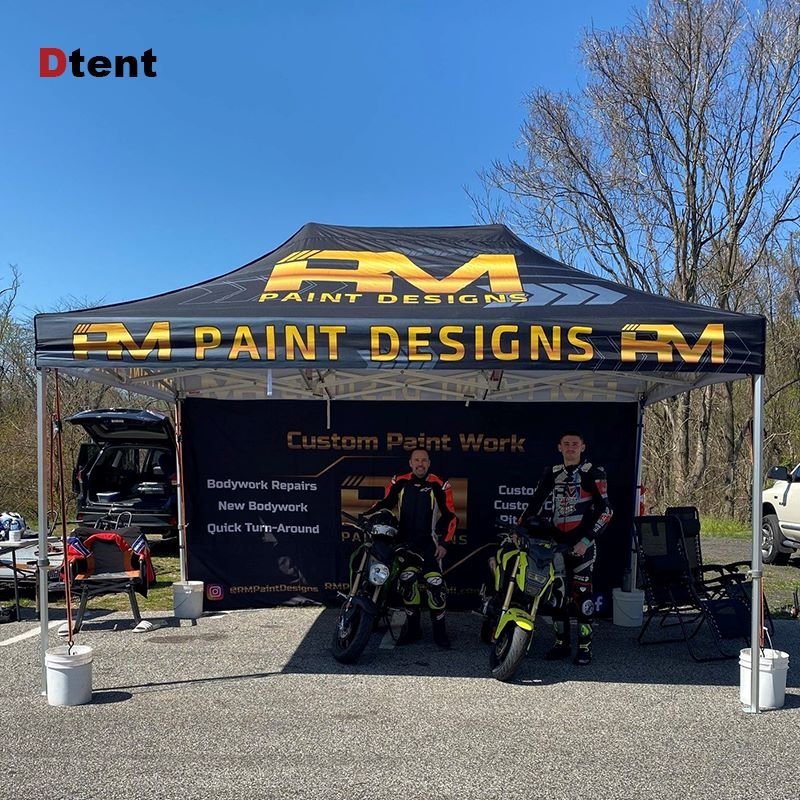
A tente dôme has become one of the most popular structures for outdoor events, exhibitions, brand activations, sports promotions, luxury hospitality, and commercial installations.
One of the biggest advantages of a dome tent is its large visual surface area. Unlike traditional flat tents, the curved membrane creates a 360-degree branding opportunity where companies can display:
- Logos
- Brand messages
- Product graphics
- Advertising images
- Custom patterns
However, many customers encounter an unexpected problem after receiving their printed dome tent:
“The logo file looked perfect on my computer, but after printing on the dome tent, the letters appear stretched, curved, or completely distorted.”
This is one of the most common challenges in custom printed dome tents.
The problem is not necessarily poor printing quality.
The real issue is the difference between:
- A 2D graphic design file
- A 3D curved dome surface
En tant que personne expérimentée fabricant de tentes dôme, Dtent has more than 10 years of experience producing customized tents for global customers. We understand that successful dome tent printing requires much more than simply uploading a logo file.
It requires:
- 3D surface analysis
- Graphic distortion compensation
- Correct printing technology
- Material understanding
- Professional production experience
This article explains why dome tent graphics become distorted, how professional manufacturers solve the problem, and how buyers can prepare artwork correctly for a perfect final result.
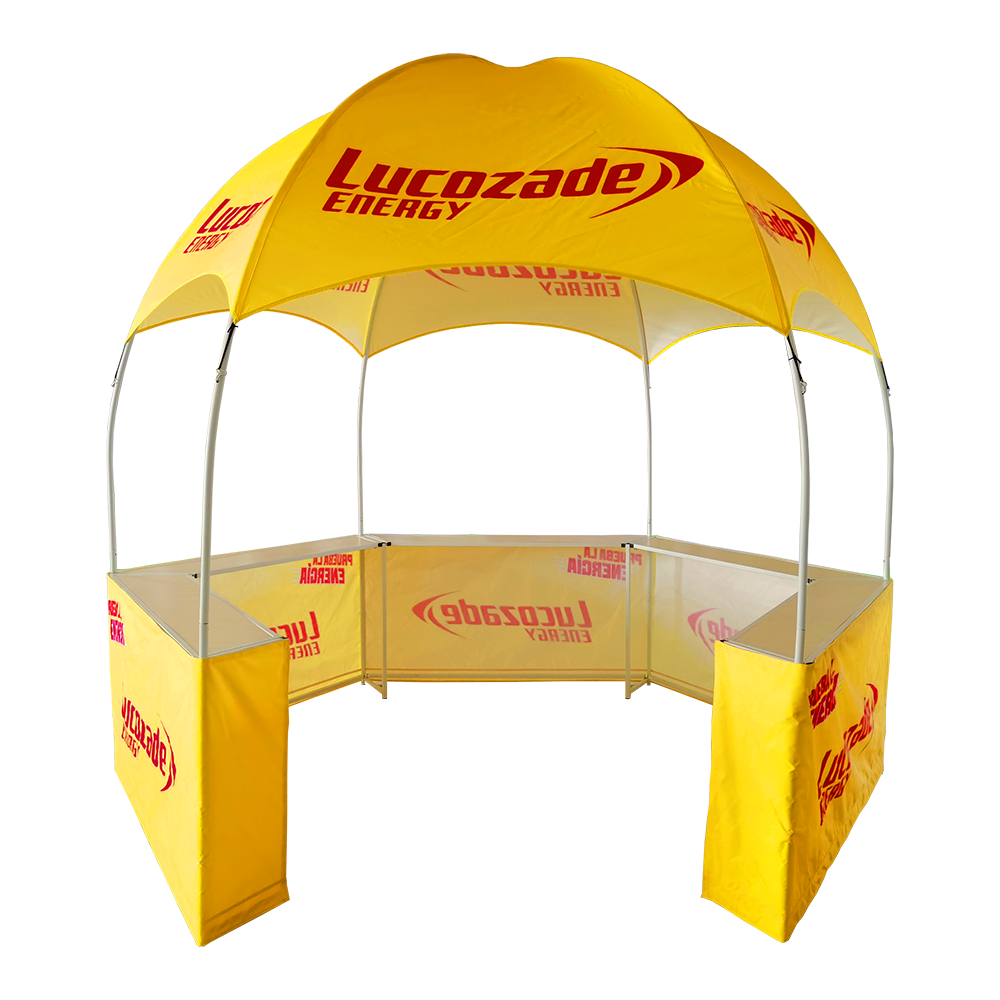
Why Does a Logo Become Distorted When Printed on a Dome Tent?
The fundamental reason is simple:
A Dome Tent Is a Three-Dimensional Curved Surface
Most logos are designed on a flat computer screen.
The artwork exists in:
- X-axis (width)
- Y-axis (height)
But a dome tent exists in:
- X-axis
- Y-axis
- Z-axis (curvature depth)
When a flat image is transferred onto a curved surface, stretching and compression naturally occur.
This is the same reason why:
- A world map distorts Earth’s surface
- A sticker wrinkles when applied to a sphere
- A flat pattern requires adjustment before making a curved product
A usine de tentes dôme must compensate for this before printing.
The "Globe Map Problem" in Dome Tent Printing
A useful comparison is a world map.
The Earth is round.
A map is flat.
When cartographers convert a globe into a flat map:
- Some areas become stretched
- Some areas become compressed
Dome tent printing faces the opposite challenge:
A flat design must be transformed back onto a curved structure.
Without correction:
A perfect circle logo may become:
- Ovale
- Uneven
- Wider at the bottom
- Narrower at the top
Text may appear:
- Tilted
- Stretched
- Compressed
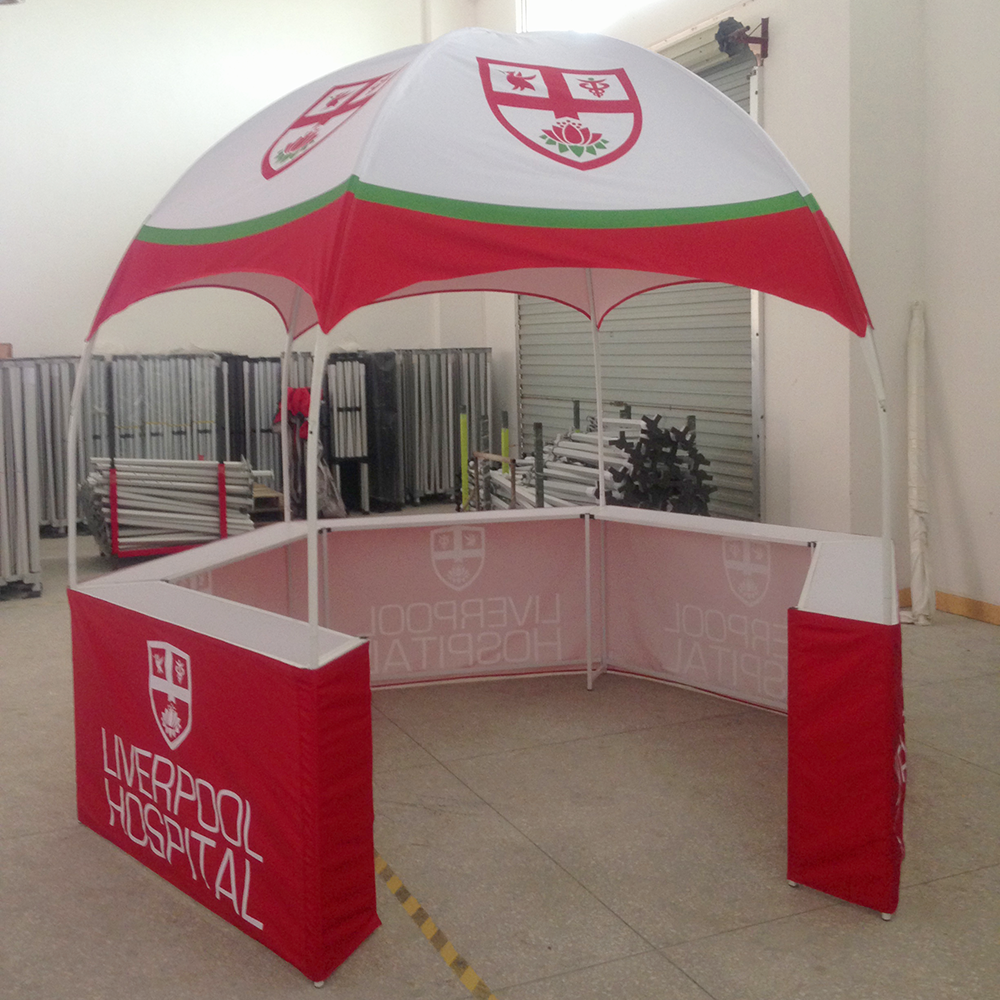

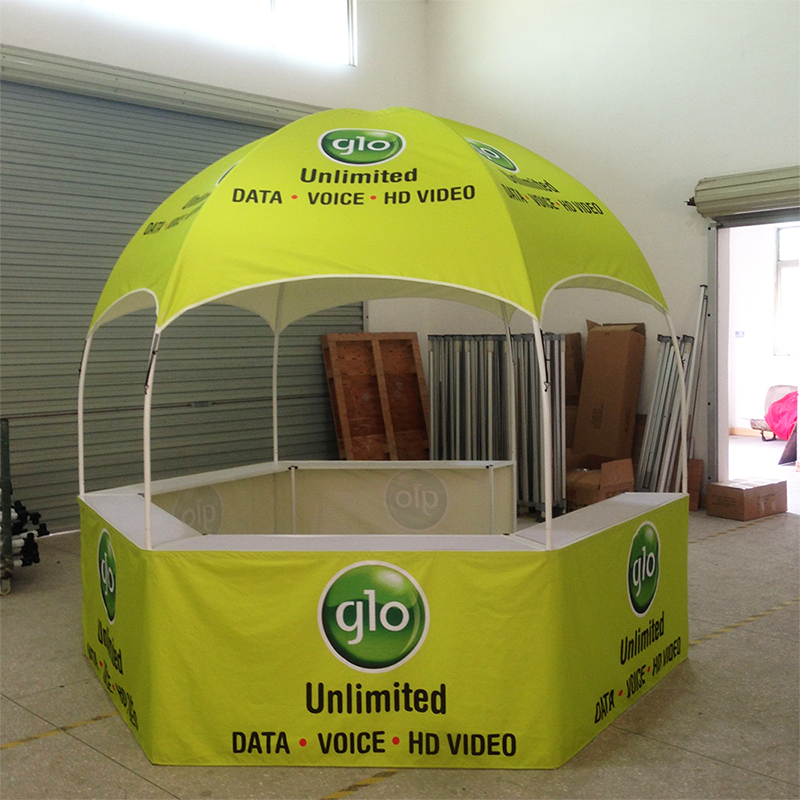
The Main Causes of Dome Tent Printing Distortion
Professional manufacturers usually identify five major causes.
1. Ignoring Dome Surface Geometry
The most common mistake is printing a normal rectangular artwork directly onto a curved panel.
Par exemple:
A customer provides:
Company Logo:
1000mm × 500mm
The printer places it directly onto a dome panel.
Le résultat :
The lower curved area stretches more than the upper area.
The logo becomes visually incorrect.
Un professionnel fabricant de tentes dôme must first analyze:
- Panel shape
- Curvature radius
- Printing area
- Viewing angle
2. Incorrect Artwork Preparation
Many customers provide:
- JPG images
- PNG files
- Low-resolution graphics
These files are not ideal for professional dome tent printing.
The preferred format is:
- AI
- EPS
- SVG
- Vector PDF
Why?
Because vector graphics allow manufacturers to:
- Resize without losing quality
- Modify curves
- Apply distortion compensation
3. Wrong Logo Placement
Not every location on a dome tent is equal.
A dome has areas with different curvature.
Par exemple:
Upper Dome Area
Usually has smoother curvature.
Graphics experience less distortion.
Side Curved Area
Experiences stronger stretching.
Logos may appear wider.
Near Seams or Structural Connections
Not recommended.
The membrane movement can affect appearance.
Un professionnel usine de tentes dôme considers the ideal branding zone before printing.
4. Incorrect Printing Method
Different printing technologies produce different results.
Common methods include:
- Dye sublimation printing
- UV printing
- Heat transfer printing
- Sérigraphie
The selected technology affects:
- Précision des couleurs
- Durabilité
- Surface flexibility
5. Fabric Stretching During Installation
Even a perfectly printed dome tent can appear slightly different after installation.
Why?
Because the membrane is tensioned.
During setup:
- Fabric stretches
- Panels become tighter
- Curvature changes slightly
This can influence graphic appearance.
Professional manufacturers consider this during artwork preparation.
How Professional Dome Tent Manufacturers Solve Printing Distortion
A high-quality supplier does not simply print a logo.
The process includes several engineering steps.
Step 1: Analyze the Dome Tent Panel Pattern
Before printing, engineers review:
- Dimensions du panneau
- Cutting pattern
- Courbure
- Seam locations
The dome is divided into printable sections.
Each section has different distortion requirements.
Step 2: Create a Distortion-Compensated Artwork File
Professional printing uses a process called:
Graphic Warping
The artwork is intentionally modified before printing.
Par exemple:
A letter may look slightly stretched in the design file.
After installation on the dome:
It appears normal.
This is called:
Reverse Distortion Compensation
Step 3: Use 3D Simulation
Advanced dome tent manufacturers use digital modeling.
The process includes:
- Creating a 3D dome model
- Applying artwork digitally
- Checking visual appearance
- Adjusting graphics
- Printing final membrane
This reduces unexpected results.
Step 4: Conduct Physical Sample Testing
For large projects, professional suppliers may produce:
- Small printed samples
- Partial membrane samples
- Color proofs
This allows customers to verify:
- Logo proportions
- Colors
- Visual effects
Before mass production.

Choosing the Right Printing Technology for Dome Tents
The correct printing method depends on the application.
Dye Sublimation Printing for Dome Tent Fabric
Dye sublimation is widely used for polyester-based materials.
Avantages :
- Excellent color penetration
- High-resolution images
- Finition lisse
Suitable for:
- Event branding
- Tentes d'exposition
- Advertising structures
UV Printing for Dome Tent Membranes
UV printing applies ink directly onto the surface.
Avantages :
- Works on many materials
- Fort impact visuel
- Suitable for detailed graphics
Cependant:
The ink flexibility must match the membrane.
Poor-quality UV inks may crack when the fabric bends.
Screen Printing for Simple Dome Tent Logos
Screen printing works well for:
- Simple logos
- Large text
- Limited colors
Avantages :
- rentable
- Durable
Disadvantage:
Not suitable for complex photographic graphics.
Why Color Accuracy Matters on Dome Tents
Printing problems are not only about shape distortion.
Color consistency is another major issue.
Customers often ask:
“Why does my brand color look different on the dome tent compared with my original file?”
Possible reasons include:
- Couleur du tissu
- Printing method
- Ink absorption
- Viewing angle
- Conditions d'éclairage
Professional manufacturers consider:
- Pantone matching
- Essais de matériaux
- Color proofing
Special Challenges for White Dome Tents
White dome tents are popular because they create a premium appearance.
However, white backgrounds reveal:
- Color variation
- Printing defects
- Alignment problems
For premium brand events, professional quality control is essential.
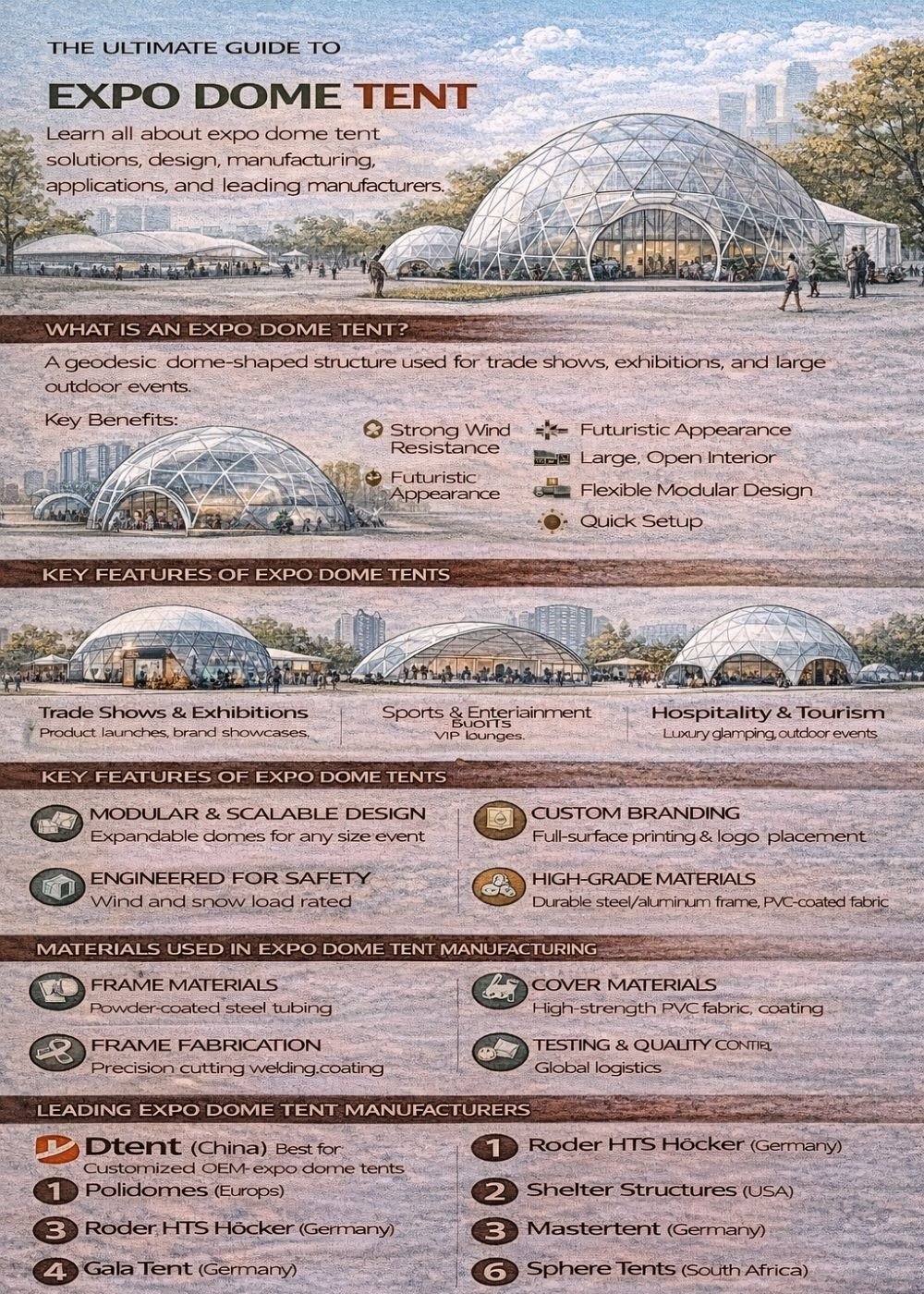
How to Prepare Your Logo File for Dome Tent Printing
Customers can improve results by following these guidelines.
Provide Vector Files
Recommended:
- AI
- EPS
- SVG
- Vector PDF
Avoid:
- Screenshots
- Low-resolution JPG
Provide Pantone Colors
Especially for:
- Corporate logos
- Brand campaigns
- International events
Confirm Printing Location
Demander:
- Where will the logo be placed?
- How will curvature affect appearance?
- Is distortion compensation included?
Request a Digital Mockup
Before production, request:
- 3D rendering
- Dome visualization
- Artwork preview
Common Dome Tent Printing Mistakes Buyers Should Avoid
Choosing Only Based on Price
Low-cost suppliers may skip:
- Artwork correction
- 3D simulation
- Proof testing
Le résultat :
A cheaper tent with poor branding quality.
Sending Artwork at the Last Minute
Graphic preparation requires engineering time.
Rushed production increases risk.
Assuming Flat Printing Rules Apply
A dome tent is not a billboard.
The surface geometry changes everything.
How Dtent Solves Dome Tent Printing Challenges
En tant que professionnel fabricant de tentes dôme, Dtent understands that printing quality directly affects brand image.
Our production process includes:
Professional Artwork Review
We analyze:
- Logo size
- Placement
- Curvature impact
Graphic Distortion Compensation
Artwork is adjusted before printing.
Customized Printing Solutions
We provide options for:
- Event dome tents
- Exhibition domes
- Commercial dome tents
- Branded promotional structures
Expérience en matière de fabrication
With:
- Over 10 years of tent production experience
- 6,000㎡ manufacturing facility
- OEM experience for international brands
Dtent helps customers transform creative designs into professional outdoor structures.

The Future of Dome Tent Printing Technology
Le secteur évolue vers :
AI-Assisted Graphic Adjustment
Artificial intelligence can automatically analyze:
- Courbure
- Distortion
- Viewing angles
3D Digital Proofing
Customers can preview final results before production.
Advanced Flexible Inks
New inks provide:
- Meilleure élasticité
- Résistance aux UV
- Longer outdoor lifespan
How to Print the Perfect Logo on a Dome Tent
A distorted logo on a tente dôme is usually not caused by the printer.
It is caused by treating a curved 3D surface like a flat 2D canvas.
The key solutions are:
✅ Analyze dome geometry before printing
✅ Use professional vector artwork
✅ Apply distortion compensation
✅ Select the correct printing technology
✅ Test graphics before mass production
Lors du choix d'un fabricant de tentes dôme ou usine de tentes dôme, buyers should evaluate not only tent structure and materials but also the supplier’s graphic engineering capability.
A successful custom printed dome tent is not just a shelter.
It is a three-dimensional brand display platform.
With the right design preparation and manufacturing expertise, your logo will look professional from every viewing angle—exactly as your brand intended.
Vous êtes une société commerciale ou un fabricant ?
Nous sommes un fabricant spécialisé dans les tentes pliantes, les parapluies d'extérieur, les drapeaux de plage et les bannières publicitaires.
Pouvez-vous réaliser un design à partir de mes idées ou de mes dessins ?
Oui, nous avons des concepteurs expérimentés et notre propre usine de moulage. En fonction de vos besoins, nous pouvons concevoir ou ouvrir des moules à des prix compétitifs.
Combien de temps dure l'échantillonnage ?
Les échantillons seront prêts dans un délai de 5 à 7 jours, en fonction de vos exigences en matière d'impression et de matériaux.
Quel est votre avantage ?
Efficacité des coûts ; prix bas ; Efficacité des délais : nous nous engageons à effectuer les livraisons de masse dans les 30 jours Efficacité des services : nos vendeurs s'engagent à répondre à votre demande dans les 12 heures : Nos vendeurs s'engagent à répondre à votre demande dans les 12 heures. whatsapp 86 180 3827 3926