

C'est le pire cauchemar de tout organisateur d'événements. Vous avez passé des mois à planifier une activation de marque à forts enjeux. Votre tente imprimée personnalisée Le spectacle est magnifique sous le soleil matinal. Puis, les nuages arrivent. Une pluie fine et persistante s'installe.
Pendant les quinze premières minutes, l'eau perle magnifiquement sur le tissu. Vous poussez un soupir de soulagement. Mais au bout de trente minutes, quelque chose change. Le tissu commence à s'assombrir et à s'alourdir. Une fine brume se met à s'infiltrer sous la toile. Puis, une première grosse goutte atterrit… directement sur votre ordinateur portable ou vos produits de valeur.
Pourquoi une tente étiquetée “ étanche ” s'est-elle révélée défectueuse en moins d'une heure ?
À Dtent, Nous ne sommes pas de simples fabricants de tentes ; nous sommes des ingénieurs textiles. Nous avons vu des milliers de tentes “ de qualité professionnelle ” de nos concurrents échouer aux tests d’étanchéité les plus simples. Dans ce guide approfondi, nous allons déconstruire les mythes marketing entourant la “ résistance à l’eau ” et expliquer les principes physiques essentiels. Hauteur hydrostatique (HH)— le seul indicateur qui compte vraiment quand la tempête frappe.
1. Le piège des termes : hydrofuge, résistant à l’eau ou imperméable
Sur le marché B2B anglophone, les fournisseurs utilisent souvent ces trois termes indifféremment, ce qui peut induire en erreur les responsables des achats. Or, en physique, ils désignent trois niveaux de protection bien distincts.
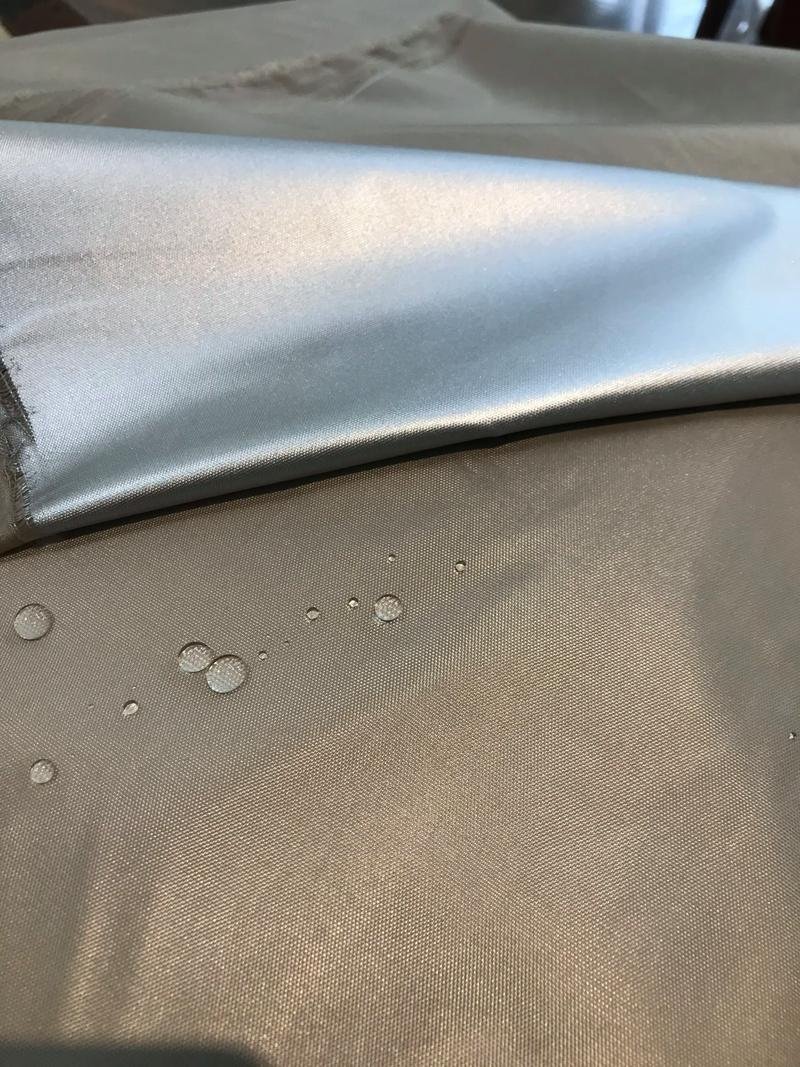
Hydrofuge (L'illusion du “ perlage ”)
Cela fait référence à un revêtement chimique (généralement un DWR – traitement déperlant durable) appliqué sur le dehors du tissu. Cela permet à l'eau de “ perler ” et de s'écouler.
Le point de défaillance : Le traitement déperlant durable (DWR) est temporaire. Il s'estompe sous l'effet des UV et des frottements. Plus important encore, il n'empêche en rien l'eau de pénétrer. pressé contre le tissu par le vent ou la gravité.
Résistant à l'eau (limite de “ 30 minutes ”)
Un tissu étiqueté “ résistant à l'eau ” est généralement tissé suffisamment serré pour ralentir la pénétration de l'eau. Il peut supporter une bruine légère ou une averse de 10 minutes.
Le point de défaillance : Une fois les fibres saturées (au bout de 30 minutes), l'eau s'infiltre à travers les pores du tissage. C'est là que la plupart des tentes “ de qualité Amazon ” présentent des faiblesses.
Imperméable (norme Dtent)
Pour être véritablement imperméable, un tissu doit posséder une barrière solide et non poreuse (comme un revêtement en polyuréthane) collée sur son envers. Son imperméabilité est mesurée par son épaisseur. pression Cette barrière peut résister avant qu'une seule goutte d'eau ne la traverse.
2. La science de la " pression hydrostatique " (PH)
Si vous ne devez examiner qu'une seule spécification lors de votre processus d'approvisionnement, choisissez-la comme… Hauteur hydrostatique.
Qu'est-ce que HH ?
Imaginez un tube vertical transparent placé sur un morceau de toile de tente. On commence à verser de l'eau dans le tube. La “ pression hydrostatique ” correspond à la hauteur de la colonne d'eau (mesurée en millimètres) au moment précis où l'eau commence à s'infiltrer à travers la toile.
1000 mm HH : Il s'agit du strict minimum pour un vêtement “ imperméable ”. Sous une tente événementielle, il sera insuffisant lors d'un orage classique.
1500 mm HH : Souvent commercialisée comme étant de “ qualité commerciale ”, elle peut résister à une pluie continue, mais si le vent pousse la pluie contre la tente, la pression supplémentaire fera passer l'eau à travers.
3000 mm HH (Dtent de qualité professionnelle) : Il s'agit du seuil de performance véritablement “ résistant aux intempéries ”. Une imperméabilité de 3 000 mm signifie que le tissu peut supporter la pression d'une colonne d'eau de 3 mètres de haut.
Pourquoi avez-vous besoin de 3000 mm pour un événement ? Car le vent exerce une “ pression dynamique ”. Une rafale de 32 km/h frappant une tente trempée par la pluie peut facilement exercer une pression équivalente à 2 000 mm. Si votre tente n'est conçue que pour résister à 1 500 mm, elle prendra l'eau instantanément.


3. Pourquoi les tentes se déforment après 30 minutes : le cycle " saturation et pression "
De nombreux acheteurs demandent, “ C’était sec pendant les 20 premières minutes, pourquoi ça a commencé à fuir ensuite ? ” La réponse réside dans un cycle de défaillance en trois étapes, courant chez les tentes de qualité inférieure.
Étape 1 : Épuisement DWR
Pendant les 10 premières minutes, le revêtement déperlant extérieur (DWR) maintient le tissu au sec. L'eau perle sur le tissu.
Étape 2 : Action capillaire (saturation)
Au bout de 20 minutes, le traitement déperlant durable (DWR) est saturé. Les fibres de polyester commencent alors à absorber l'eau. Ce phénomène est appelé “ mouillage ”. Une fois mouillé, le tissu devient un “ pont ” permettant à l'eau de passer de l'extérieur vers l'intérieur.
Étape 3 : Infiltration sous pression
Au bout de 30 minutes, le poids de l'eau sur le toit et la force du vent créent une pression. Si le revêtement intérieur en polyuréthane est mince ou mal collé, l'eau s'infiltre à travers les microfissures du revêtement. À ce stade, la tente échoue au test d'étanchéité à la pluie de 30 minutes.
4. Anatomie d'une tente résistante aux intempéries : au-delà du tissu
L'imperméabilisation ne concerne pas seulement le tissu ; elle concerne aussi le système. ingénierie de l'assemblage. À Dtent, Nous nous concentrons sur les “ points de fuite invisibles ” que les autres fabricants ignorent.
A. Les Coutures (Le coupable #1)
À chaque fois qu'on coud une tente, l'aiguille crée un trou. Une tente de 3 x 3 mètres compte des milliers de ces trous.
La solution économique : Les fournisseurs laissent les coutures “ nues ” ou utilisent un fin mastic d'étanchéité pulvérisé.
La méthode Dtent : Nous utilisons Ruban adhésif étanche thermoscellé. Une machine spécialisée applique un ruban thermoplastique sur chaque couture sous haute température et pression, “ soudant ” physiquement les trous.
B. Le problème de la “ stagnation ” (tension structurale)
Si le toit d'une tente est affaissé, l'eau va s'y accumuler. Un gallon d'eau pèse environ 3,8 kg. Si une flaque de 20 litres se forme sur votre toit, cela représente une pression constante de plus de 18 kg sur une seule surface de tissu.
Ingénierie Dtent : Nos structures sont dotées d'une tension de crête réglable et de toiles “ étanches ” découpées avec précision. Cela garantit un écoulement instantané de l'eau, l'empêchant ainsi de créer une stagnation.“
C. Les rabats à velcro et à fermeture éclair
L'eau est sournoise. Elle peut s'infiltrer par capillarité à travers les fermetures Velcro ou les fermetures éclair.
Conception de tentes : Nous incluons des gouttières surdimensionnées et des rabats de protection sur chaque fermeture éclair et point de fixation afin de garantir que la gravité joue en votre faveur, en éloignant l'eau de l'intérieur.
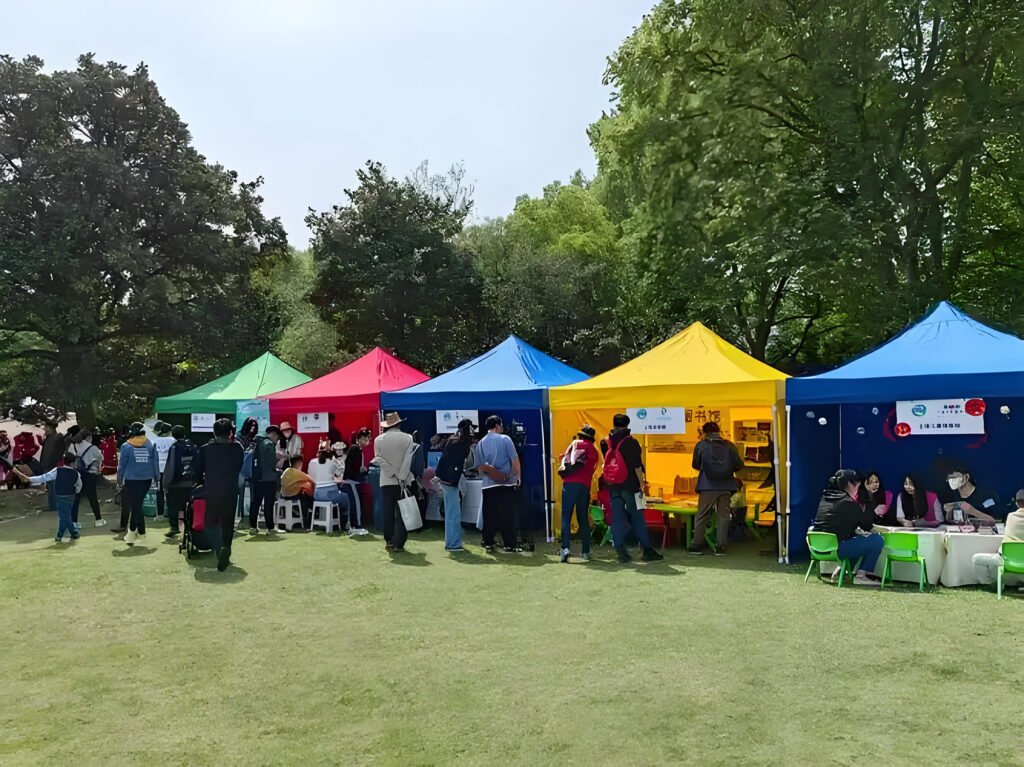
5. L'importance des matériaux : le polyester 600D face à la concurrence
Lors de la recherche de tentes événementielles, Vous verrez partout le terme “ 600D ”. Mais “ 600D ” fait uniquement référence au poids du fil (denier), et non à la qualité de l’imperméabilité.
Le 600D “ White Label ”
De nombreuses usines utilisent un tissage lâche et un support en PVC épais et bon marché pour donner une impression d'épaisseur. Comme nous l'avons évoqué dans notre précédent article, le PVC se fissure lorsqu'il est plié, ce qui entraîne des fuites en quelques mois.
Le Dtent 600D Pro-Performance
Nous utilisons un polyester haute densité à tissage serré associé à un revêtement multicouche en PU (polyuréthane).
Couche 1 : Pénètre les fibres pour assurer la liaison.
Couche 2 : Crée la barrière étanche (3000 mm HH).
Couche 3 : Un revêtement “ antidérapant ” pour empêcher le tissu de coller sur lui-même lorsqu'il est plié (anti-adhérence).
6. Comment vérifier les affirmations d'un fournisseur concernant l'étanchéité (Liste de contrôle des achats)
Lorsque vous discutez avec un fournisseur potentiel, ne posez pas de questions, “ Est-ce étanche ? ” Ils diront toujours oui. Posez plutôt ces questions techniques pointues :
“ Pouvez-vous fournir un rapport d'essai en laboratoire conforme à la norme ISO 811 ? ” (La norme ISO 811 est la norme internationale pour les essais de pression hydrostatique).
“ L’indice HH est-il indiqué pour le tissu ? » avant ou après Exposition aux UV ?” (Les revêtements bon marché se dégradent rapidement au soleil).
“ Les coutures sont-elles scellées par ruban thermocollant ou simplement "résistantes à l'eau" ? ‘ 4. “ Quelle est la valeur de la colonne d'eau (indice TE) de la bande d'étanchéité elle-même ? ‘ (Le ruban doit correspondre à la valeur nominale de 3000 mm du tissu).
“ Le tissu comporte-t-il un traitement déperlant durable (DWR) sur l'endroit ? ”
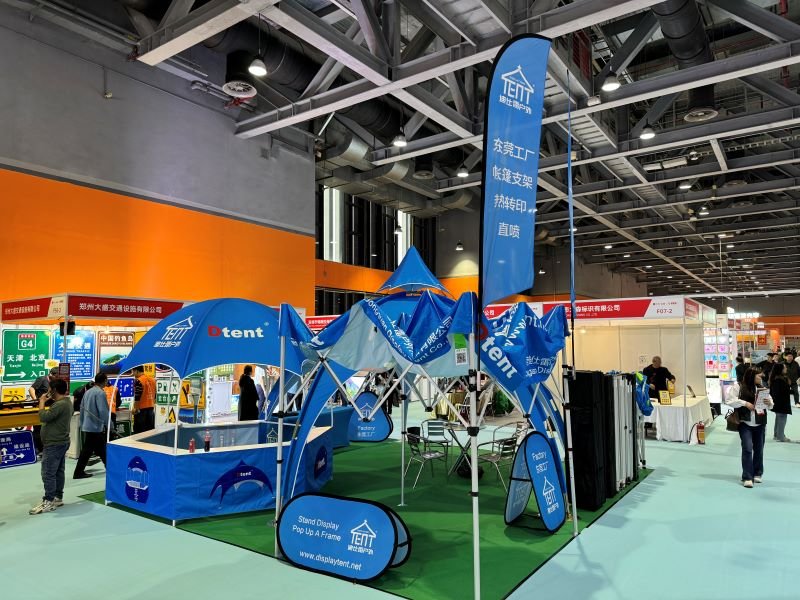
7. Pourquoi Dtent est la référence en matière de communication extérieure
À Dtent, Nous savons que votre tente est bien plus qu'un simple abri ; c'est une garantie pour la réputation de votre marque. Si elle prend l'eau, votre marque paraît de piètre qualité. En revanche, si elle garde tout le monde au sec lors d'une averse torrentielle, votre marque est perçue comme une marque exemplaire.“
Protocole d'étanchéité Dtent :
Norme 3000 mm : Nous ne proposons pas de tissus d'entrée de gamme présentant des fuites. Notre gamme de base est conçue pour une utilisation professionnelle intensive.
Résines testées en conditions climatiques extrêmes : Nos revêtements en polyuréthane sont formulés pour rester flexibles de -20 °C à 50 °C. Ils ne se fissurent pas par temps froid et ne fondent pas sous l'effet de la chaleur.
Tension de précision : Nous utilisons un logiciel de modélisation 3D exclusif pour garantir que chaque auvent s'adapte parfaitement à la structure, sans aucun affaissement, empêchant ainsi l'accumulation d'eau.
Coutures doubles et ruban adhésif : Chaque couture structurelle est doublement cousue pour plus de solidité, puis scellée avec du ruban adhésif pour une étanchéité 100%.
Protégez votre investissement et votre marque
Le “ test de pluie de 30 minutes ” est un critère d'égalité essentiel dans le secteur événementiel. Il permet de distinguer les équipements de qualité des équipements plus performants. Choisir une tente ayant subi ce test est donc primordial. Hauteur de refoulement hydrostatique de 3000 mm Avec un scellement professionnel des coutures, vous n'achetez pas seulement du tissu et de l'aluminium, vous achetez la tranquillité d'esprit.
Ne laissez pas un argument marketing de “ résistance à l'eau ” gâcher votre prochain événement. Exigez les données. Exigez une étanchéité de 3 000 mm. Exigez. Dtent.
Votre tente actuelle est-elle prête pour la prochaine tempête ?
[Téléchargez notre fiche technique du tissu]
[Demander un devis pour un auvent sur mesure Dtent résistant aux intempéries]
Vous êtes une société commerciale ou un fabricant ?
Nous sommes un fabricant spécialisé dans les tentes pliantes, les parapluies d'extérieur, les drapeaux de plage et les bannières publicitaires.
Pouvez-vous réaliser un design à partir de mes idées ou de mes dessins ?
Oui, nous avons des concepteurs expérimentés et notre propre usine de moulage. En fonction de vos besoins, nous pouvons concevoir ou ouvrir des moules à des prix compétitifs.
Combien de temps dure l'échantillonnage ?
Les échantillons seront prêts dans un délai de 5 à 7 jours, en fonction de vos exigences en matière d'impression et de matériaux.
Quel est votre avantage ?
Efficacité des coûts ; prix bas ; Efficacité des délais : nous nous engageons à effectuer les livraisons de masse dans les 30 jours Efficacité des services : nos vendeurs s'engagent à répondre à votre demande dans les 12 heures : Nos vendeurs s'engagent à répondre à votre demande dans les 12 heures. whatsapp 86 180 3827 3926