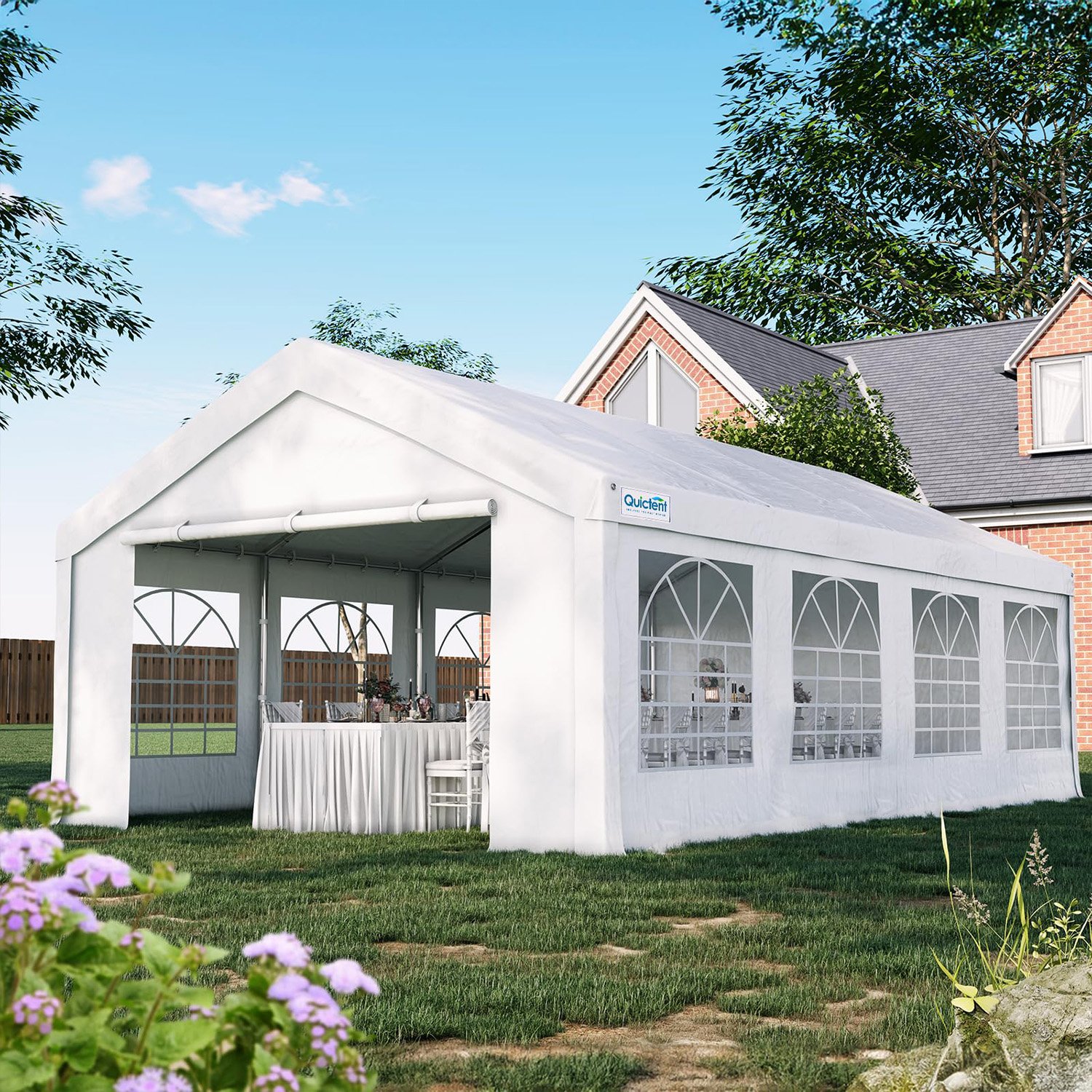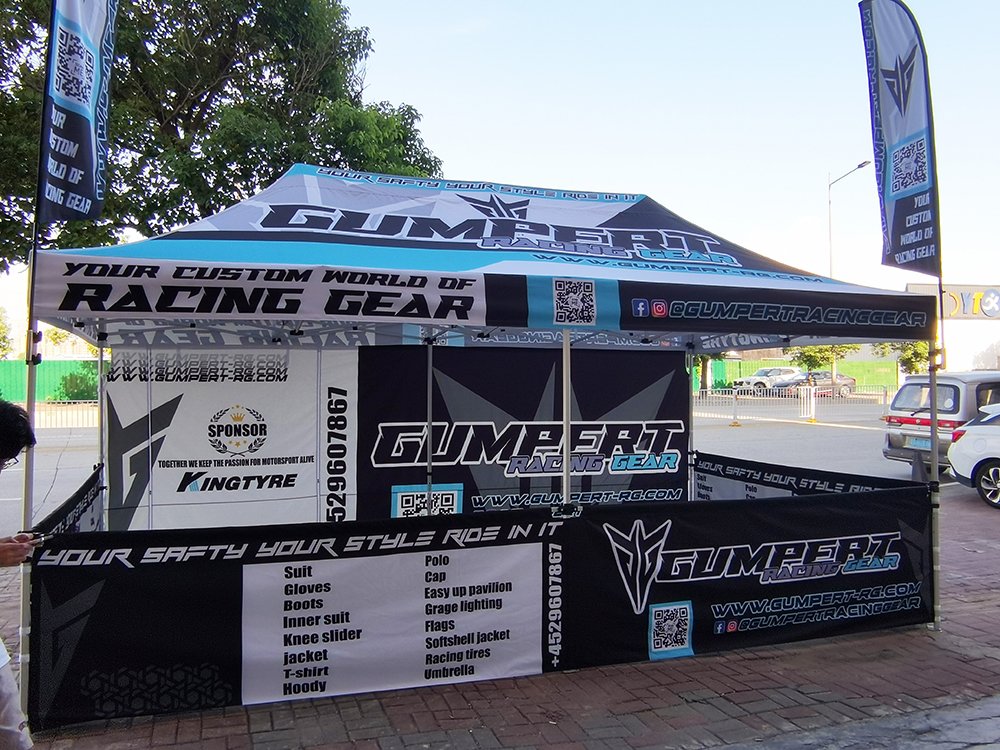

Picture this: It’s 9:00 AM on the opening day of a major national trade show or a high-profile outdoor festival. Your booth is set up, your custom-printed 10×20 tent looks flawless, and your team is ready to engage with thousands of attendees.
Then, a person in a uniform with a clipboard walks up. They aren’t there to admire your branding. They are the Fire Marshal.
They reach for the valance of your tent, looking for a specific tag. You confidently pull out a PDF on your phone—a “Certificate of Flame Retardancy” provided by your online vendor. The Marshal glances at it, looks back at the tent, and says:
“This certificate doesn’t match the tent. There is no permanent label sewn into the fabric that references NFPA 701 or CPAI-84. This structure is a fire hazard. Take it down now, or we shut down the booth.”
À Dtent, we hear this story far too often from clients who come to us après a disaster. The market is flooded with “white-label” tents that claim to be fire-resistant in the product description but fail to meet the rigorous legal standards required in the US, Canada, and Europe.
Today, we are going deep into the science of textile flammability, the legal requirements of the “Big Three” certifications, and why a permanent sewn-in label is your only real insurance policy.
1. The Dangerous Myth of "Fireproof" vs. "Flame Retardant"
Before we look at the labels, we must clarify the terminology. In the textile world, nothing is truly “fireproof.” Given enough heat and time, any fabric will eventually succumb.
Flame Retardant (FR): This means the fabric is designed to resist ignition and, more importantly, to self-extinguish once the flame source is removed. It doesn’t mean it won’t char; it means it won’t become a “fuel source” that spreads the fire.
Inherently Flame Retardant (IFR): The fire-resistant properties are built into the molecular structure of the fiber itself.
Treated Flame Retardant: The fabric (usually polyester) is dipped or coated in a chemical solution after weaving.
The Dtent Insight: Most custom event tents use treated polyester. The problem? If the treatment is poor quality or “salted” (a cheap method), it can wash off in the rain or degrade in the sun. If your “FR” tent has been through three rainstorms and a month of sun, it might no longer be flame retardant. This is exactly what Fire Marshals are trained to look for.
2. The "Big Three" Standards: What Do They Actually Test?
When a Fire Marshal asks for “the standards,” they aren’t looking for a general statement. They are looking for specific, lab-tested protocols.
A. NFPA 701 (National Fire Protection Association)
This is the “Gold Standard” for public occupancy in the United States.
What it tests: It measures the “flame propagation” of textiles. Basically, how far and how fast does the flame travel up the fabric?
The “Drip” Factor: A crucial part of NFPA 701 is checking for “flaming droplets.” If the polyester melts and drips flaming liquid onto the ground (where people are standing), it fails.
Method 1 vs. Method 2: Method 1 is for single-layer fabrics (like your tent canopy). Method 2 is for heavier, multi-layer materials.
B. CPAI-84 (Canvas Products Association International)
While NFPA 701 is for general textiles (curtains, drapes, tents), CPAI-84 is a standard specifically written for tents.
The Vertical Flame Test: A sample of the tent fabric is held vertically over a flame for 12 seconds. To pass, the “after-flame” (how long it stays lit after the burner is removed) must be minimal, and the “char length” must stay within strict limits.
Mandatory in specific states: If you are doing an event in California, New York, or Massachusetts, CPAI-84 is non-negotiable.
C. European Standards: B1 (DIN 4102-1) and M2
If you are a global brand, you need to know the EU codes.
B1 (Germany): Highly respected worldwide. It tests for “difficult-to-ignite” materials.
M2 (France/Europe): Part of the “M-rating” system. M0 is non-combustible; M2 is “difficult to ignite.”
3. Why the "Printed Logo" is Not a Valid Label
Many budget manufacturers try to bypass the cost of certification by simply printing a “Flame Retardant” logo on the corner of the tent. This is almost always rejected by professional Fire Marshals.
The Problem with Printed Labels:
Lack of Traceability: Anyone can print a logo. It doesn’t prove that this specific batch of fabric was tested in a certified lab (like SGS or Intertek).
Lack of Standard Reference: A logo that says “Fire Resistant” without mentioning NFPA 701 ou CPAI-84 is legally meaningless.
Durability: Printing can wear off.
The “Dtent Standard”: The Permanent Sewn-in Label
A Fire Marshal wants to see a Permanent Sewn-in Label (usually found on an interior seam). This label must include:
The Manufacturer’s Name (e.g., Dtent).
The Date of Manufacture.
The Specific Standards Met (e.g., “This fabric meets or exceeds NFPA 701 and CPAI-84”).
The Statement of Retardancy: “Flame-resistant qualities are permanent for the life of the fabric.”
Why Sewn-in? Because it proves the fabric was manufactured with these properties from day one. It cannot be easily faked or swapped from a different tent.
4. The Chemistry of Compliance: How Dtent Does It
At Dtent, we don’t just “hope” our tents pass; we engineer them to. Our 600D Pro-Performance Polyester undergoes a multi-stage FR infusion process.
Substrate Selection: We start with high-density polyester that has a high melting point.
FR Polymer Infusion: During the PU (Polyurethane) coating process, we mix flame-retardant chemicals directly into the coating resin. This ensures the FR properties are “locked” to the fabric, rather than just sitting on the surface.
Batch Testing: We don’t just test once a year. We perform random “Vertical Burn” tests on our production line to ensure consistency.
5. How to Choose a Manufacturer That Won't Get You Shut Down
When you are vetting a manufacturer (especially overseas), you must look beyond the price tag. Use this Compliance Checklist to verify their claims:
Ask for the “Original” PDF Lab Report: Don’t accept a screenshot. You want the full report from a recognized body (SGS, Intertek, or Underwriters Laboratories).
Verify the Company Name: Does the name on the lab report match the company you are buying from? Many “middle-men” use someone else’s lab report.
Check for “Wash Testing”: Ask the supplier if their FR treatment is “leachable.” A professional tent should maintain its FR rating after at least 5-10 professional cleanings or heavy rain cycles.
Confirm the Labeling: Specifically state in your RFQ: “Each canopy and sidewall must include a permanent sewn-in label stating compliance with NFPA 701 and CPAI-84.”
6. The ROI of Safety: Why Cheap Tents Cost More
A “Fire-Compliant” tente from Dtent might cost 15-20% more than a generic “Heavy Duty” tent from a marketplace site. But let’s look at the Total Cost of Failure (TCF):
Scenario A (Generic Tent): You save $200. The Fire Marshal shuts you down. You lose your $5,000 booth space fee, your staff travel costs, and the potential $50,000 in leads you would have generated. Total Loss: $55,000+
Scenario B (Dtent): You invest the extra $200. The Fire Marshal checks your sewn-in label, nods, and moves on. You generate 500 new leads and secure three major contracts. Total Gain: $250,000+
Safety isn’t an expense; it’s a barrier to entry for professional events.
7. Why Dtent is the Global Leader in Compliant Event Tents
Dtent was founded on the principle of Industrial Authority. We serve brands that operate in the most strictly regulated environments—from California state fairs to European trade expos and Middle Eastern desert festivals.
The Dtent Compliance Pack
When you order from Dtent, you don’t just get a tent. You get a Compliance Pack that includes:
Permanent Sewn-in Labels on all fabric components.
Digitally Verifiable Lab Reports (SGS/Intertek) that you can show on your phone or print for your event binder.
Expert Guidance: If you are going to a specific city with unique codes (like Las Vegas or Chicago), our team will tell you exactly which standard you need to meet.

Don't Let a Clip-Board Shut Down Your Brand
In the high-stakes world of event marketing, your equipment is a reflection of your brand’s professionalism. Using a tente with fake or missing fire certifications signals that you cut corners.
Don’t wait for the Fire Marshal’s “Final Boss” moment. Ensure your next custom event tent features the Dtent Permanent Compliance System. We make sure the only thing “on fire” at your event is your sales team.
Is your current tent fleet compliant? Don’t guess—know.
[Get a Free Compliance Audit & Quote from the Dtent Expert Team]
[Learn More About Our NFPA 701 Certified Fabric Options]
Vous êtes une société commerciale ou un fabricant ?
Nous sommes un fabricant spécialisé dans les tentes pliantes, les parapluies d'extérieur, les drapeaux de plage et les bannières publicitaires.
Pouvez-vous réaliser un design à partir de mes idées ou de mes dessins ?
Oui, nous avons des concepteurs expérimentés et notre propre usine de moulage. En fonction de vos besoins, nous pouvons concevoir ou ouvrir des moules à des prix compétitifs.
Combien de temps dure l'échantillonnage ?
Les échantillons seront prêts dans un délai de 5 à 7 jours, en fonction de vos exigences en matière d'impression et de matériaux.
Quel est votre avantage ?
Efficacité des coûts ; prix bas ; Efficacité des délais : nous nous engageons à effectuer les livraisons de masse dans les 30 jours Efficacité des services : nos vendeurs s'engagent à répondre à votre demande dans les 12 heures : Nos vendeurs s'engagent à répondre à votre demande dans les 12 heures. whatsapp 86 180 3827 3926