
In the custom event tent industry, a surprisingly expensive problem often appears after the sale: replacement parts. Buyers discover that a seemingly simple component—a plastic bracket, a connector, a slider, or a truss joint—can vary wildly in price and, more frustratingly, fail to fit across brands, even when it looks identical.
This phenomenon is commonly referred to (informally) as a “replacement part monopoly”—where compatibility limitations lock buyers into a single supplier ecosystem.
But this is not just a pricing issue. It is a design, engineering, and manufacturing standardization problem.
В этой статье представлено technical, system-level explanation of:
- Why identical-looking parts are often incompatible
- What drives large price differences in replacement parts
- The hidden role of tolerances, molds, and proprietary design
- How to identify and source truly “universal” repair kits
- How to avoid long-term supply lock-in
We also explain how experienced manufacturers like Дент address compatibility challenges through better engineering and OEM practices.
1. The Illusion of Interchangeability
Why Parts Look the Same—but Aren’t
At first glance, many tent components appear identical:
- Plastic corner brackets
- Nylon connectors
- Aluminum joints
- Sliding hubs
However, visual similarity does not equal dimensional compatibility.
Ключевой вывод
In mechanical systems, millimeters—and even fractions of a millimeter—matter.
A 0.5 mm difference in:
- Tube diameter
- Slot width
- Pin alignment
…can make a part completely unusable.
2. The Real Reasons Behind Incompatibility
2.1 Tube Diameter Variations
Tent frames are typically described as:
- 30 mm
- 40 mm
- 50 mm hex or square legs
But in reality:
- One “40 mm” frame may be 39.6 mm
- Another may be 40.3 mm
Result
- Brackets designed for one will not fit the other
2.2 Wall Thickness Differences
Even if outer dimensions match:
- Wall thickness affects internal fit
- Connector insertion depth changes
This impacts:
- Structural stability
- Locking mechanism alignment
2.3 Tolerance Stacking
Every component has manufacturing tolerances:
- Tube ±0.2 mm
- Connector ±0.3 mm
When combined:
- Misalignment increases
- Fit becomes unreliable
2.4 Proprietary Mold Design
Many manufacturers use:
- Custom injection molds
- Unique geometries
В результате получается:
- Intentional incompatibility
- Brand-specific ecosystems
2.5 Locking Mechanism Differences
Small variations in:
- Spring button position
- Pin diameter
- Lock slot geometry
…can prevent proper engagement.

3. Why Replacement Parts Vary So Much in Price
3.1 Material Quality
A $5 bracket vs a $15 bracket may differ in:
- Plastic type (PP vs reinforced nylon)
- Устойчивость к УФ-излучению
- Cold-weather durability
3.2 Manufacturing Process
Higher-quality parts involve:
- Precision molds
- Better finishing
- Контроль качества
3.3 Volume and Supply Chain
- Mass-produced parts → lower cost
- Low-volume proprietary parts → higher cost
3.4 Brand Lock-In Strategy
Some suppliers intentionally:
- Limit compatibility
- Control replacement supply
This increases:
- Lifetime customer value
- Spare part margins
4. The Hidden Cost of Non-Standard Parts
Operational Impact
- Downtime due to unavailable parts
- Higher long-term maintenance costs
- Inventory complexity
Business Impact
For rental or event companies:
- Inconsistent fleets
- Difficult repairs
- Customer dissatisfaction
5. What Does “Universal” Really Mean?
Myth vs Reality
“Universal” parts are often marketed as:
- Compatible with all tents
In reality, true universality is rare.
What True Compatibility Requires
A part can only be considered “universal” if it matches:
- Tube geometry
- Connection system
- Требования к нагрузке
- Locking mechanism
Practical Definition
“Universal” usually means:
Compatible within a specific category (e.g., 40mm hex frame systems)
6. How to Identify Compatible Replacement Parts
Step 1: Measure Precisely
Use calipers to measure:
- Outer tube diameter
- Inner diameter
- Slot width
- Hole spacing
Step 2: Identify Frame Type
- Hexagonal vs square
- Pop-up vs pole tent
- Light-duty vs commercial
Step 3: Check Material Compatibility
Ensure the replacement part:
- Matches strength requirements
- Performs under expected conditions
Step 4: Request Technical Drawings
Professional suppliers provide:
- CAD drawings
- Dimensional specifications

7. Engineering a Standardized Tent System
Why Standardization Is Difficult
Unlike industries such as plumbing or electronics:
- The tent industry lacks global standards
- Designs evolve independently
What Standardization Would Require
- Unified dimension standards
- Shared connector specifications
- Industry-wide cooperation
Current Reality
Standardization exists only at:
- Partial levels (e.g., 10×10 tents)
- Regional markets
8. Strategies to Avoid Replacement Part Lock-In
1. Choose Standard Frame Systems
Select tents with:
- Common dimensions
- Widely used designs
2. Buy Spare Parts Upfront
Stock:
- Connectors
- Brackets
- Pins
3. Work With OEM Manufacturers
OEM suppliers can:
- Replicate parts
- Customize compatibility
4. Avoid Overly Proprietary Designs
Unique designs may:
- Look innovative
- But increase long-term cost
9. Material Matters: Plastic vs Nylon vs Aluminum Parts
Plastic (PP / ABS)
- Low cost
- Limited durability
- High failure rate
Nylon (Reinforced)
- Better strength
- Improved longevity
- Moderate cost
Алюминий
- High strength
- Long lifespan
- Best for commercial use
Ключевой вывод
Higher-quality materials reduce:
- Replacement frequency
- Total lifecycle cost
10. Why Dtent Provides Better Compatibility Solutions
Дент focuses on long-term usability and system compatibility.
OEM Capability
- Reverse engineering of parts
- Custom replacement solutions
- Cross-brand compatibility support
Engineering Expertise
- Precise dimensional control
- Material optimization
- Структурная надежность
Production Strength
- Завод площадью 6000 м²
- 10+ years experience
- Global brand partnerships
Customer-Oriented Approach
Dtent helps clients:
- Reduce dependency on single suppliers
- Improve maintenance efficiency
- Lower long-term costs
11. Future Trends: Toward Modular Tent Systems
The industry is gradually moving toward:
- Modular components
- Standardized interfaces
- Interchangeable systems
Emerging Innovations
- Universal connector systems
- Adjustable-fit components
- Hybrid material designs
12. Final Takeaway: Compatibility Is Engineering, Not Coincidence
The reason a $5 bracket from Vendor A does not fit Vendor B is not accidental—it is the result of:
- Design differences
- Manufacturing tolerances
- Business strategies
Key Lessons
- Visual similarity is misleading
- Measurements and specifications matter
- “Universal” is often conditional
- Material and design determine value
- Long-term cost depends on compatibility
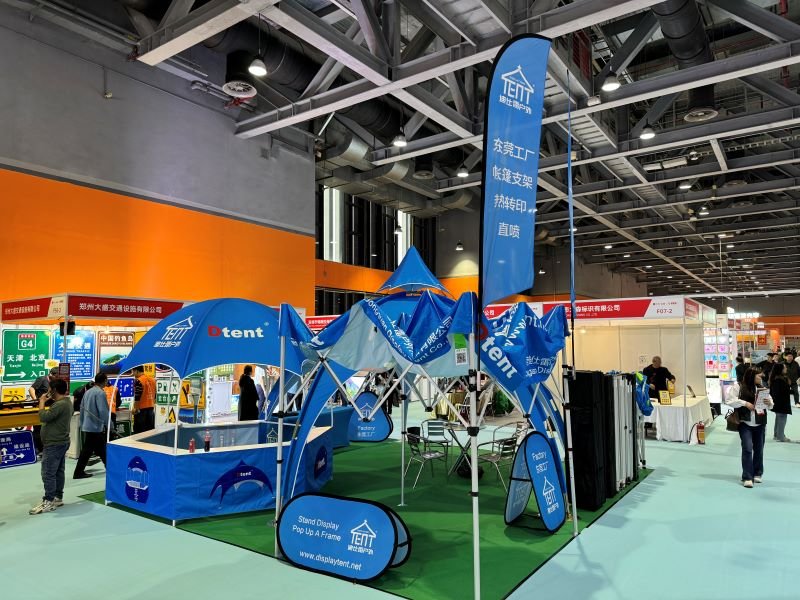
Replacement Part Monopoly in Tents
Replacement part challenges in the tent industry highlight a deeper issue: lack of standardization combined with proprietary design practices.
To avoid being trapped in a replacement part monopoly, buyers must:
- Understand technical specifications
- Demand transparency
- Work with experienced manufacturers
By partnering with companies like Dtent, you can ensure:
- Better compatibility
- Reliable replacement sourcing
- Lower lifetime ownership cost
Вы торговая компания или производитель?
Мы — производитель, специализирующийся на складных шатрах, уличных зонтах, пляжных флагах и рекламных баннерах.
Можете ли вы разработать дизайн на основе моих идей или эскизов?
Да, у нас есть опытные дизайнеры и собственный завод по производству пресс-форм. Мы можем разработать дизайн или изготовить пресс-форму в соответствии с вашими требованиями по конкурентной цене.
Сколько времени занимает изготовление образца?
Образец будет готов в течение 5–7 дней, в зависимости от ваших требований к печати и материалам.
В чем ваше преимущество?
Выгодная цена; экономия времени: мы гарантируем выполнение оптового заказа в течение 30 дней; качественное обслуживание: наши менеджеры обязуются ответить на ваш запрос в течение 12 часов. Контакты. WhatsApp 86 180 3827 3926