

Dans l'industrie des tentes, l'un des points de défaillance les plus négligés, mais pourtant critiques, est le Problème de fixation des connecteurs de tente—surtout par temps froid. Les acheteurs se concentrent souvent sur le tissu, l'épaisseur de la structure ou la structure générale, mais négligent les petits éléments qui assurent la cohésion de l'ensemble : connecteurs et joints.
Si vous avez déjà vécu Les connecteurs en plastique se cassent à 30°F (-1°C) ou moins, la cause première n'est pas aléatoire ; il s'agit d'une défaillance matérielle prévisible provoquée par propriétés mécaniques dépendantes de la température.
Cet article fournit un analyse professionnelle de niveau ingénierie de:
- Pourquoi les connecteurs de tente cassent-ils par temps froid ?
- Différences entre les joints en plastique, en nylon et en aluminium
- Existe-t-il une note de “ rupture à froid ” (et que demander) ?
- Comment évaluer les matériaux et la durabilité des connecteurs
- Comment éviter les échecs coûteux dans les applications réelles
Nous expliquons également pourquoi travailler avec des fabricants expérimentés comme Dtent garantit des performances fiables dans des conditions de températures extrêmes.
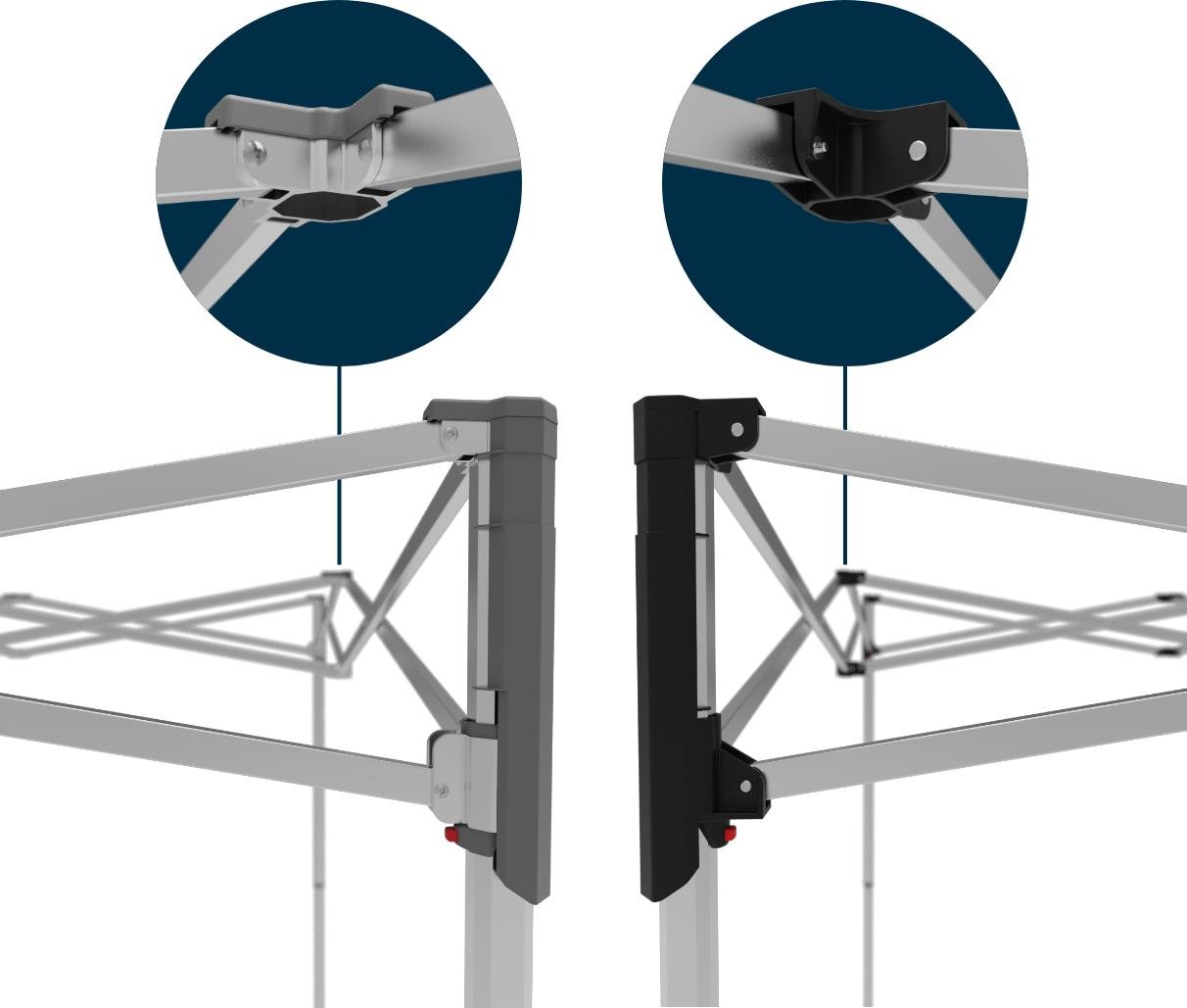
Que sont les connecteurs de tente et pourquoi les connecteurs de tente se cassent-ils ?
Les connecteurs de tente sont les composants de jonction qui se connectent :
- tubes du cadre
- Pieds et fermes
- structures de toiture
- Charnières et systèmes de verrouillage
Ils sont soumis à :
- contrainte de traction
- Charges de cisaillement
- Chargement dynamique répété
- exposition environnementale
Quand connecteurs de tente En fait, c'est généralement dû à :
- Fragilité du matériau
- Faible résistance aux chocs
- Fragilisation à basse température
- Concentration des contraintes de conception
Le problème fondamental : la fragilisation à basse température
La raison principale Les connecteurs de tente s'enclenchent à -1°C (30°F) Les conditions sont un phénomène de science des matériaux connu sous le nom de :
Transition ductile-fragile
À des températures plus basses :
- Les matériaux perdent en flexibilité
- chutes de résistance aux chocs
- La propagation des fissures s'accélère
Ceci est particulièrement crucial pour plastiques et polymères de qualité inférieure, qui peut passer d'un état dur à un état cassant dans une plage de températures étroite.
Connecteurs de tente en plastique : pourquoi ils tombent en panne en premier
Matériaux courants
De nombreuses tentes bon marché utilisent :
- Polypropylène (PP)
- ABS (Acrylonitrile Butadiène Styrène)
- plastiques recyclés
Avantages
- Faible coût
- Facile à mouler
- Léger
Faiblesses critiques
À des températures proches de zéro :
- La résistance aux chocs diminue fortement
- Des microfissures se forment facilement
- Une fracture fragile soudaine se produit
Pourquoi les connecteurs de tente s'enclenchent-ils dans du plastique ?
Les connecteurs en plastique se détériorent pour les raisons suivantes :
- Ils manquent de suffisamment résistance aux chocs à basses températures
- Les contraintes internes dues au moulage créent des points faibles
- Les matériaux recyclés réduisent la consistance
Scénario réel
Un connecteur peut fonctionner correctement à 20 °C, mais :
- Se casse instantanément sous l'effet d'un choc ou d'une contrainte à -1°C
- L'échec survient lors de la configuration, et pas seulement sous charge.

Connecteurs de tente en nylon : une solution de milieu de gamme
Qu'est-ce que le nylon (polyamide) ?
Le nylon est un polymère technique qui possède les propriétés suivantes :
- une plus grande robustesse
- Meilleure résistance à la fatigue
- Performances thermiques améliorées
Avantages
- Meilleure résistance aux chocs que les plastiques standards
- Conserve sa flexibilité à des températures plus basses
- Durée de vie plus longue
Limites
- Toujours touché par le froid extrême
- Peut absorber l'humidité (modifiant les propriétés)
- La qualité varie selon la qualité (par exemple, PA6 vs PA66).
Performances à froid
Connecteurs en nylon de haute qualité :
- Fonctionne de manière fiable jusqu'à environ -20 °C (selon la formulation).
- Résiste mieux à la rupture soudaine que le PP ou l'ABS
Aperçu clé
Tous les nylons ne se valent pas — nylon renforcé de fibres de verre (nylon GF) s'améliore sensiblement :
- Force
- Rigidité
- stabilité thermique
Connecteurs de tente en aluminium : la norme professionnelle
Pourquoi l'aluminium est supérieur
Les connecteurs en aluminium sont largement utilisés dans tentes commerciales et événementielles haut de gamme parce qu'ils :
- Ne pas devenir cassant par temps froid
- Maintenir des propriétés mécaniques constantes
- Offre une capacité de charge supérieure
Avantages
- Excellent rapport résistance/poids
- Aucune défaillance due à la fissuration à froid
- Longue durée de vie
- Haute fiabilité structurelle
Limites
- coût plus élevé
- Fabrication plus complexe
- Légèrement plus lourd que le plastique
Résultat pratique
Si votre demande concerne :
- climats froids
- Configuration fréquente
- Utilisation intensive
Les connecteurs en aluminium constituent la solution la plus fiable pour prévenir défaillances des connecteurs de tente.

Existe-t-il une norme de résistance aux fissures à froid pour les connecteurs de tente ?
Oui, mais c'est rarement standardisé dans l'industrie des tentes.
Ce que vous devriez demander
Au lieu de déclarations vagues, demandez :
1. Données d'essai de résistance aux chocs
- Résultats des essais de choc Izod ou Charpy
- Testé à basses températures (par exemple, -10°C, -20°C)
2. Fiche technique du matériau
Cherchez :
- température de transition vitreuse (Tg)
- courbe de résistance aux chocs en fonction de la température
3. Tests de flexibilité à froid
Demandez si les connecteurs sont testés dans les conditions suivantes :
- Chargement répété à basse température
- Simulated field conditions
4. Certification or Internal Standards
Professional manufacturers may provide:
- Internal cold-weather testing protocols
- Real-use validation data
Réalité du secteur
Most low-cost suppliers do not test for cold performance, which is why tent connectors snap unexpectedly.
Key Factors That Influence Connector Failure
Beyond material type, several engineering factors affect connector durability.
1. Wall Thickness
Thicker connectors:
- Resist cracking better
- Distribute stress more evenly
2. Geometry Design
Sharp corners create:
- Stress concentration points
- Crack initiation zones
3. Reinforcement Structure
High-quality connectors include:
- Ribbing
- Load-distribution features
4. Manufacturing Quality
Poor molding or casting leads to:
- Internal voids
- Weak نقاط
Comparing Plastic vs Nylon vs Aluminum Tent Connectors
| Property | Plastic | Nylon | Aluminium |
|---|---|---|---|
| Cost | Low | Medium | High |
| Force | Low | Medium | High |
| Cold Resistance | Poor | Moderate | Excellent |
| Durabilité | Low | Medium | High |
| Failure Mode | Brittle snap | Gradual deformation | Rare failure |
Key Takeaway
If tent connectors snap in your application, upgrading material is often the most effective solution.
How to Prevent Tent Connectors Snap in Cold Weather
1. Choose the Right Material
- Light-duty → reinforced nylon
- Professional use → aluminum
2. Specify Temperature Requirements
Définir :
- Minimum operating temperature
- Expected environmental conditions
3. Avoid Recycled Plastics
Insist on:
- Virgin material
- Verified composition
4. Test Before Bulk Purchase
Conduct:
- Cold setup testing
- Impact testing in real conditions
Why Dtent Provides Reliable Connector Solutions
Dtent is a professional custom tent manufacturer with extensive experience in producing high-performance event tents for global brands.
Material Selection Expertise
Dtent carefully selects:
- High-grade aluminum alloys
- Reinforced engineering plastics
- Premium nylon materials
Conception axée sur l'ingénierie
Focus on:
- Stress distribution
- Structural integrity
- durabilité à long terme
Real-World Testing
Products are validated under:
- Repeated use cycles
- Environmental stress conditions
- Structural load testing
Expérience de fabrication OEM
With over 10 years of OEM production, Dtent ensures:
- Qualité constante
- Reliable specifications
- Scalable production
When Should You Upgrade to Aluminum Connectors?
Consider switching to aluminum if:
- You operate in cold climates
- You experience repeated connector failures
- Your tents are used commercially or rented frequently
- Safety and reliability are critical
Future Trends in Tent Connector Materials
Le secteur évolue vers :
- Hybrid connectors (metal + polymer)
- Advanced reinforced polymers
- Cold-resistant composite materials
- Precision-engineered joint systems
Manufacturers focusing on engineering performance rather than cost-cutting will define the next generation of tent systems.
Eliminate “Tent Connectors Snap” Failures with Smart Material Choices
The issue of tent connectors snap in cold weather is not a mystery—it is a predictable result of material limitations and poor engineering decisions.
Key conclusions:
- Plastic connectors are prone to brittle failure near freezing
- Nylon offers improved performance but still has limits
- Aluminum provides the highest reliability, especially in cold environments
- “Cold-crack” performance must be verified through testing, not marketing claims
For professional buyers, the solution is clear:
- Specify material requirements
- Demand test data
- Work with experienced manufacturers like Dtent
By doing so, you ensure your tent systems deliver:
- Fiabilité structurelle
- Cold-weather performance
- durabilité à long terme
Vous êtes une société commerciale ou un fabricant ?
Nous sommes un fabricant spécialisé dans les tentes pliantes, les parapluies d'extérieur, les drapeaux de plage et les bannières publicitaires.
Pouvez-vous réaliser un design à partir de mes idées ou de mes dessins ?
Oui, nous avons des concepteurs expérimentés et notre propre usine de moulage. En fonction de vos besoins, nous pouvons concevoir ou ouvrir des moules à des prix compétitifs.
Combien de temps dure l'échantillonnage ?
Les échantillons seront prêts dans un délai de 5 à 7 jours, en fonction de vos exigences en matière d'impression et de matériaux.
Quel est votre avantage ?
Efficacité des coûts ; prix bas ; Efficacité des délais : nous nous engageons à effectuer les livraisons de masse dans les 30 jours Efficacité des services : nos vendeurs s'engagent à répondre à votre demande dans les 12 heures : Nos vendeurs s'engagent à répondre à votre demande dans les 12 heures. whatsapp 86 180 3827 3926