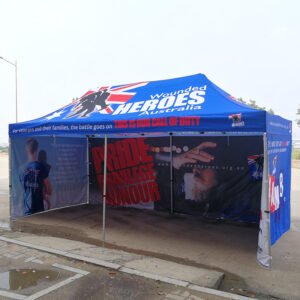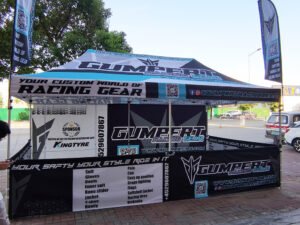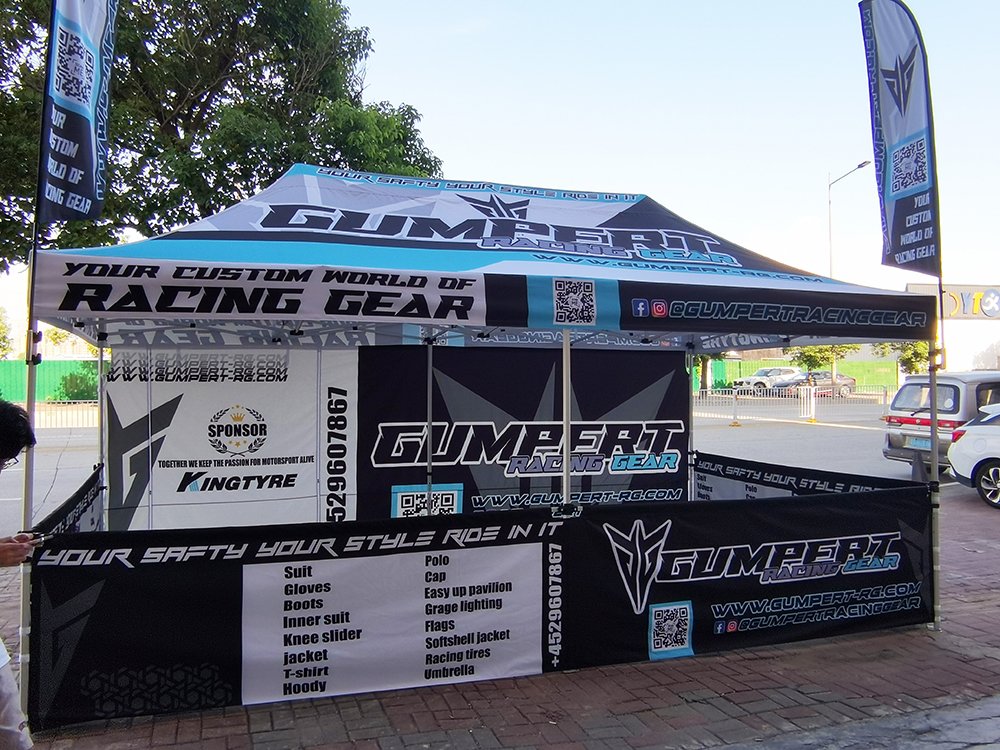
A Auvent escamotable Cette structure temporaire est l'une des plus pratiques pour le marketing extérieur, les expositions, les événements sportifs, les promotions commerciales, les commerces de détail, les festivals et les activités d'entreprise. Sa structure pliable permet un transport et une installation relativement faciles, tandis que le toit et les parois latérales en tissu offrent un espace précieux pour le branding et une protection contre les intempéries.
Cependant, choisir le bon Auvent escamotable Il ne s'agit pas simplement de choisir la plus grande taille disponible.
Un auvent trop petit risque de créer un encombrement pour le personnel, les produits, les tables et les clients. Un auvent inutilement grand peut augmenter les coûts de transport, les besoins d'installation, l'espace de stockage et le coût total du projet.
Pour les marques qui achètent des auvents personnalisés, la bonne décision devrait prendre en compte application, surface disponible, nombre d'utilisateurs, équipement d'affichage, exigences en matière de marque, transport, structure du cadre, tissu, conditions météorologiques et fréquence d'utilisation prévue.
Ce guide explique les plus courants Auvent escamotable des applications et fournit un cadre pratique de sélection des tailles pour les acheteurs commerciaux.
Dtent est un fabricant professionnel de tentes sur mesure, fort de plus de 10 ans d'expérience dans la conception et la fabrication de tentes. Notre usine de 6 000 m² propose des solutions OEM et ODM personnalisées aux marques de différents pays et régions. Nous accompagnons nos clients dans leur développement. auvent pliant sur mesure des produits avec leurs propres dimensions, couleurs, graphismes, logos, tissus, cadres et accessoires.
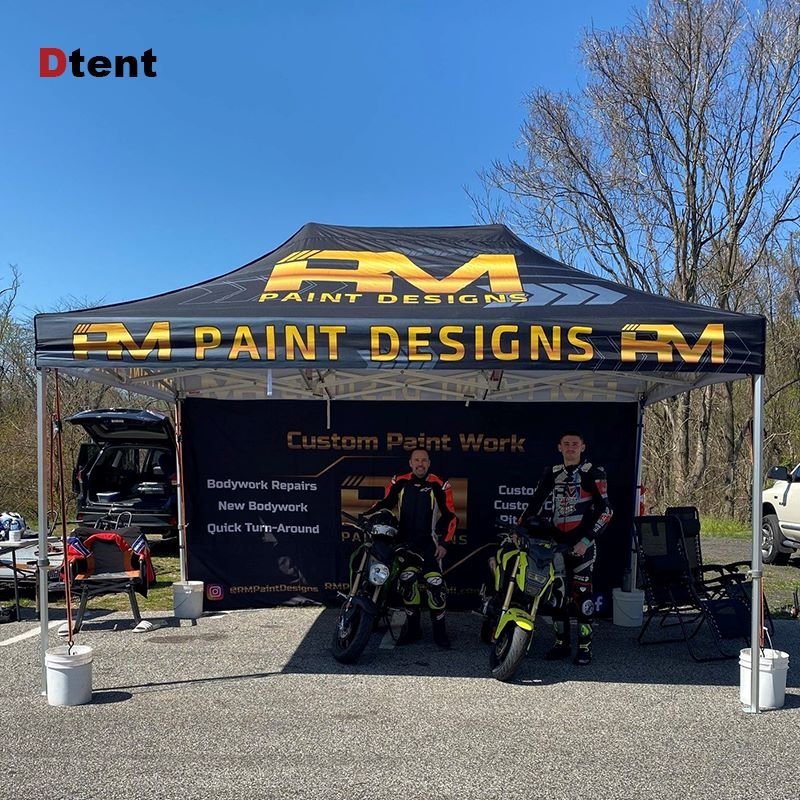
Qu'est-ce qu'un auvent pliable ?
A Auvent escamotable Il s'agit d'un abri pliable et portable construit autour d'une structure repliable. Cette structure utilise généralement des barres de treillis en forme de ciseaux qui permettent à l'abri de se déployer et de se replier.
Une publicité Auvent escamotable peut inclure :
- Cadre pliant
- barres de renfort
- centres de données
- Pieds hexagonaux ou carrés
- Semelles
- Tissu de toiture
- Parois latérales
- Parois arrière
- Fermetures à glissière ou attaches auto-agrippantes
- Sac de transport ou sac à roulettes
- sacs de lestage ou systèmes de ballast
- drapeaux et bannières facultatifs
Le principal avantage réside dans la flexibilité.
Une entreprise peut transporter la structure en auvent vers différents endroits et créer un espace temporaire à son image sans construire de structure permanente.
Lorsqu'il est personnalisé avec un logo d'entreprise, des graphismes de produits, les couleurs de la marque ou des messages marketing, un Auvent escamotable il devient à la fois un abri et une plateforme publicitaire extérieure.
Pourquoi la taille d'un auvent pliable est importante
La taille influe directement sur les performances d'une canopée dans des applications concrètes.
L'emprise au sol détermine l'espace disponible pour :
- Personnel
- Clients
- Tables
- Chaises
- Présentoirs de produits
- guichets d'inscription
- Compteurs
- Équipement
- Stockage
- Matériel promotionnel
Mais l'empreinte écologique n'est qu'un élément à prendre en compte.
L'espace utilisable sous un Auvent escamotable Cela dépend également de la position des pieds, de la conception de la structure, de la géométrie du toit, des parois latérales, des entrées et de l'aménagement intérieur.
Pour cette raison, les acheteurs ne doivent pas choisir une taille en se basant uniquement sur le numéro imprimé dans un catalogue de produits.
Commencez plutôt par les activités qui se dérouleront concrètement sous la canopée.
Guide des tailles des auvents pliables en un coup d'œil
Les dimensions suivantes constituent des points de départ courants pour les applications commerciales.
| Dimensions de l'auvent pliable | Superficie approximative | Applications typiques |
|---|---|---|
| 5 × 5 pi | 25 pieds carrés | Petit stand promotionnel |
| 6 × 6 pi | 36 pieds carrés | Station d'échantillonnage compacte |
| 8 × 8 pieds | 64 pieds carrés | Petit stand de vente au détail ou promotionnel |
| 10 × 10 pi | 100 pieds carrés | Stand de marketing standard |
| 10 × 15 pi | 150 pieds carrés | Écrans de taille moyenne |
| 10 × 20 pi | 200 pieds carrés | Grand stand promotionnel |
| 13 × 13 pi | 169 pieds carrés | Événements plus importants |
| 20 × 20 pi | 400 pieds carrés | Applications commerciales de grande envergure |
Les unités métriques sont également largement utilisées :
- 2 × 2 m
- 3 × 3 m
- 3 × 4,5 m
- 3 × 6 m
- 4 × 4 m
- 4 × 8 m
- 6 × 6 m
La taille optimale dépend de l'application spécifique et non pas simplement du choix de la structure la plus grande.


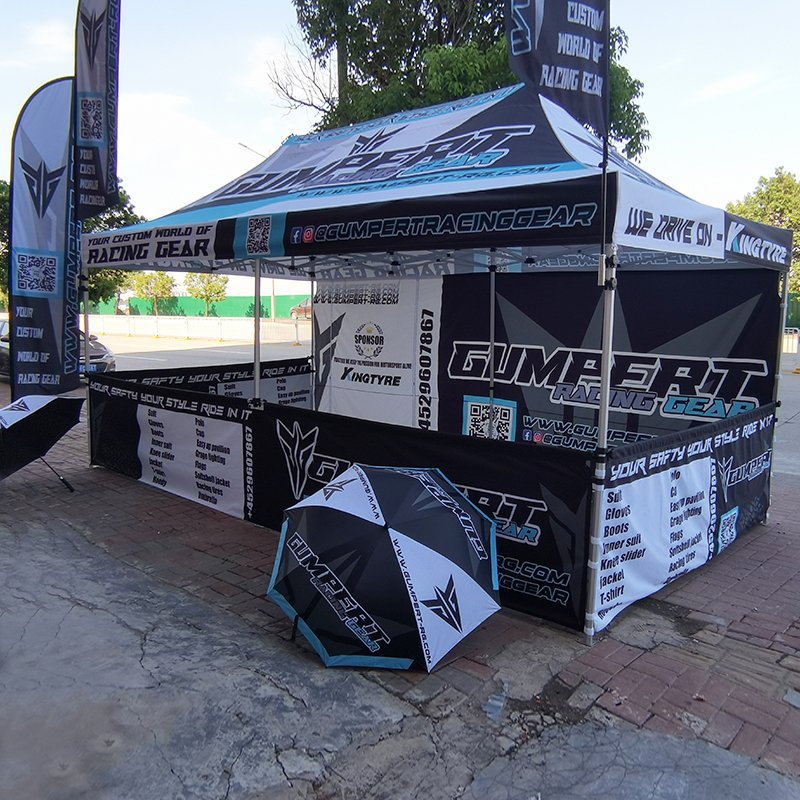
Auvent pliable 10 × 10 : le choix le plus polyvalent
Le 10 × 10 pieds Auvent escamotable est l'une des configurations les plus utilisées.
Elle offre une surface au sol d'environ 100 pieds carrés.
Il convient pour :
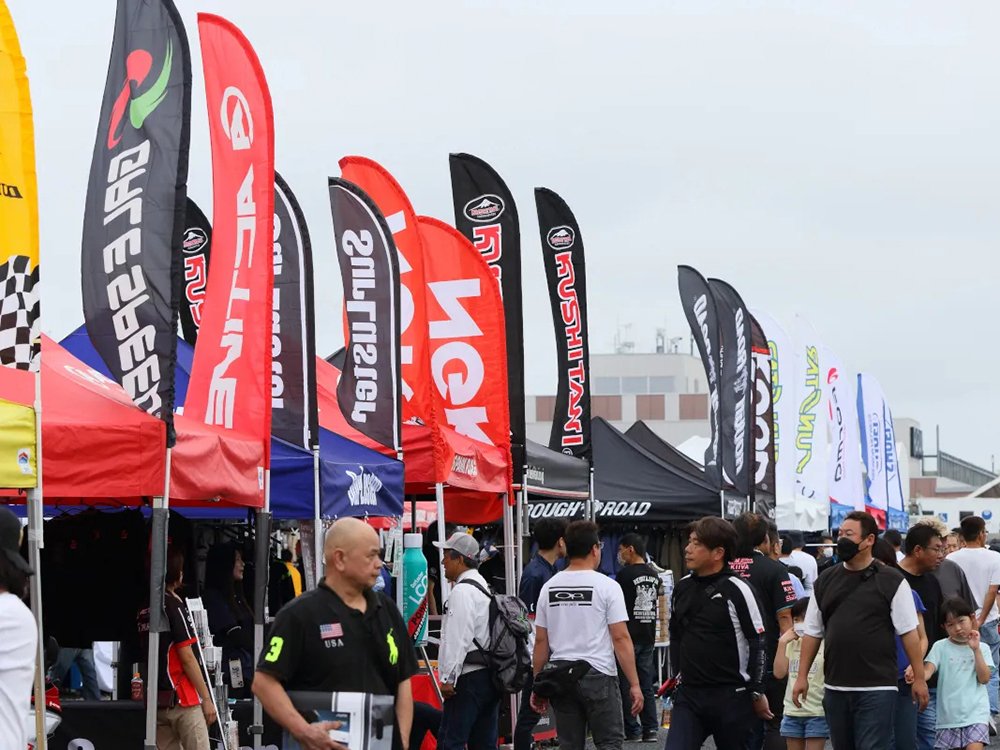
- Salons professionnels
- marchés de producteurs
- événements sportifs
- Promotions de produits
- événements d'entreprise
- Activités scolaires
- Échantillonnage en extérieur
- Petits stands de vente au détail
Un auvent de 10 × 10 est particulièrement utile lorsque les organisateurs d'événements attribuent des emplacements de stands standardisés.
Son format compact facilite également le transport.
Pour les marques participant à de nombreux événements différents, cette taille peut offrir un équilibre pratique entre espace d'affichage, portabilité et zone de marque.
Auvent pliable 10 × 15 : lorsque vous avez besoin de plus d’espace d’exposition
Un espace de 10 × 15 pieds Auvent escamotable offre une surface de couverture d'environ 150 pieds carrés.
Elle offre plus d'espace sans pour autant atteindre la taille d'une configuration 10 × 20.
Cette taille convient parfaitement pour :
- Démonstrations de produits
- vendeurs de nourriture
- Promotions en magasin
- équipes sportives
- Stands événementiels de taille moyenne
- Campagnes d'échantillonnage
Ces 1,5 mètre supplémentaires en longueur peuvent offrir un espace précieux pour des tables, des comptoirs, du matériel ou la circulation des clients.
Chapiteau pliant 10 × 20 : pour les grands présentoirs commerciaux
Un espace de 10 × 20 pieds Auvent escamotable offre une surface au sol d'environ 200 pieds carrés.
Il convient aux entreprises qui ont besoin d'un espace temporaire plus grand.
Les applications typiques comprennent :
- Grandes campagnes promotionnelles
- lancements de produits
- Service de restauration
- marketing automobile
- événements d'entreprise
- compétitions sportives
- Grandes vitrines commerciales
Cependant, une canopée plus large engendre également des considérations supplémentaires.
L'acheteur doit évaluer :
- Transport
- Poids du cadre
- Setup manpower
- Stockage
- Ballast
- Wind exposure
- Site regulations
A larger footprint means a larger exposed fabric area, so stability and anchoring become increasingly important.
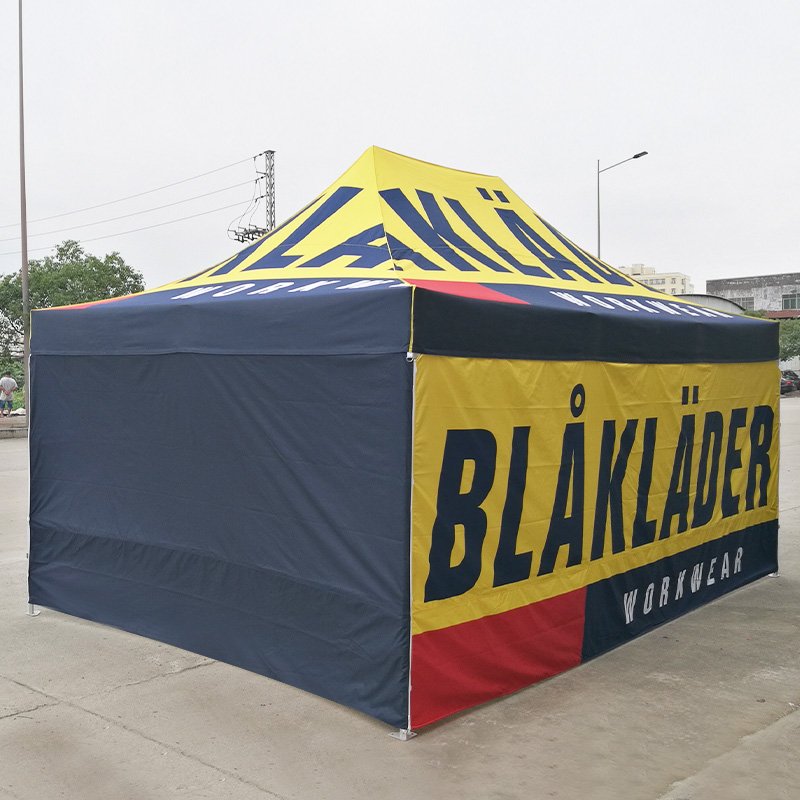
Pop Up Canopy for Trade Shows and Exhibitions
Trade show exhibitors usually need to maximize visibility within a limited footprint.
A Auvent escamotable can provide a recognizable branded environment.
For exhibition applications, buyers should consider:
1. Booth Regulations
Check the organizer’s maximum dimensions before ordering.
2. Branding
Use the roof, valance, and walls as coordinated advertising surfaces.
3. Customer Flow
Leave sufficient room for visitors to enter and move through the booth.
4. Product Display
Consider whether shelves, tables, banners, or counters will be installed.
A 10 × 10 configuration is often appropriate for compact exhibition applications, while larger sizes are better for demonstrations and multiple staff members.
Pop Up Canopy for Sports Events
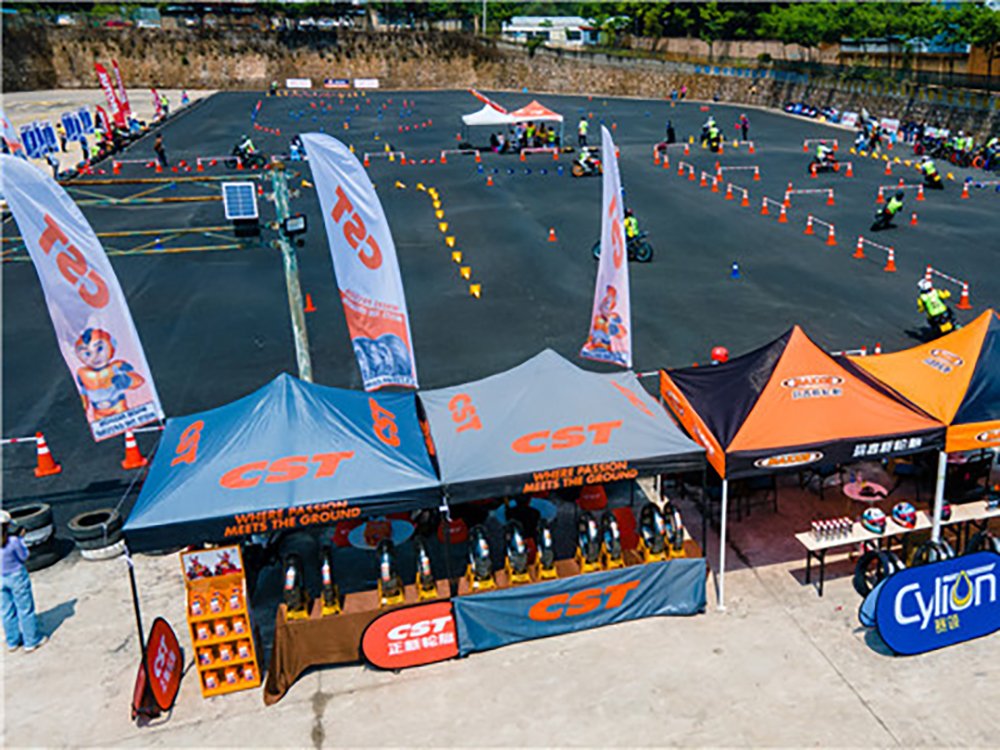
Sports organizations are major users of custom canopies.
Applications include:
- Registration
- Team headquarters
- Player rest areas
- Sponsor activation
- Merchandise sales
- Equipment storage
For sports events, portability is particularly important.
A team may transport its Auvent escamotable between tournaments throughout the season.
A branded roof and sidewalls can display:
- Team logo
- Team colors
- Sponsor logos
- Competition graphics
For this reason, sports canopies are often designed as reusable marketing assets rather than simple shelters.
Pop Up Canopy for Farmers Markets
Farmers market vendors typically need a combination of:
- Product display space
- Weather protection
- Customer access
- Branding
A 10 × 10 Auvent escamotable is often a practical starting point.
However, vendors should also consider how much counter and shelving space is required.
A canopy that looks spacious when empty may become crowded once products, tables, staff, and customers are added.
A useful planning principle is to draw the intended layout before ordering the canopy.

Pop Up Canopy for Food and Beverage Businesses
Food vendors have specialized requirements.
A Auvent escamotable may be used for:
- Food festivals
- Outdoor catering
- Coffee promotions
- Beverage sampling
- BBQ events
- Street markets
The size should account for:
- Preparation area
- Serving counter
- Équipement
- Personnel
- Customer queue
- Stockage
Food-service applications may also require consideration of flame performance, hygiene, ventilation, local regulations, and weather resistance.
The canopy manufacturer should confirm the material specification based on the intended market and application.
Pop Up Canopy for Brand Activation
Brand activation is one of the strongest applications for a custom Auvent escamotable.
Marketing teams may use a canopy to create:
- Product sampling stations
- Interactive experiences
- Photo areas
- Promotional booths
- Mobile retail spaces
For these projects, graphics are often just as important as structure.
The roof and walls can be customized with:
- Logos
- Product images
- Brand colors
- Slogans
- QR codes
- Campaign graphics
A well-designed canopy can create a recognizable brand environment even in a crowded outdoor event.
Pop Up Canopy for Automotive Events
Automotive brands and dealerships frequently need larger branded spaces.
Applications include:
- Vehicle launches
- Test drives
- Motorsport
- Car shows
- Dealer promotions
The canopy may need to accommodate:
- Personnel
- Clients
- Matériel promotionnel
- Tables
- Seating
- Présentoirs de produits
For automotive events, the canopy’s graphics should be designed to remain visually consistent with the vehicle brand.
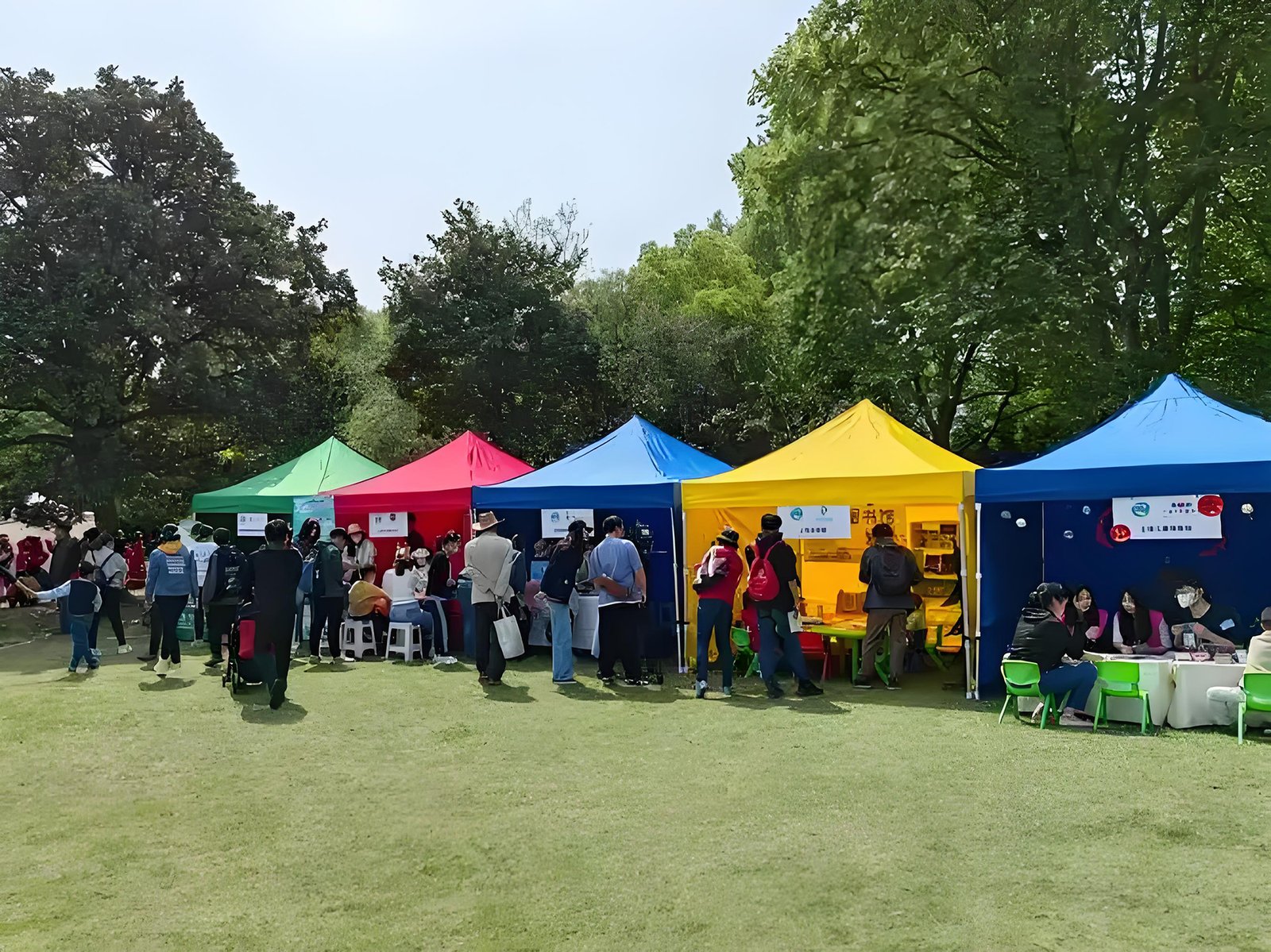
How Many People Can a Pop Up Canopy Accommodate?
There is no universal occupancy number because the usable capacity depends on the layout.
For example, a 10 × 10 Auvent escamotable could be used for:
- A small two-person promotional team
- Several standing visitors
- A registration desk
- Présentoirs de produits
But the same 100-square-foot space may feel crowded if filled with tables, chairs, equipment, and multiple people.
Therefore, buyers should calculate:
Required Area = People Area + Equipment Area + Display Area + Circulation Area
This is more useful than choosing a canopy based only on nominal dimensions.
How to Choose Pop Up Canopy Size Based on Your Application
A simple decision process can help.
Step 1: Define the Primary Function
Demander:
Is the canopy mainly for:
- Branding?
- Product sales?
- Customer service?
- Food preparation?
- Registration?
- Storage?
- Team operations?
Step 2: Count the Users
Estimate the maximum number of staff and customers expected under the canopy.
Step 3: List Everything Going Under the Canopy
Inclure:
- Tables
- Chaises
- Compteurs
- Displays
- Shelves
- Équipement
- Storage boxes
Step 4: Add Circulation Space
People need room to walk.
Do not design the interior as if every square foot can be filled with equipment.
Step 5: Check the Event Site
Confirm:
- Maximum footprint
- Height restrictions
- Access routes
- Ground conditions
- Emergency exits
- Local regulations
Pop Up Canopy Size and Transportation
Size also affects logistics.
A larger Auvent escamotable generally requires:
- Larger packaging
- More storage space
- More transportation capacity
- More setup labor
The frame should be designed around the customer’s logistics system.
For example, a rental company may prioritize compact folded dimensions because its staff repeatedly loads and unloads equipment.
A marketing agency may prioritize roller bags for easier transportation.
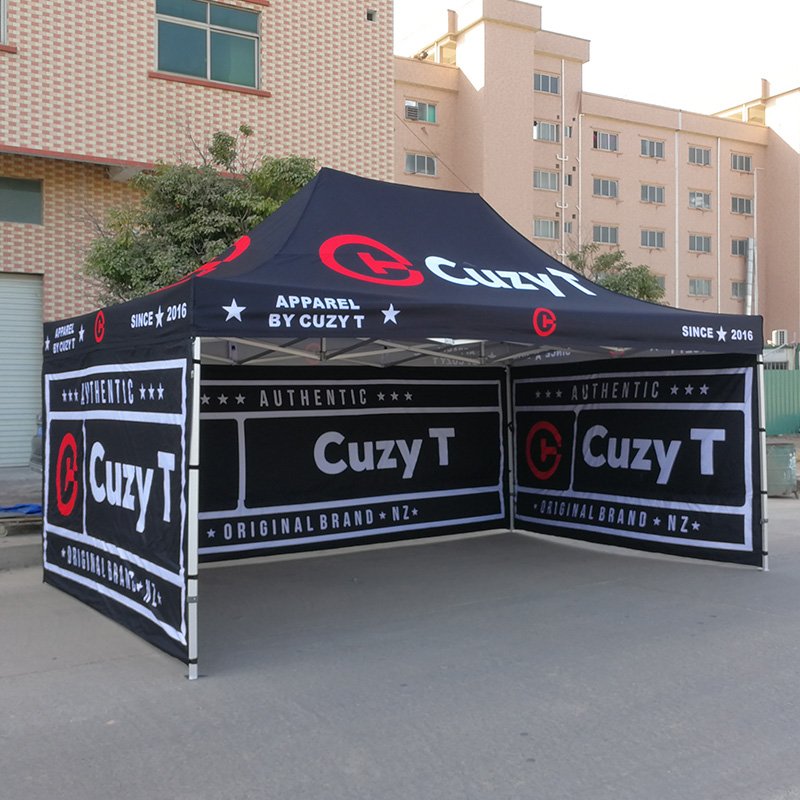
Pop Up Canopy Frame Selection
The frame is the structural skeleton of the canopy.
Important parameters include:
- Alliage d'aluminium
- Acier
- Leg profile
- Épaisseur de paroi
- Truss bar dimensions
- Matériau de connecteur
- Conception de hub
- Foot pad design
For commercial applications, buyers should not evaluate a frame only by its external appearance.
Two frames may look similar but have substantially different material thicknesses, alloy specifications, joint designs, and load-bearing capabilities.
Un professionnel fabricant de tentes pliantes should be able to explain these specifications clearly.
Hexagonal Legs vs. Square Legs
Leg geometry affects structural behavior and user experience.
Hexagonal legs can provide useful stiffness and are widely used in commercial folding canopy systems.
Square legs are also common.
When comparing two products, buyers should evaluate:
- Outer dimension
- Épaisseur de paroi
- Alloy
- Reinforcement
- Connection design
- Telescoping mechanism
A larger outer dimension does not automatically mean a stronger leg.
Material thickness and alloy condition must also be considered.
Pop Up Canopy Fabric Selection
Fabric affects:
- Apparence
- Performance en matière d'étanchéité
- Résistance aux UV
- Qualité d'impression
- Poids
- Durabilité
Common options include:
- 420D polyester
- 500D polyester
- 600D polyester
- Tissu Oxford
- Polyester enduit de PVC
For branded canopies, fabric selection should also consider print compatibility.
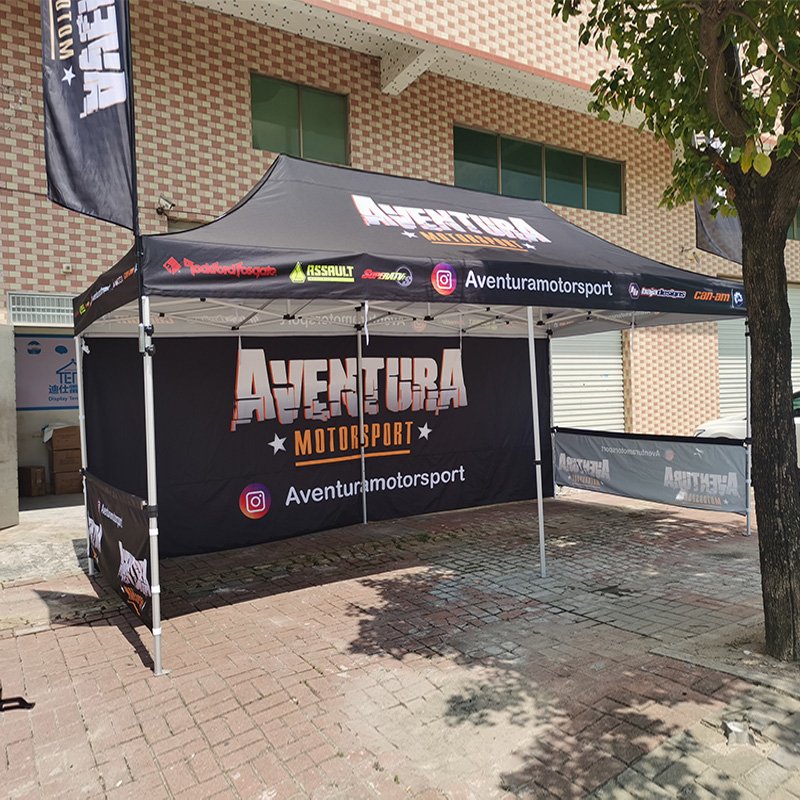
Why Custom Printing Matters for Pop Up Canopies
For many commercial customers, the primary purpose of the canopy is not merely shelter.
It is brand communication.
A custom-printed Auvent escamotable can use almost every visible fabric surface.
Potential printed areas include:
- Toit
- Valance
- Parois latérales
- Backwall
- Door panels
- Bannières
Printing methods may include:
- Dye sublimation
- Impression numérique
- Screen printing
- Heat transfer
The appropriate technology depends on the fabric, image complexity, color requirements, production quantity, and expected outdoor exposure.
Pop Up Canopy Design: Full Printing vs. Partial Printing
Customers do not always need full coverage.
Full Printing
Suitable for brands that want maximum visibility.
Avantages :
- Fort impact visuel
- Complete brand identity
- Large advertising surface
Partial Printing
Suitable for customers with simpler branding requirements.
Examples include:
- Logo-only roof
- Logo on valance
- Printed backwall
This can reduce production costs while maintaining brand recognition.
Weather Considerations When Choosing Pop Up Canopy Size
Size and weather performance are closely related.
A larger canopy presents a larger surface area to wind.
Therefore, buyers should not assume that a large canopy is automatically suitable for every outdoor condition.
Weather planning should consider:
- Vent
- Rain
- exposition aux UV
- Température
- Ground conditions
Appropriate anchoring and ballast should always be determined according to the specific canopy design, site conditions, and applicable safety requirements.
A canopy should never be used outside the manufacturer’s specified operating conditions.

Pop Up Canopy Size Does Not Determine Quality
A common purchasing mistake is assuming:
Bigger = Better
This is not necessarily true.
A high-quality 10 × 10 commercial canopy may outperform a poorly engineered larger canopy in terms of:
- durabilité du cadre
- Ease of setup
- Joint reliability
- Fabric performance
- Qualité d'impression
- Portabilité
The correct question is not:
“What is the biggest canopy I can buy?”
It is:
“What canopy configuration provides enough usable space for my application without creating unnecessary transportation, setup, and structural challenges?”
When Should You Choose a Custom Pop Up Canopy?
Custom manufacturing becomes particularly valuable when standard sizes cannot meet the customer’s requirements.
A custom Auvent escamotable may be appropriate when you need:
- Unique dimensions
- Special frame specifications
- Couleurs personnalisées
- Full-color graphics
- Special sidewalls
- Branding packages
- OEM packaging
- Custom accessories
For brands launching their own product line, OEM manufacturing can also provide greater control over specifications and appearance.
How a Pop Up Canopy Manufacturer Develops a Custom Product
A professional development process normally includes several stages.
1. Requirement Analysis
The manufacturer determines:
- Application
- Taille
- Target market
- Quantity
- Branding requirements
2. Engineering Design
The frame and fabric structure are developed.
3. Artwork Preparation
Customer logos and graphics are converted into production-ready files.
4. Material Selection
Fabric, aluminum, hardware, and accessories are selected.
5. Prototype Production
A sample is produced for evaluation.
6. Testing and Modification
The design is reviewed and adjusted if necessary.
7. Mass Production
Approved specifications are transferred to production.
8. Quality Control
Printing, sewing, frame components, assembly, and packaging are inspected.
How to Choose a Pop Up Canopy Manufacturer
Choisir le bon fabricant de tentes pliantes is as important as choosing the right size.
Ask potential suppliers:
Do you have your own factory?
A factory-controlled supply chain can provide better control over production.
How long have you manufactured tents?
Experience can be particularly important for customized structures.
Can you customize the frame?
A true OEM manufacturer should be capable of discussing frame specifications.
Can you customize printing?
Ask about printing methods, color matching, and outdoor durability.
Can you make samples?
Prototype development reduces risk before mass production.
Do you provide replacement parts?
Commercial users may eventually require replacement components.
Can you support large orders?
Production capacity matters when a brand launches a nationwide campaign.
Why Choose Dtent for Custom Pop Up Canopies?
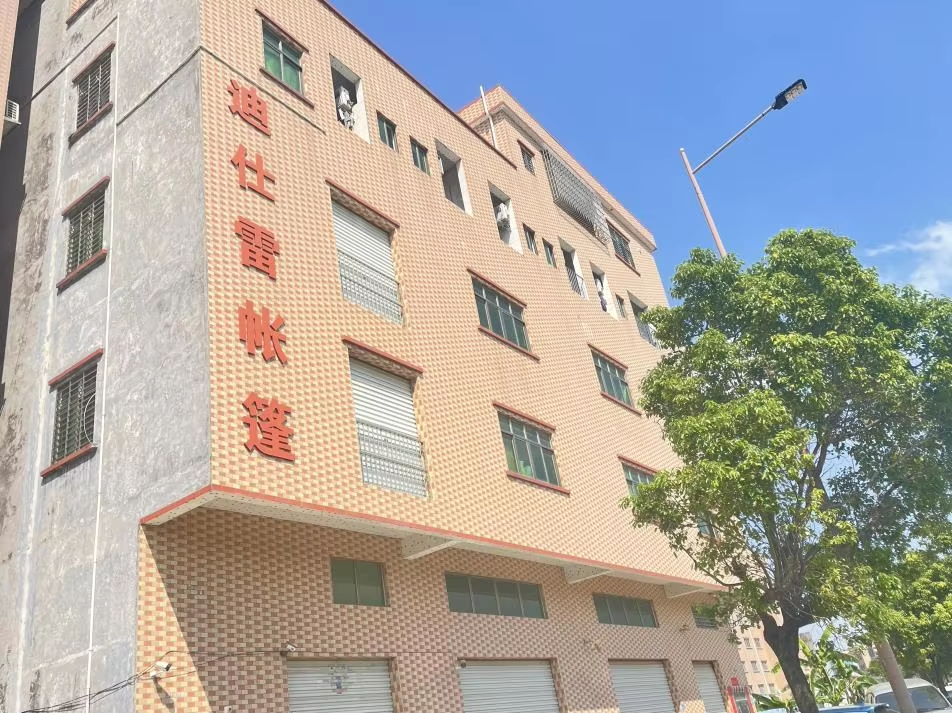
Dtent specializes in customized tents and outdoor display products.
With more than 10 years of tent manufacturing experience et un 6 000㎡ usine, Dtent provides OEM and ODM services for brands in multiple international markets.
Our capabilities include:
- Custom pop up canopy design
- Frame customization
- Fabric selection
- Custom printing
- Roof and sidewall production
- Accessory customization
- Prototype development
- Production de masse
- Quality inspection
- OEM packaging
We understand that a successful Auvent escamotable needs to balance several factors simultaneously.
It must have sufficient usable space while remaining practical to transport. It must look attractive while maintaining structural reliability. It must provide branding opportunities while using fabrics and printing systems appropriate for outdoor exposure.
That is why Dtent approaches canopy development as a complete product engineering project rather than simply printing a logo onto a standard tent.
Pop Up Canopy Size Selection Checklist
Before ordering, commercial buyers should answer the following questions:
Application
What will the canopy be used for?
Number of Users
How many staff and customers need to occupy the space?
Équipement
What tables, counters, displays, or equipment will be placed underneath?
Site
What is the maximum permitted footprint?
Transport
How will the canopy be transported?
Stockage
Where will the canopy be stored between events?
Weather
What outdoor conditions are expected?
Branding
Which surfaces need custom printing?
Frequency
Will the canopy be used occasionally or every week?
Accessoires
Are walls, weight bags, flags, roller bags, or lighting required?
Answering these questions makes it much easier to select the appropriate configuration.
Frequently Asked Questions About Pop Up Canopy Size
What is the most common pop up canopy size?
The 10 × 10 ft configuration is one of the most widely used sizes because it offers a useful balance between usable space, portability, and compatibility with standardized event spaces.
Is a 10 × 10 pop up canopy large enough for four people?
It can accommodate several people, but the actual usable capacity depends on tables, displays, chairs, equipment, and circulation space. Buyers should plan the interior layout rather than relying solely on nominal area.
When should I choose a 10 × 20 pop up canopy?
A 10 × 20 canopy is useful when a business needs approximately 200 square feet of coverage for larger displays, multiple staff members, food service, product demonstrations, or larger promotional activities.
Can I customize the size of a pop up canopy?
Yes. An experienced OEM fabricant de tentes pliantes can develop customized dimensions depending on the required structure, manufacturing process, transport requirements, and application.
Can I print my logo on a pop up canopy?
Yes. The roof, valance, sidewalls, backwalls, and banners can often be customized with logos, graphics, brand colors, and marketing messages.
What fabric should I choose for a printed pop up canopy?
The choice depends on durability, waterproofing, UV exposure, printing requirements, weight, and budget. Common commercial options include polyester and PVC-coated polyester fabrics.
Is a larger pop up canopy always better?
No. A larger canopy provides more space but can increase transportation, storage, setup, ballast, and structural requirements. The best size is the smallest configuration that comfortably satisfies the intended application.
Why should I work with a pop up canopy factory?
Travailler directement avec un fabrique d'auvents pop up can provide better control over frame specifications, materials, printing, sewing, quality control, customization, and OEM development.
Choose Pop Up Canopy Size Based on Application, Not Just Dimensions
Choisir le bon Auvent escamotable starts with understanding how the structure will actually be used.
A 10 × 10 canopy may be ideal for a compact promotional booth, sports team, or farmers market vendor. A 10 × 15 canopy can provide additional display space without becoming excessively large. A 10 × 20 canopy can create a significantly larger commercial environment for product demonstrations, food service, automotive events, and major promotional campaigns.
But size is only one part of the equation.
A successful commercial canopy also depends on frame engineering, fabric selection, waterproofing, printing technology, structural connections, portability, anchoring, accessories, and manufacturing quality.
For brands ordering customized products, working with an experienced fabricant de tentes pliantes can make the entire process more reliable. The manufacturer should be able to translate your marketing requirements into practical engineering specifications and then turn those specifications into a repeatable production product.
With more than 10 years of experience and a 6,000㎡ manufacturing facility, Dtent provides customized tent and outdoor display solutions for international brands. From dimensions and frame construction to fabric, printing, sidewalls, accessories, prototype development, and mass production, Dtent supports customers throughout the OEM manufacturing process.
The right pop up canopy is not necessarily the biggest one. It is the one that provides the right combination of usable space, portability, structural performance, branding, and cost for your specific application.
Vous êtes une société commerciale ou un fabricant ?
Nous sommes un fabricant spécialisé dans les tentes pliantes, les parapluies d'extérieur, les drapeaux de plage et les bannières publicitaires.
Pouvez-vous réaliser un design à partir de mes idées ou de mes dessins ?
Oui, nous avons des concepteurs expérimentés et notre propre usine de moulage. En fonction de vos besoins, nous pouvons concevoir ou ouvrir des moules à des prix compétitifs.
Combien de temps dure l'échantillonnage ?
Les échantillons seront prêts dans un délai de 5 à 7 jours, en fonction de vos exigences en matière d'impression et de matériaux.
Quel est votre avantage ?
Efficacité des coûts ; prix bas ; Efficacité des délais : nous nous engageons à effectuer les livraisons de masse dans les 30 jours Efficacité des services : nos vendeurs s'engagent à répondre à votre demande dans les 12 heures : Nos vendeurs s'engagent à répondre à votre demande dans les 12 heures. whatsapp 86 180 3827 3926