
Lorsque les acheteurs évaluent un tente dôme, ils se concentrent généralement sur les éléments les plus évidents :
- Diamètre du dôme
- tubes du cadre
- Matériau de couverture
- Résistance au vent
- Apparence
Cependant, des ingénieurs expérimentés et des professionnels fabricants de tentes dôme Sachez que les parties les plus importantes d'une tente dôme sont souvent les plus petites.
Spécifiquement:
Les connecteurs, les moyeux, les boulons, les goupilles et les systèmes de fixation.
Une tente dôme commerciale typique peut contenir :
- 100 à plus de 500 boulons
- Des dizaines d'assemblages de moyeux
- Des centaines de points de connexion
Chaque rafale de vent, chaque changement de température, chaque charge de neige et chaque cycle d'installation transmet une force à travers ces connecteurs.
En tant que fabricant professionnel de tentes, Dtent reçoit fréquemment des questions telles que :
“ La structure de ma tente dôme semble en bon état, mais pourquoi le connecteur a-t-il lâché ? ”
“ La plaque du moyeu s'est tordue après quelques mois. Est-ce normal ? ”
“ Comment puis-je savoir si les pièces métalliques sont en acier à haute résistance ou en métal plaqué bon marché ? ”
“ Pourquoi certaines tentes dôme durent-elles 10 ans alors que d'autres développent des problèmes de connexion après une seule saison ? ”
La réponse réside souvent dans la compréhension fatigue des connecteurs, choix des matériaux et ingénierie des structures.
Ce guide explique tout ce que les acheteurs doivent savoir sur la fiabilité des connecteurs de tentes dôme et comment identifier les systèmes de connexion de haute qualité avant d'effectuer un achat.

Pourquoi les connecteurs de tente dôme sont plus importants que la structure
De nombreux acheteurs supposent :
Tube solide = dôme solide.
En réalité :
La solidité d'une structure en dôme dépend de son point de connexion le plus faible.
Imaginez une chaîne.
Même si 99% des maillons sont solides, un seul maillon faible détermine la résistance finale.
Le même principe s'applique à une tente dôme.
Les tubes servent principalement au transport de charges.
Les connecteurs transfèrent ces charges.
En cas de défaillance des connecteurs :
- Modifications de la géométrie structurelle
- Déplacement des chemins de chargement
- Un stress supplémentaire se développe
- L'échec progressif devient possible
Dans de nombreux cas, la défaillance du connecteur survient bien avant la défaillance du châssis.
Comprendre la fatigue des connecteurs dans une tente dôme
L'un des concepts d'ingénierie les plus mal compris est la fatigue.
Beaucoup de gens pensent que le métal ne cède que lorsqu'il est surchargé.
En réalité, la plupart des défaillances structurelles sont dues à :
Chargement répété
Au lieu d'une seule force importante.
Chaque expérience sous une tente dôme :
- Vibrations du vent
- dilatation thermique
- Tension du tissu
- Mouvement d'installation
- Stress lié aux transports
Avec le temps, ces forces créent des fissures microscopiques.
Ce processus est appelé :
Fatigue des métaux
Un connecteur peut survivre :
- 1 000 livres une fois
Pourtant, ils échouent sous :
- 200 livres répété des milliers de fois
Cela explique pourquoi un connecteur peut se casser subitement alors qu'il semble intact.
Pourquoi les connecteurs bon marché tombent en panne plus rapidement
L'industrie mondiale des tentes présente une énorme variation en termes de qualité du matériel.
Deux connecteurs peuvent paraître identiques.
Pourtant, leurs performances peuvent varier considérablement.
Les causes courantes comprennent :
- Différents alliages
- Différents traitements thermiques
- Différentes méthodes de fabrication
- Différents revêtements
C’est pourquoi les acheteurs ne doivent jamais juger un matériel informatique uniquement sur son apparence.

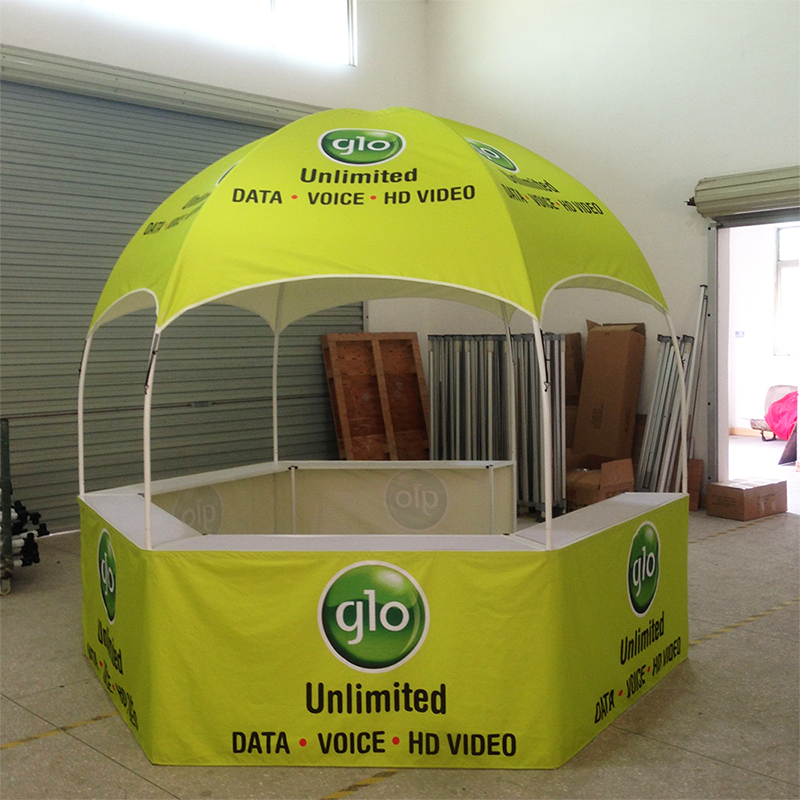
Le plus gros problème : les connecteurs en alliage de zinc
L'une des défaillances les plus courantes survient dans les systèmes à faible coût. tentes dômes qui utilisent des pièces moulées à base de zinc.
Ces produits sont souvent commercialisés sous l'appellation :
- Connecteurs métalliques
- Connecteurs renforcés
- Moyeux robustes
Bien que techniquement vrai, le contenu réel peut être :
- Alliage de zinc
- Pot metal
- moulage sous pression de qualité inférieure
Pourquoi les connecteurs en alliage de zinc posent problème
Avantages :
- Bon marché
- Facile à lancer
- apparence attrayante
Inconvénients :
- résistance à la traction inférieure
- résistance à la fatigue réduite
- Comportement de rupture fragile
- vulnérabilité à la corrosion
Sous chargements répétés :
Des fissures peuvent se former sans prévenir.
Finalement:
Le connecteur s'enclenche.
Acier à haute résistance contre alliage de zinc
Comparons.
Acier à haute résistance
Résistance à la traction typique :
- 800–1200 MPa
Caractéristiques:
- Excellente résistance à la fatigue
- ductilité élevée
- Performances à fort impact
- Longue durée de vie
alliage de zinc
Résistance à la traction typique :
- 200–400 MPa
Caractéristiques:
- résistance à la fatigue réduite
- Fragile sous contrainte
- Plus susceptible de se fissurer
Pour tente dôme commerciale Pour certaines applications, l'acier à haute résistance est généralement le choix privilégié.
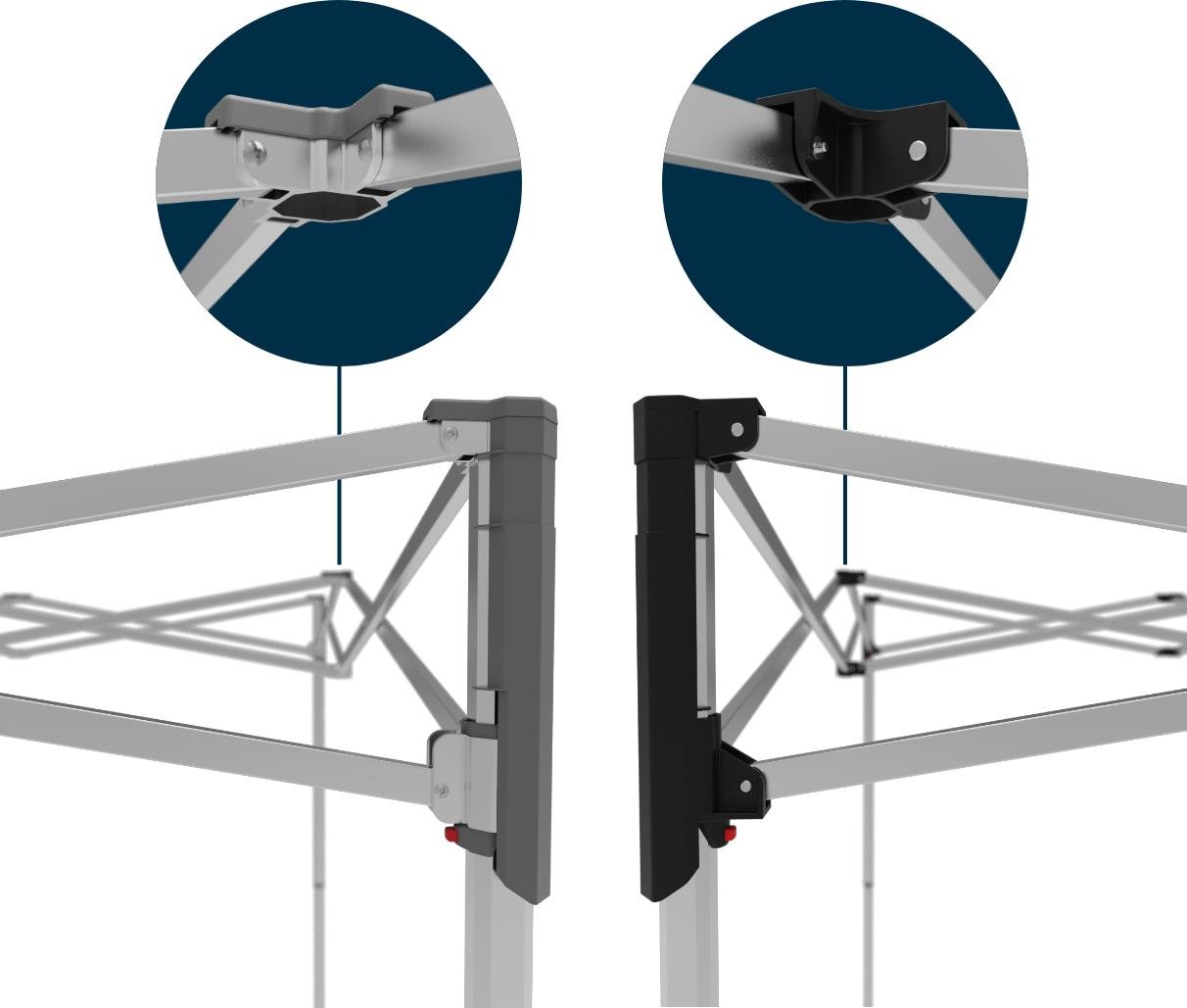
Comment identifier les matériaux des connecteurs
La plupart des fournisseurs ne divulguent jamais les spécifications des matériaux des connecteurs.
Les acheteurs ont donc besoin de méthodes de vérification alternatives.
Méthode 1 : Demander les certificats de matériaux
Une personne réputée fabricant de tentes dôme devrait fournir :
- Rapports sur les matériaux
- certificats d'usine
- Spécifications matérielles
Demander:
“ De quel matériau sont faits les moyeux ? ”
Les réponses professionnelles incluent :
- Acier Q235
- Acier Q355
- acier inoxydable 304
- Aluminium 6061-T6
- aluminium 6082-T6
Méfiez-vous des réponses vagues comme :
- Métal de qualité supérieure
- qualité industrielle
- robuste
Ces termes n'ont aucune signification technique.
Méthode 2 : Vérifier le poids
Les connecteurs en acier à haute résistance sont nettement plus lourds que les pièces moulées en zinc.
Si un connecteur semble anormalement léger :
Une enquête plus approfondie est nécessaire.
Le poids à lui seul n'est pas déterminant.
Mais cela peut être un indicateur utile.
Méthode 3 : Inspection des surfaces de fracture
En cas de défaillance d'un composant :
Observez la pause.
alliage de zinc
Affichage typique :
- Texture granuleuse
- bords tranchants
- Fracture fragile
Acier
Affiche généralement :
- Déformation ductile
- S'étirer avant l'échec
- Couvrance visible
Pourquoi les boulons sont plus importants que les acheteurs ne le pensent
Un moyeu haut de gamme peut tout de même tomber en panne si des boulons bon marché sont utilisés.
De nombreux échecs de tentes dôme sont dus à :
- étirement des boulons
- Dénudage du fil
- Corrosion
- fissures de fatigue
Comprendre les classes de boulons
Le matériel professionnel utilise généralement :
Niveau 8.8
Applications structurelles courantes.
10e année, 9e année
Structures commerciales à plus haute résistance.
12e année, 9e année
Applications extrêmes.
Les fournisseurs à bas prix utilisent parfois :
- Matériel non classé
- Fixations génériques
- boulons décoratifs
Ces produits peuvent sembler identiques, mais leur résistance est nettement inférieure.
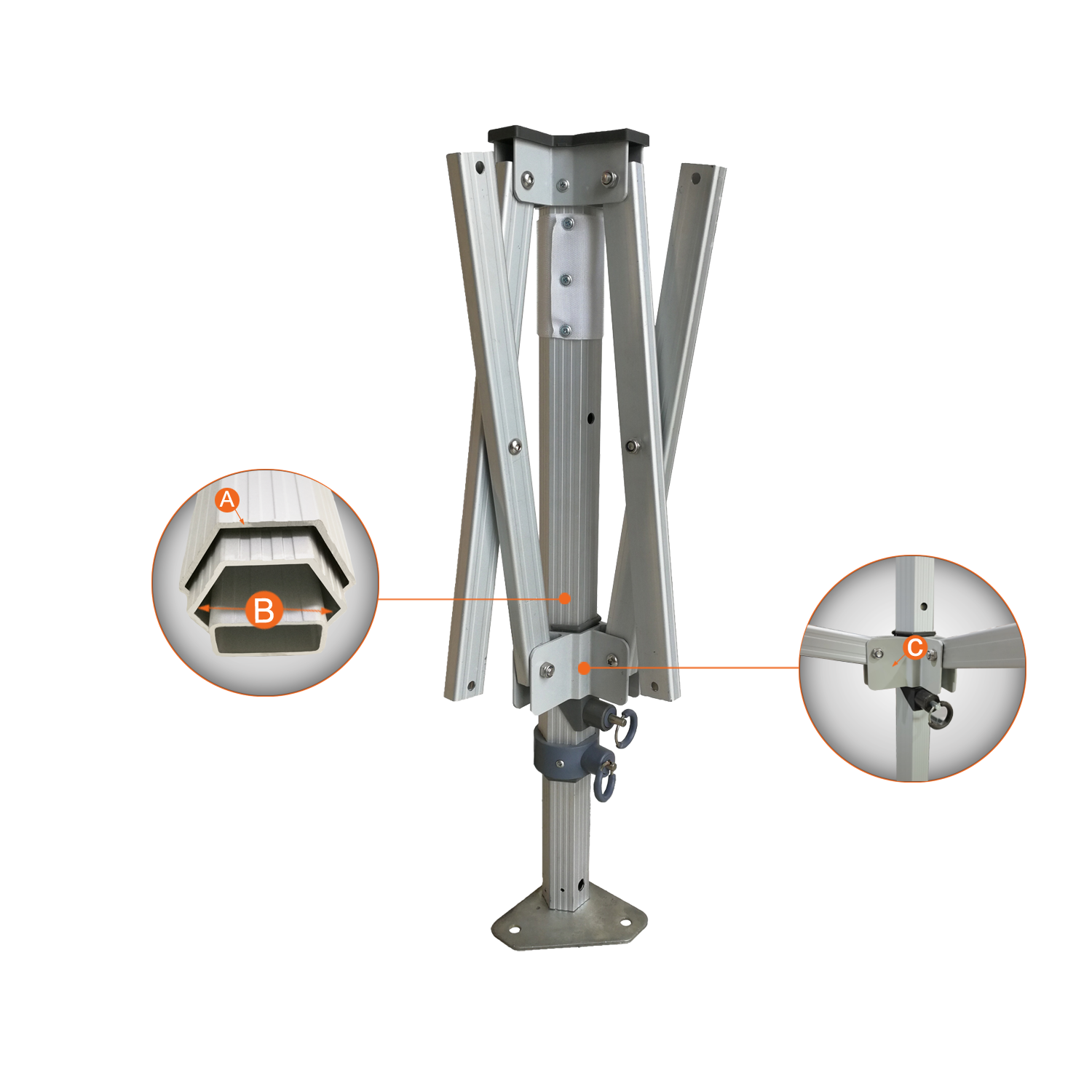
Pourquoi la rouille accélère la défaillance des connecteurs
La corrosion n'est pas qu'un simple problème esthétique.
La rouille modifie les propriétés mécaniques du métal.
Cela crée :
- Piqûres de surface
- Points d'amorçage des fissures
- Section transversale réduite
Les fissures de fatigue apparaissent souvent au niveau des zones de corrosion.
C’est pourquoi la protection contre la corrosion est essentielle.
Quincaillerie galvanisée ou en acier inoxydable
Acier galvanisé
Avantages :
- rentable
- Bonne résistance à la corrosion
Inconvénients :
- Le revêtement finit par s'user.
Acier inoxydable
Avantages :
- Excellente résistance à la corrosion
- Durée de vie plus longue
Inconvénients :
- coût plus élevé
En milieu côtier, les accessoires en acier inoxydable offrent souvent des performances supérieures sur le long terme.
Pourquoi la conception des hubs est souvent plus importante que les matériaux
De nombreux acheteurs se concentrent uniquement sur la résistance du métal.
Cependant:
Même un métal robuste peut céder si la conception du moyeu est défectueuse.
Les défauts de conception courants incluent :
- Angles aigus
- Concentrations de stress
- Plaques minces
- goussets insuffisants
- mauvaise répartition de la charge
Ces problèmes amplifient la charge de fatigue.
Le danger caché de la concentration du stress
Les défaillances en ingénierie commencent souvent par :
- trous de boulons
- bords de soudure
- Transitions abruptes
Ces zones concentrent le stress.
Au fil du temps:
Des fissures se forment et s'agrandissent.
Professionnel usines de tentes dôme utiliser:
- Géométries arrondies
- plaques de renfort
- Chemins de chargement optimisés
Pour minimiser la concentration des contraintes.
Moyeux soudés vs moyeux moulés
Hubs de distribution
Avantages :
- Production rapide
- coût inférieur
Inconvénients :
- Porosité potentielle
- Qualité variable
Moyeux en acier fabriqués
Avantages :
- Meilleure cohérence
- force supérieure
- Inspection plus facile
Inconvénients :
- Coût de fabrication plus élevé
De nombreux projets de tentes dômes commerciales privilégient les moyeux préfabriqués.
Facteurs environnementaux qui accélèrent la fatigue des connecteurs
Températures élevées
La chaleur provoque :
- cycles d'expansion
- Augmentation du stress
Vibrations du vent
Les micromouvements continus accélèrent la fatigue.
Environnements côtiers
Le sel accélère la corrosion.
Charges de neige
La compression à long terme augmente la contrainte sur les connecteurs.
Assemblage fréquent
Les sociétés de location montent et démontent souvent des structures à plusieurs reprises.
Cela engendre une usure supplémentaire.
Questions que tout acheteur devrait poser à un fabricant de tentes dôme
Avant d'acheter, demandez :
De quel matériau sont faits les moyeux ?
Quelles sont les qualités de boulons utilisées ?
Des certificats de matériaux sont-ils disponibles ?
La quincaillerie est-elle galvanisée ou en acier inoxydable ?
Quels tests de fatigue ont été effectués ?
Quelle est la résistance au vent de conception ?
Quelle est la durée de vie prévue ?
Les fournisseurs professionnels devraient pouvoir répondre à ces questions avec assurance.
Comment Dtent garantit la fiabilité des connecteurs
En tant que professionnel fabricant de tentes dôme, Dtent comprend que la qualité des connecteurs détermine directement la fiabilité structurelle.
Notre approche comprend :
Conception basée sur l'ingénierie
Nous privilégions :
- Répartition de la charge
- résistance à la fatigue
- Longévité structurelle
Sélection de matériel de qualité
Le matériel est sélectionné en fonction de :
- Force
- résistance à la corrosion
- durabilité à long terme
Contrôle de la qualité de la fabrication
Chaque lot de production subit :
- Inspection dimensionnelle
- Vérification des matériaux
- Tests d'assemblage
Applications de qualité commerciale
Nos systèmes de tentes dômes sont utilisés pour :
- Evénements
- Expositions
- Projets hôteliers
- Activations de la marque
- installations commerciales
Expérience de fabrication OEM
Avec plus de 10 ans d'expérience dans la fabrication de tentes et une usine de production de 6 000 mètres carrés, Dtent propose des solutions de tentes dômes personnalisées aux marques internationales, aux distributeurs, aux sociétés de location et aux organisateurs d'événements.
Tendances futures en matière de technologie de connecteurs pour tentes dômes
Le secteur évolue vers :
Alliages structuraux à haute résistance
Connecteurs usinés CNC
Systèmes de fixation résistants à la corrosion
Optimisation par analyse par éléments finis
Surveillance structurelle intelligente
Ces innovations améliorent la sécurité tout en prolongeant la durée de vie.
Le connecteur est souvent la partie la plus importante d'une tente dôme.
A tente dôme peut contenir des tubes et des tissus d'une valeur de plusieurs milliers de dollars.
Pourtant, toute la structure repose sur des composants matériels relativement petits.
Lors de l'évaluation d'une tente dôme :
Ne vous concentrez pas uniquement sur :
- Diamètre
- Apparence
- Poids
Au lieu de cela, enquêtez :
- Matériau de connecteur
- Qualité des boulons
- Protection contre la corrosion
- Conception de hub
- résistance à la fatigue
Le meilleur usine de tentes dôme n'est pas celui qui propose le prix le plus bas.
C’est le fabricant qui peut expliquer précisément comment ses connecteurs sont conçus, testés et vérifiés.
Car dans les systèmes structurels, la fiabilité est rarement déterminée par le composant le plus volumineux.
Elle est déterminée par la plus petite unité qui supporte la charge.
Vous êtes une société commerciale ou un fabricant ?
Nous sommes un fabricant spécialisé dans les tentes pliantes, les parapluies d'extérieur, les drapeaux de plage et les bannières publicitaires.
Pouvez-vous réaliser un design à partir de mes idées ou de mes dessins ?
Oui, nous avons des concepteurs expérimentés et notre propre usine de moulage. En fonction de vos besoins, nous pouvons concevoir ou ouvrir des moules à des prix compétitifs.
Combien de temps dure l'échantillonnage ?
Les échantillons seront prêts dans un délai de 5 à 7 jours, en fonction de vos exigences en matière d'impression et de matériaux.
Quel est votre avantage ?
Efficacité des coûts ; prix bas ; Efficacité des délais : nous nous engageons à effectuer les livraisons de masse dans les 30 jours Efficacité des services : nos vendeurs s'engagent à répondre à votre demande dans les 12 heures : Nos vendeurs s'engagent à répondre à votre demande dans les 12 heures. whatsapp 86 180 3827 3926