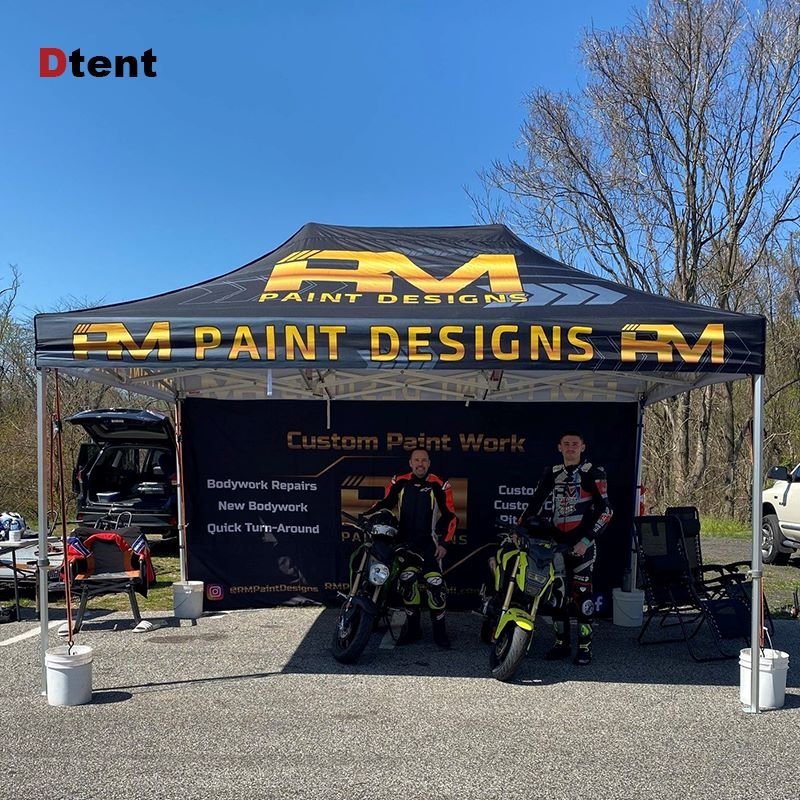


One of the biggest misconceptions about a tente dôme is that its large interior volume automatically guarantees comfort.
Many event organizers, glamping operators, exhibition managers, and brand activation teams assume that because a dome tent is spacious, it will naturally remain cool during the day and dry overnight.
Unfortunately, reality is often very different.
Many users experience what professional tent engineers call:
The Dome Tent Sauna Effect
Common complaints include:
- “My dome tent becomes unbearably hot by noon.”
- “The inside feels like a greenhouse.”
- “The ventilation windows don’t seem to help.”
- “Every morning the roof is covered with water droplets.”
- “Guests think the tent is leaking, but it’s actually condensation.”
En tant que personne expérimentée fabricant de tentes dôme, Dtent regularly helps customers solve temperature, humidity, and ventilation challenges for dome installations used in:
- Événements en plein air
- Salons professionnels
- glamping de luxe
- Sports facilities
- Hospitality venues
- Temporary commercial structures
The truth is that ventilation and condensation are not simple airflow problems.
They are the result of complex interactions between:
- Solar radiation
- Fabric materials
- Dome geometry
- Air exchange rates
- Occupancy levels
- Weather conditions
- Insulation systems
In this guide, we explain why dome tents become hot, why condensation forms, and what practical engineering solutions actually work.
Why Dome Tent Become So Hot in Summer
The first step is understanding the physics.
Many people blame:
- Fabric quality
- Lack of windows
- Poor ventilation
While these factors matter, the primary cause is actually:
Solar Heat Gain
Every dome tent functions like a giant solar collector.
During daylight hours:
- Sunlight passes through the cover material
- Surfaces absorb radiant energy
- Interior air temperature rises
This effect becomes even more pronounced because of the dome shape.
Why the Dome Shape Amplifies Heat
A dome structure has several advantages:
- Excellent rapport résistance/poids
- Aerodynamic wind resistance
- apparence attrayante
However, from a thermal perspective, the geometry creates challenges.
A dome tent has:
Large Surface Area
Compared with traditional rectangular structures.
This means:
More surface exposure to sunlight.
Curved Heat Collection
Throughout the day, different parts of the dome continuously face the sun.
Unlike flat-roof structures, the dome captures solar radiation from multiple angles.
Heat Stratification
Warm air naturally rises.
The dome shape encourages hot air to accumulate at the highest point.
Cela crée :
- Higher peak temperatures
- Reduced comfort
- Increased humidity
Why White Dome Tents Still Get Hot
De nombreux acheteurs supposent :
White fabric equals a cool interior.
While white covers reflect more sunlight than dark colors, they do not eliminate heat gain.
Even premium white PVC can still transmit:
- Light energy
- Infrared radiation
- Conductive heat
As a result:
Interior temperatures may exceed outdoor temperatures by:
- 10°F–30°F (5°C–17°C)
Depending on conditions.
The Greenhouse Effect Inside a Dome Tent
The greenhouse effect is one of the biggest reasons a dome tent feels like an oven.
The process works like this:
Step 1
Sunlight enters the tent.
Step 2
Interior surfaces absorb heat.
Step 3
Heat is re-radiated as infrared energy.
Step 4
The cover material traps a portion of this energy.
Step 5
Interior temperatures continue rising.
This cycle can dramatically increase thermal buildup.


Why Standard Ventilation Flaps Often Fail
Most tentes dômes inclure:
- Roof vents
- Side vents
- Ventilation flaps
These features are useful.
But they often fail to solve the problem entirely.
Why?
Because ventilation requires more than openings.
It requires:
Airflow
Without sufficient airflow:
A vent is simply a hole.
The Difference Between Ventilation and Air Exchange
Many manufacturers advertise:
- Ventilated dome tent
- Breathable dome tent
- Airflow system
But true cooling requires:
Air Intake
Fresh air entering the structure.
Air Exhaust
Warm air leaving the structure.
Pressure Differential
A force that drives airflow.
Without all three elements:
Ventilation performance remains limited.
The Stack Effect: The Most Effective Cooling Principle
Professional engineers rely on a concept called:
Stack Ventilation
Hot air rises naturally.
If properly designed:
- Cool air enters low openings
- Warm air exits high openings
This creates continuous airflow.
Many low-cost dome tents include roof vents but insufficient lower intake openings.
Le résultat :
Poor air circulation.
Why Morning Condensation Forms
Condensation is frequently mistaken for leakage.
En réalité :
Many dome tents that appear to leak are completely waterproof.
The water comes from inside.
Understanding the Dew Point
Air contains moisture.
The amount depends on:
- Température
- Humidité
Warm air holds more moisture.
When temperatures drop overnight:
The air reaches its dew point.
Water vapor becomes liquid.
Condensation appears.
Sources of Moisture Inside a Dome Tent
Many users underestimate how much moisture is generated.
Common sources include:
Human Respiration
Each person releases significant water vapor overnight.
Cooking Activities
Food preparation dramatically increases humidity.
Wet Clothing
Rain gear and damp equipment contribute moisture.
Ground Evaporation
Moisture rises from the ground beneath the structure.
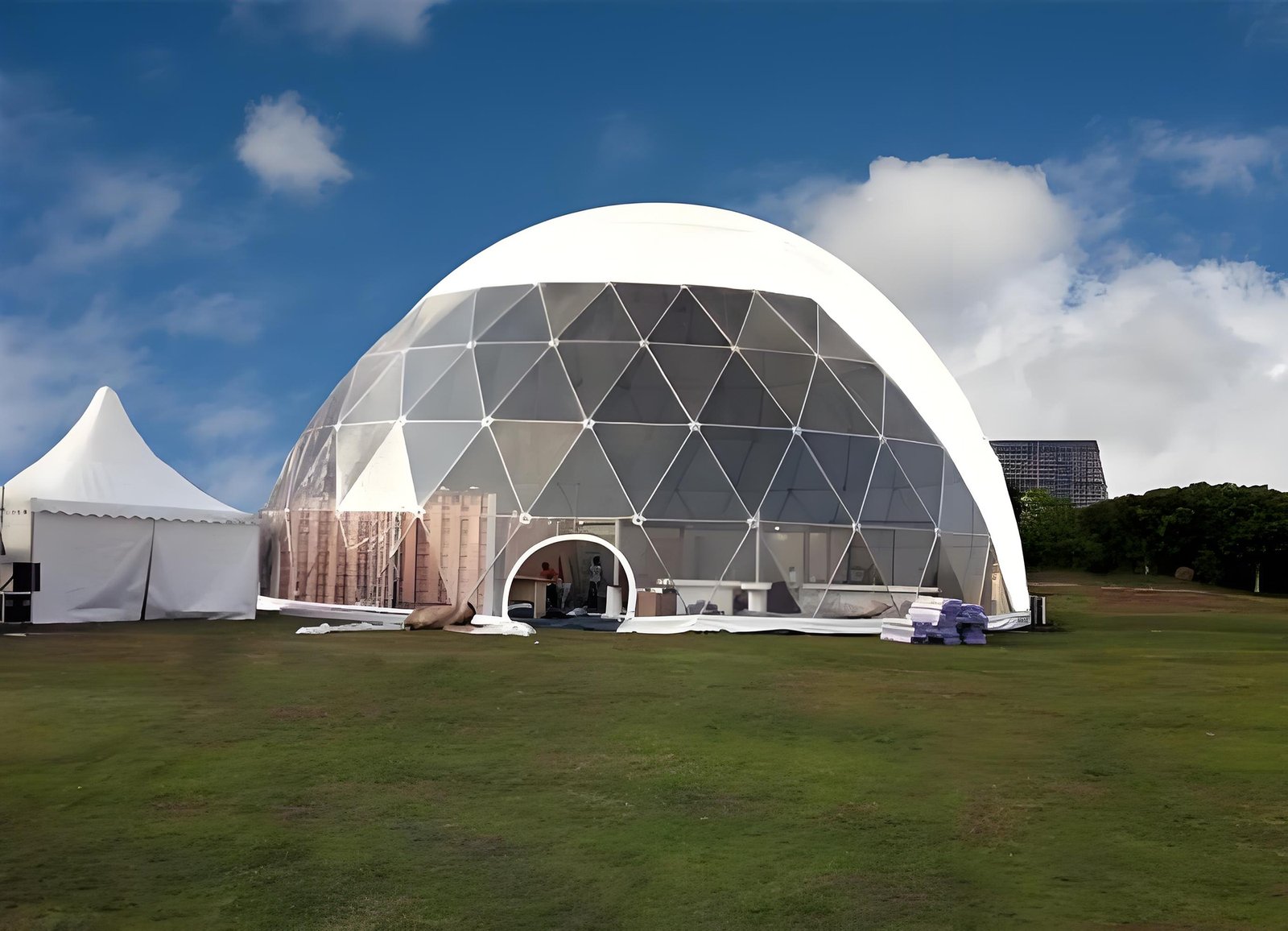
Why Dome Tents Experience More Condensation
A tente dôme has characteristics that encourage condensation.
Large Roof Surface
More area for moisture to condense.
Cooler Night Surface Temperatures
Radiative cooling lowers fabric temperature.
Limited Insulation
Most event dome tents use single-layer covers.
Without insulation:
Interior surfaces cool rapidly.
Why Ventilation Alone Cannot Eliminate Condensation
This is a crucial concept.
De nombreux acheteurs supposent :
More vents = no condensation.
Pas nécessairement.
Ventilation reduces moisture.
But if humidity production exceeds airflow capacity:
Condensation still occurs.
This is especially common when:
- Temperatures drop sharply
- Occupancy is high
- Weather is humid
The Most Effective Solutions for Dome Tent Cooling
Solution 1: Double-Layer Insulated Covers
One of the best upgrades.
Les avantages comprennent :
- Reduced solar heat gain
- Lower interior temperatures
- Reduced condensation
The air gap acts as insulation.
Solution 2: Reflective Exterior Coatings
Premium fabrics can incorporate:
- Reflective pigments
- Solar-reflective coatings
- Infrared-blocking layers
These significantly reduce thermal buildup.
Solution 3: Mechanical Ventilation
Commercial installations often use:
- Exhaust fans
- Air circulation systems
- Powered roof extraction
This creates controlled airflow.
Solution 4: High-Level Exhaust Vents
Positioning is critical.
Hot air naturally accumulates at the dome apex.
Roof exhaust systems are highly effective.
Solution 5: Ground Vapor Barriers
A common but overlooked solution.
Moisture from the ground contributes heavily to humidity.
Professional installations use:
- Vapor barriers
- Raised flooring systems
- Moisture-resistant foundations
How Insulation Reduces Condensation
Many people associate insulation only with winter.
Cependant:
Insulation also improves summer performance.
Les avantages comprennent :
- Reduced temperature fluctuations
- Warmer interior surface temperatures at night
- Lower condensation risk
This is why luxury glamping domes frequently use insulated liners.
Choosing the Right Dome Tent Material
Not all covers perform equally.
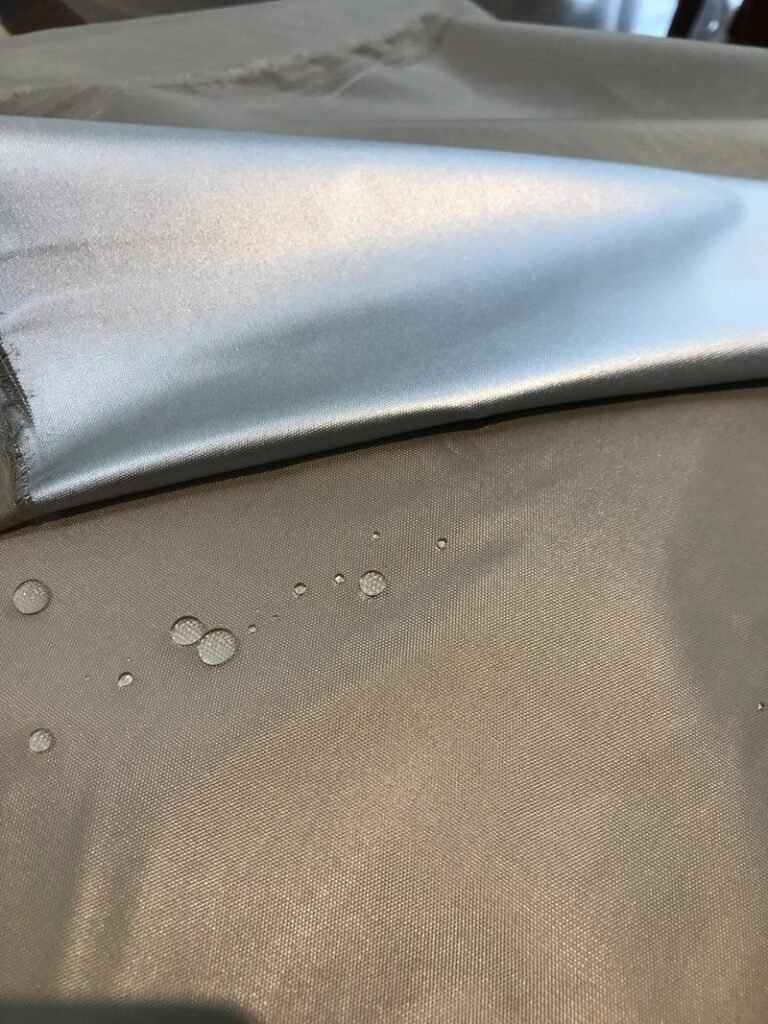
PVC-Coated Fabric
Avantages :
- Imperméable à l'eau
- Durable
- Résistant aux UV
Common in commercial dome tent applications.
PVC with Blackout Layer
Avantages :
- Reduced light transmission
- Reduced solar gain
Increasingly popular in hospitality projects.
Insulated Composite Fabrics
Premium option.
Provides superior thermal performance.
Questions à poser à un fabricant de tentes dôme
Before purchasing a tente dôme, ask:
What is the solar reflectivity of the fabric?
Is an insulated liner available?
How many air exchanges per hour are recommended?
Are mechanical ventilation options available?
Does the design include low-level air intake?
What condensation-control features are offered?
These questions often reveal whether a supplier truly understands thermal performance.
How Dtent Designs Comfortable Dome Tent Systems
En tant que professionnel fabricant de tentes dôme, Dtent understands that comfort is just as important as structural strength.
Notre approche comprend :
Material Optimization
We select fabrics based on:
- Résistance aux UV
- Reflectivity
- Thermal performance
Custom Ventilation Design
Projects can include:
- Roof ventilation systems
- Sidewall airflow solutions
- Mechanical exhaust integration
Insulation Options
For long-term installations, we offer:
- Double-layer covers
- Thermal liners
- Enhanced comfort systems
Customized Project Support
With over 10 years of manufacturing experience and a 6,000㎡ production facility, Dtent provides tailored dome tent solutions for:
- Evénements
- Expositions
- Hospitality venues
- Glamping resorts
- installations commerciales
Future Trends in Dome Tent Climate Control
The industry is rapidly evolving.
Emerging technologies include:
Smart Ventilation Systems
Solar-Powered Exhaust Fans
Reflective Membrane Fabrics
Active Climate Monitoring
Integrated HVAC Solutions
These innovations help transform the modern dome tent from a temporary shelter into a comfortable all-season environment.
Why Dome Tents Become Hot and Why Condensation Persists
The “sauna effect” is not caused by a single flaw.
It results from a combination of:
- Solar heat gain
- Greenhouse effects
- Insufficient airflow
- Ground moisture
- Poor insulation
- Improper ventilation design
Similarly, morning condensation is usually not a waterproofing failure.
It is a predictable result of humidity, temperature changes, and airflow limitations.
The best-performing dome tent is not simply the strongest structure.
It is the one designed to manage:
- Chaleur
- Airflow
- Humidité
- Occupant comfort
Lors de l'évaluation d'un usine de tentes dôme ou fabricant de tentes dôme, look beyond frame specifications and wind ratings. Thermal performance, ventilation engineering, and condensation management are equally important factors that determine whether a dome tent becomes a comfortable event space—or an uncomfortable summer oven.
Vous êtes une société commerciale ou un fabricant ?
Nous sommes un fabricant spécialisé dans les tentes pliantes, les parapluies d'extérieur, les drapeaux de plage et les bannières publicitaires.
Pouvez-vous réaliser un design à partir de mes idées ou de mes dessins ?
Oui, nous avons des concepteurs expérimentés et notre propre usine de moulage. En fonction de vos besoins, nous pouvons concevoir ou ouvrir des moules à des prix compétitifs.
Combien de temps dure l'échantillonnage ?
Les échantillons seront prêts dans un délai de 5 à 7 jours, en fonction de vos exigences en matière d'impression et de matériaux.
Quel est votre avantage ?
Efficacité des coûts ; prix bas ; Efficacité des délais : nous nous engageons à effectuer les livraisons de masse dans les 30 jours Efficacité des services : nos vendeurs s'engagent à répondre à votre demande dans les 12 heures : Nos vendeurs s'engagent à répondre à votre demande dans les 12 heures. whatsapp 86 180 3827 3926