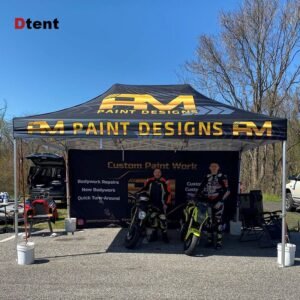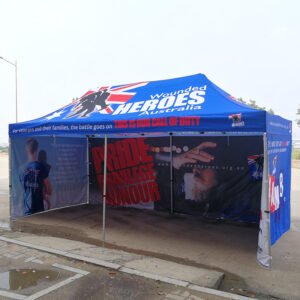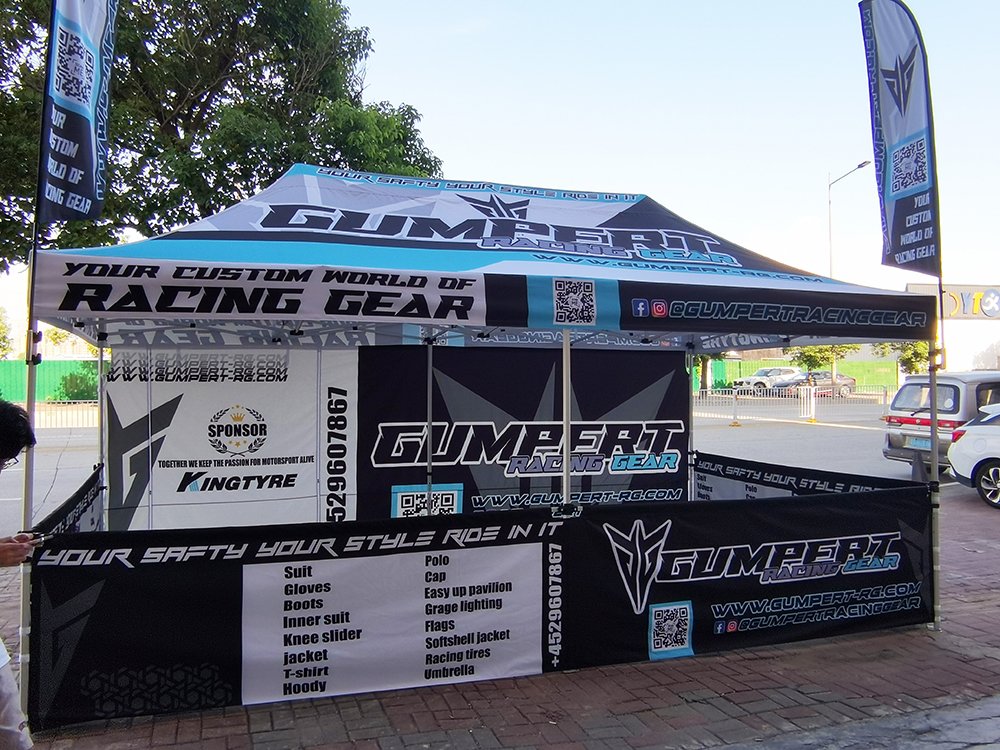


Dans le tente événementielle Dans ce secteur, la présentation visuelle est primordiale. Une tente aux spécifications techniques apparemment parfaites peut néanmoins… paraître peu professionnel sur les photos prises dans la vie réelle si la toile du toit s'affaisse, se froisse ou ne parvient pas à conserver une pointe nette.
Ce problème, souvent décrit comme un “ toit affaissé ”, est l'une des plaintes les plus fréquentes des distributeurs, des organisateurs d'événements et des sociétés de location. Cependant, la cause profonde est rarement un facteur unique. Il s'agit plutôt généralement du résultat de… déséquilibre de tension à l'intérieur du système de tente, impliquant la découpe du tissu, la géométrie structurelle et la tension interne du ressort du pôle supérieur.
Cet article fournit un analyse de niveau ingénieur professionnel des systèmes de tension des tentes, pour vous aider à comprendre :
- Pourquoi les toits des tentes semblent-ils affaissés sur les photos ?
- Le rôle de la coupe des patrons de tissu par rapport à la tension structurelle
- Comment fonctionne la tension du ressort du pôle supérieur
- Comment diagnostiquer et résoudre les problèmes de tension
- Comment choisir un fabricant de haute qualité comme Dtent
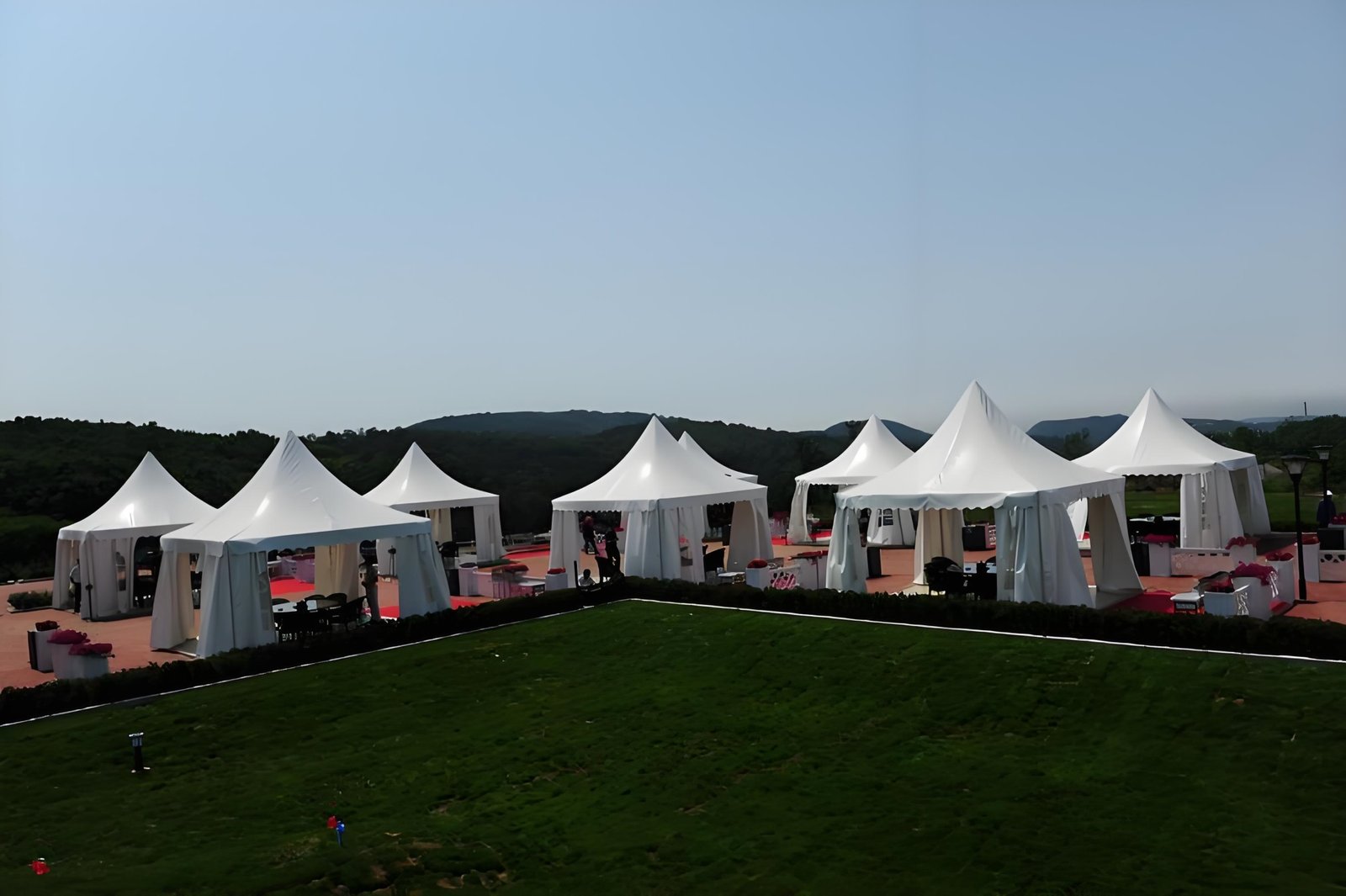
Qu’est-ce que la tension de la toile de tente et pourquoi est-elle importante ?
La tension de la tente fait référence à la répartition contrôlée de la force sur le tissu de la canopée, en veillant à ce que la surface reste :
- Lisse
- Serré
- Structurellement stable
- Visuellement attrayant
Un toit de tente correctement tendu :
- Évacue l'eau efficacement
- Résiste à la poussée du vent
- Maintient une forme aérodynamique
- Améliore la présentation de la marque
Lorsque la tension est insuffisante ou inégale, le résultat est le suivant :
- Tissu affaissé
- Rides et plis
- accumulation d'eau
- Mauvaise qualité visuelle des photos
Le problème des “ toits affaissés ” : symptômes et idées reçues
Symptômes courants
- creux visibles entre les cadres
- Rides rayonnant depuis le sommet
- Tissu lâche près des bords ou des coins
- Surface irrégulière sous éclairage
Idées fausses courantes
De nombreux acheteurs supposent :
- “ Le tissu est de mauvaise qualité. ”
- “ La tente est trop grande ”
- “ Il suffit de le resserrer manuellement. ”
En réalité, le problème est généralement un défaillance de tension au niveau du système, pas un seul défaut.
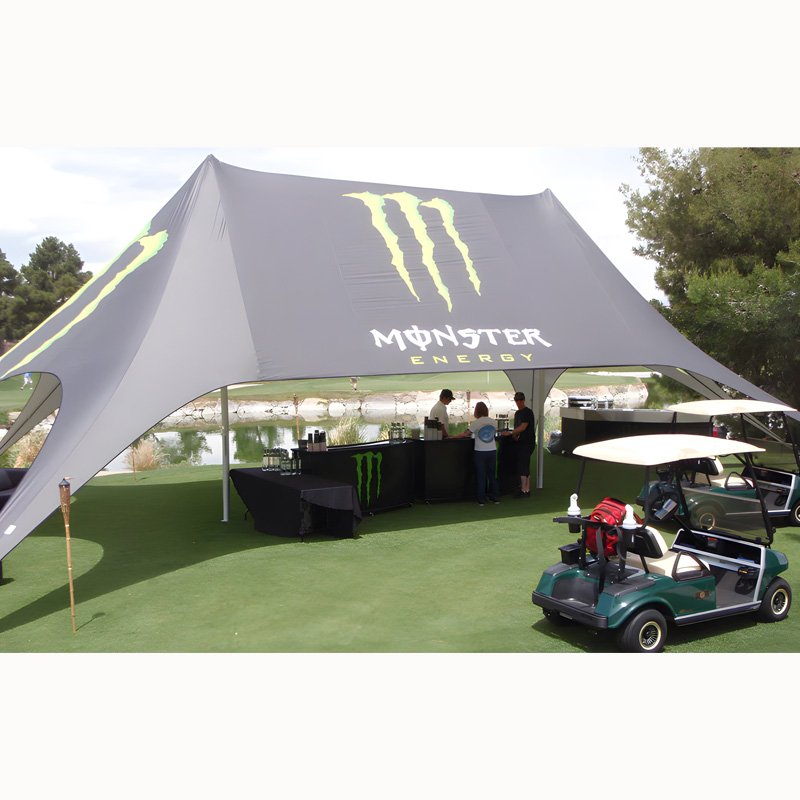
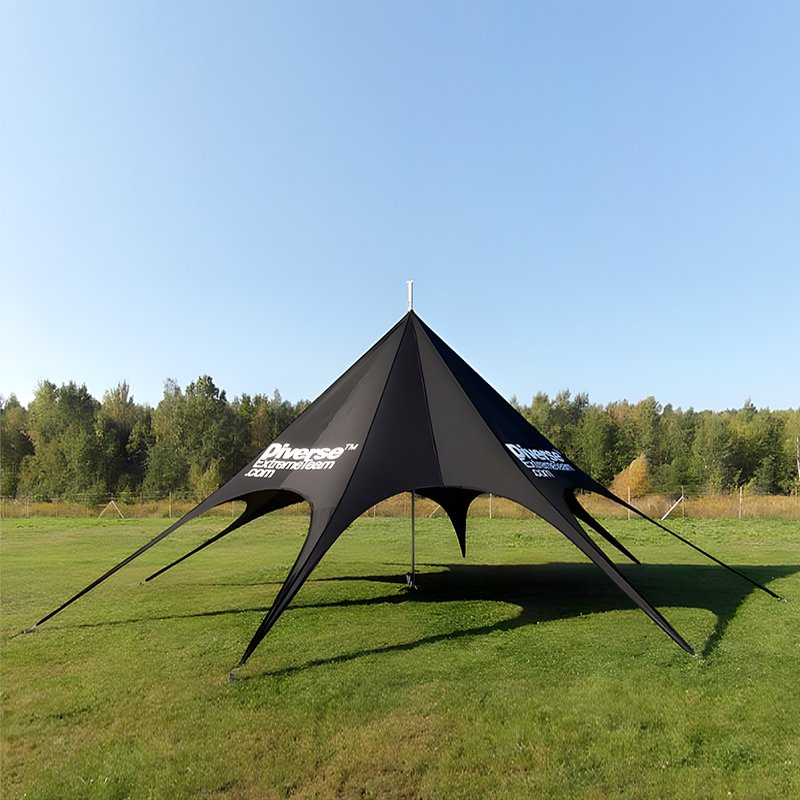
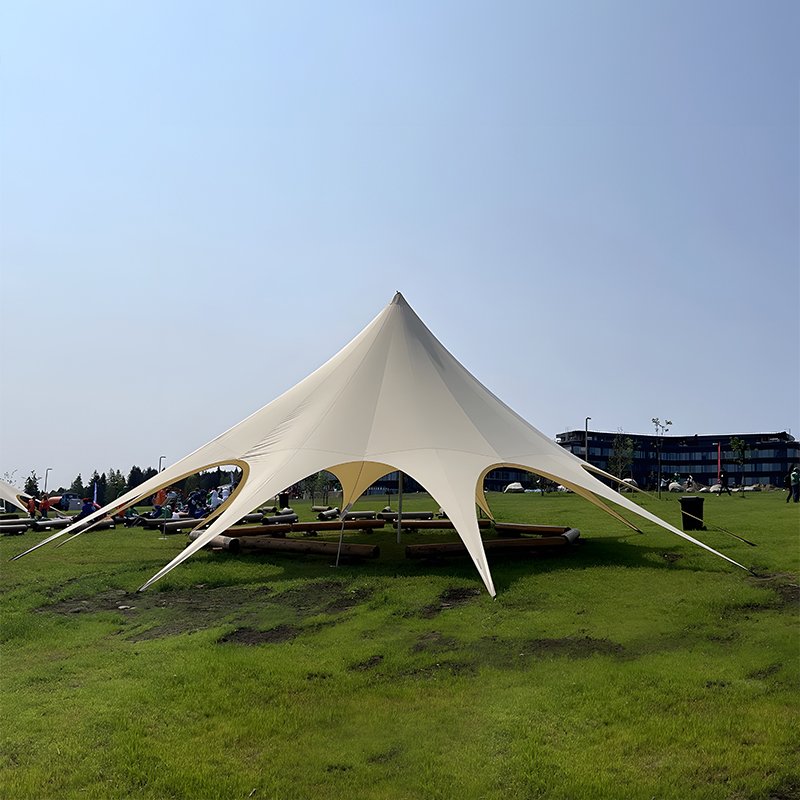
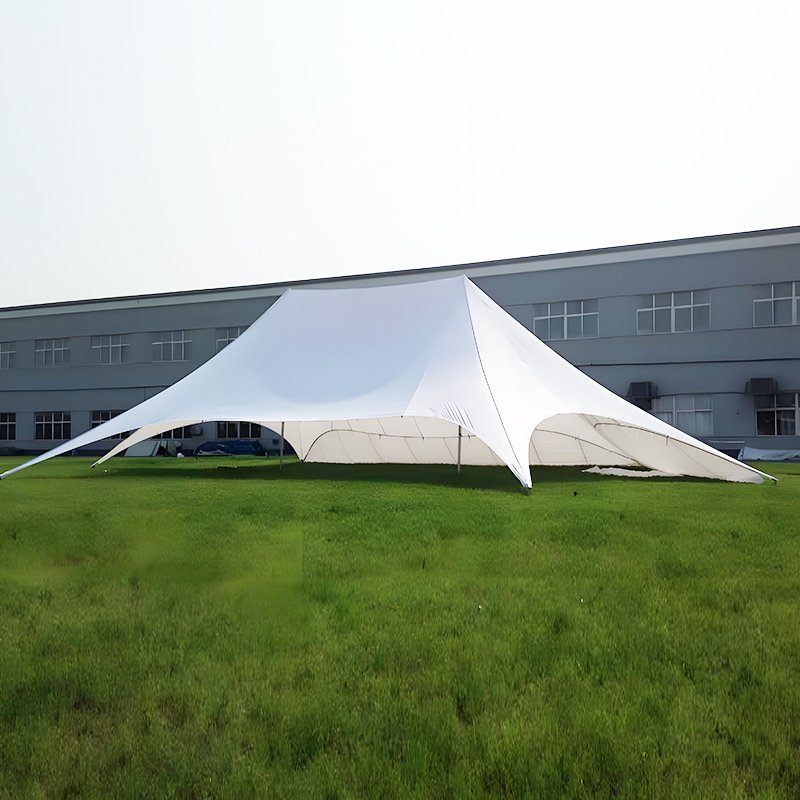
Cause première #1 : Conception de la découpe et de la prétension des patrons de tissu
L'un des facteurs les plus importants — et souvent négligés — est conception de motifs de tissus.
Découpe à plat vs découpe sous tension 3D
Les fabricants d'entrée de gamme utilisent souvent :
- coupe à plat
- Compensation de courbure minimale
Cela conduit à :
- Excès de matériau dans la canopée
- Incapacité à atteindre une tension adéquate
Approche professionnelle : Ingénierie de la précontrainte
Les tentes de haute qualité utilisent :
- Découpe de patrons courbes 3D
- Aisance négative (sous-dimensionnement intentionnel)
- Mise en forme basée sur la charge
Cela garantit que, lorsque la tente est montée :
- Le tissu est naturellement tendu
- La surface devient lisse et tendue
Aperçu clé
Si le toit de votre tente semble affaissé même avec une installation correcte, La découpe du tissu est une cause probable..
Cause première #2 : Système de tension du ressort du pôle supérieur
Le deuxième facteur majeur est tension interne maximale du ressort du pôle.
Comment fonctionnent les systèmes de poteaux Peak Pole ?
La plupart des tentes événementielles utilisent un mât central faîtier ou un mécanisme de tension interne qui :
- Il exerce une pression vers le haut contre la canopée.
- Crée une tension radiale à travers le tissu
- Définit la géométrie du toit
Rôle des mécanismes à ressort
Les ressorts servent à :
- Maintenir une tension constante
- Compenser l'élasticité du tissu
- Absorber les charges dynamiques (vent, mouvement)
Pourquoi une tension insuffisante des ressorts provoque un affaissement
Si la tension du ressort du pôle supérieur est trop faible :
- La force ascendante est insuffisante
- Le tissu ne peut pas s'étirer complètement.
- La tension est inégale de part et d'autre de la canopée.
Cela donne :
- Un pic aplati ou “ effondré ”
- Les rides s'étendent vers l'extérieur
- Mauvaise définition visuelle
Perspective d'ingénierie
La tension doit être surmontée :
- Élasticité du tissu
- Charge gravitationnelle
- forces environnementales
Si la force du ressort est inférieure à la tension requise → un affaissement se produit.
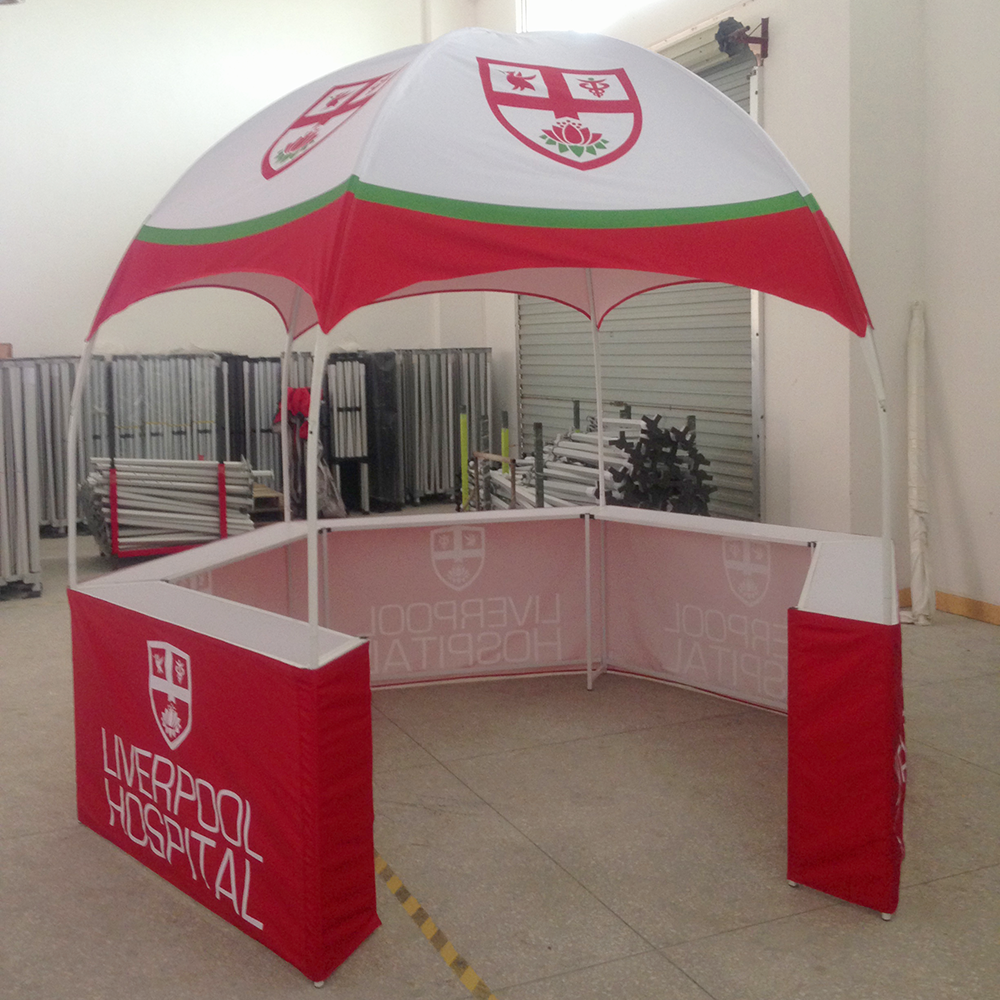


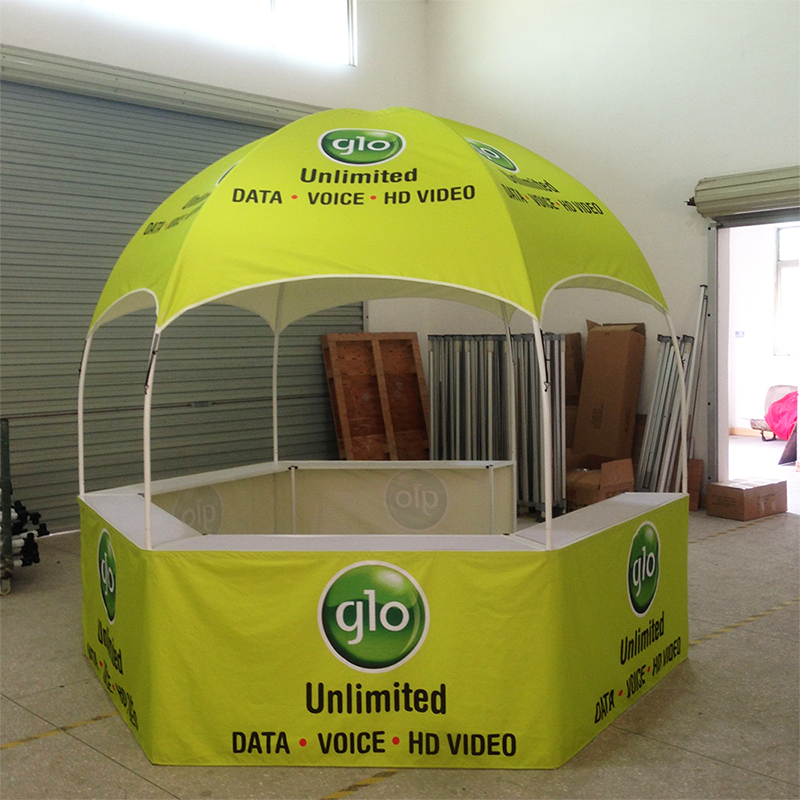
Cause première #3 : Géométrie du cadre et conception structurelle
Même avec un tissu et une tension de ressort corrects, une mauvaise conception du cadre peut provoquer un affaissement.
Facteurs clés
- Rapport entre la hauteur des jambes et la hauteur maximale
- Géométrie de treillis
- rigidité du connecteur
- Déformation du cadre sous charge
Déformation structurelle
Si le cadre fléchit :
- La tension est réduite
- Le tissu se détend.
- L'affaissement devient visible
Cause première #4 : Propriétés du matériau textile
Le comportement du tissu joue un rôle majeur dans la performance de la tension.
Propriétés importantes
- Élasticité
- Poids (GSM)
- Type de revêtement
- dilatation thermique
Problèmes courants
Les tissus de mauvaise qualité peuvent :
- Étirez-vous au fil du temps
- Détendez-vous au soleil
- Absorber l'humidité et s'affaisser
Cause première #5 : Conditions environnementales
Même une tente bien conçue peut paraître affaissée dans certaines conditions.
Effets de la température
- Chaleur → le tissu se dilate → tension réduite
- Froid → contraction du tissu → augmentation de la tension
Humidité et pluie
- L'absorption d'eau augmente le poids
- Provoque un affaissement localisé
Vent
- Les charges dynamiques déforment la répartition des tensions
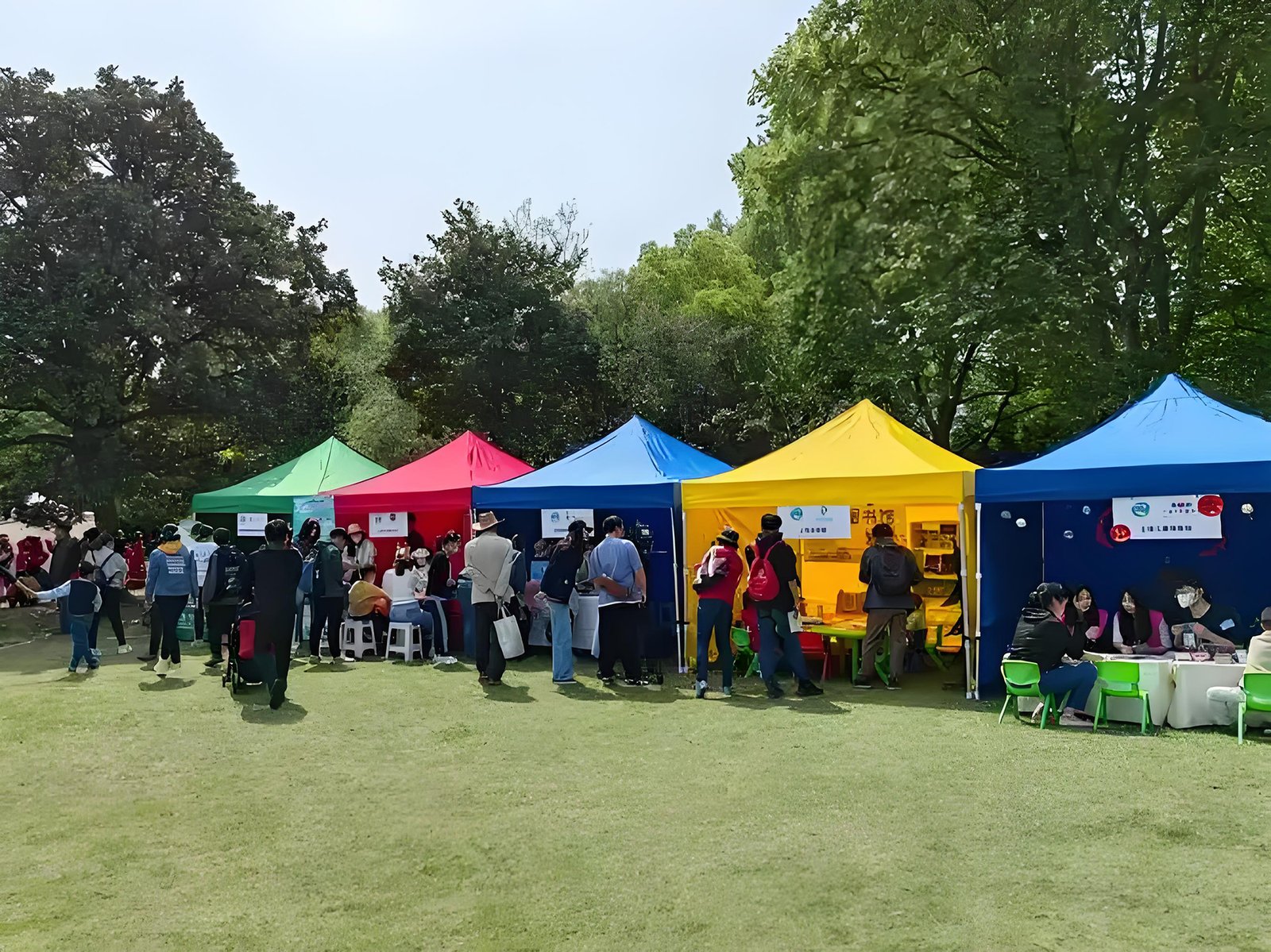
Diagnostiquer la véritable cause de l'affaissement
Pour identifier la cause profonde, suivez une approche systématique.
Étape 1 : Vérifier l’ajustement du tissu
- La verrière est-elle surdimensionnée ?
- Des rides sont-elles présentes avant la mise en place complète ?
Étape 2 : Vérifier la hauteur maximale
- Le sommet atteint-il la hauteur prévue ?
- Le ressort est-il complètement détendu ?
Étape 3 : Évaluer la rigidité du cadre
- Le cadre fléchit-il sous une légère pression ?
Étape 4 : Tester dans différentes conditions
- Comparer les performances par temps froid et par temps chaud
Comment réparer l'affaissement du toit d'une tente ?
Solution 1 : Améliorer la conception des motifs de tissu
- Utiliser une découpe basée sur la tension 3D
- Réduire les matériaux excédentaires
Solution 2 : Augmenter la force maximale du ressort
- Passez à des systèmes de ressorts plus robustes.
- Optimiser la tension de précharge
Solution 3 : Renforcer la structure du cadre
- Utilisez des matériaux plus résistants (par exemple, l'aluminium 6061-T6).
- Améliorer la qualité des connecteurs
Solution 4 : Améliorer la qualité du tissu
- Choisissez des matériaux peu extensibles
- Utiliser des revêtements haute performance
Équilibre technique : tension vs durabilité
Augmenter la tension n'est pas toujours préférable.
Risques de surtension
- déchirure du tissu
- Défaillance de la couture
- Concentration des contraintes du cadre
Approche optimale
- Répartition équilibrée des tensions
- Élasticité contrôlée
- Adaptation dynamique de la charge
Pourquoi la fabrication professionnelle est importante
Pour obtenir une tension parfaite, il faut :
- ingénierie de modèles avancée
- Conception structurelle précise
- Sélection contrôlée des matériaux
Ce niveau d'intégration n'est possible qu'avec des fabricants expérimentés.
Pourquoi Dtent offre des performances de tension de tente supérieures
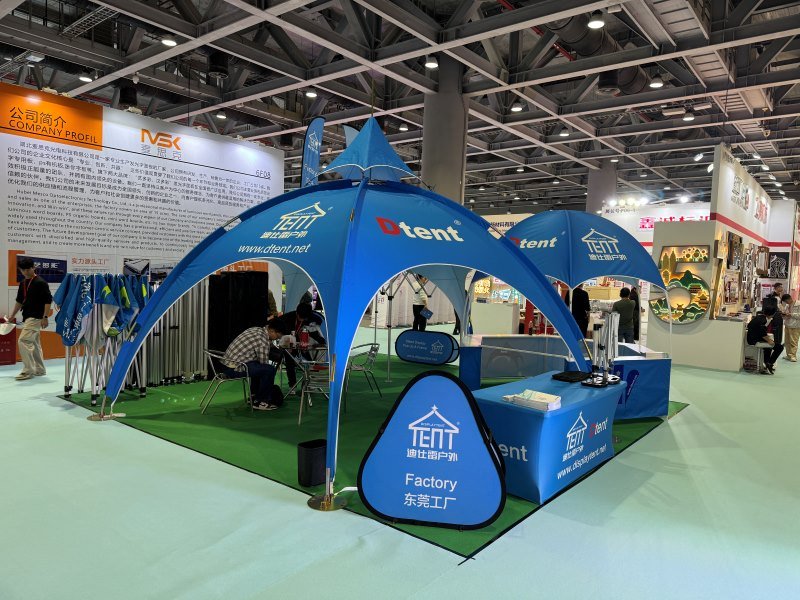
Dtent est un professionnel sur mesure fabricant de tentes avec plus de 10 ans d'expérience dans la production de tentes événementielles haute performance.
Ingénierie textile avancée
- Découpe de patrons 3D
- Optimisation de la prétension
- fabrication de précision
Systèmes de ressorts optimisés
- Mécanismes de tension maximale conçus
- Répartition uniforme des forces
Excellence structurelle
- Cadres en aluminium haute résistance
- Connecteurs renforcés
- Conception géométrique stable
Expérience OEM
Dtent produit pour des marques internationales, garantissant :
- Qualité constante
- Performances fiables
- normes d'ingénierie professionnelle
Comment spécifier les exigences de tension de la tente lors de la commande
Pour éviter les problèmes d'affaissement, les acheteurs doivent clairement définir :
Exigences techniques
- Type de tissu et GSM
- méthode de découpe de patrons
- Hauteur et géométrie du pic
- spécifications de tension du ressort
attentes en matière de performance
- normes d'apparence visuelle
- Conditions environnementales
- Fréquence d'utilisation
Tendances futures des systèmes de tension de tentes
Le secteur évolue vers :
- Systèmes de tension intelligents
- mécanismes de crête réglables
- Tissus composites haute performance
- Simulation numérique dans la conception
Les fabricants qui investissent dans la précision en ingénierie domineront le marché.

Résoudre le problème du “ toit affaissé ”
Un toit de tente affaissé n'est pas qu'un problème esthétique, c'est le signe d'un problème sous-jacent. ingénierie de tension inadéquate.
Points clés à retenir :
- La découpe du tissu et la tension maximale du ressort sont les principaux facteurs
- La conception du cadre et la qualité des matériaux jouent également un rôle crucial.
- Une tension adéquate nécessite une optimisation au niveau du système
- La surtension est aussi problématique que la sous-tension.
Pour obtenir des résultats professionnels, les acheteurs doivent aller au-delà des spécifications superficielles et se concentrer sur principes fondamentaux de l'ingénierie.
En collaborant avec des fabricants expérimentés comme Dtent, vous pouvez vous assurer que vos tentes répondent aux exigences suivantes :
- Apparence visuelle nette et précise
- Performances structurelles fiables
- durabilité à long terme
Vous êtes une société commerciale ou un fabricant ?
Nous sommes un fabricant spécialisé dans les tentes pliantes, les parapluies d'extérieur, les drapeaux de plage et les bannières publicitaires.
Pouvez-vous réaliser un design à partir de mes idées ou de mes dessins ?
Oui, nous avons des concepteurs expérimentés et notre propre usine de moulage. En fonction de vos besoins, nous pouvons concevoir ou ouvrir des moules à des prix compétitifs.
Combien de temps dure l'échantillonnage ?
Les échantillons seront prêts dans un délai de 5 à 7 jours, en fonction de vos exigences en matière d'impression et de matériaux.
Quel est votre avantage ?
Efficacité des coûts ; prix bas ; Efficacité des délais : nous nous engageons à effectuer les livraisons de masse dans les 30 jours Efficacité des services : nos vendeurs s'engagent à répondre à votre demande dans les 12 heures : Nos vendeurs s'engagent à répondre à votre demande dans les 12 heures. whatsapp 86 180 3827 3926