

In the tent industry, one of the most overlooked yet critical failure points is the tent connectors snap issue—especially in cold environments. Buyers often focus on fabric, frame thickness, or overall structure, but ignore the small components that hold everything together: connectors and joints.
If you’ve ever experienced plastic connectors snapping at 30°F (-1°C) or lower, the root cause is not random—it is a predictable material failure driven by temperature-dependent mechanical properties.
This article provides a professional, engineering-level breakdown of:
- Why tent connectors snap in cold weather
- Differences between plastic, nylon, and aluminum joints
- Whether a “cold-crack” rating exists (and what to ask for)
- How to evaluate connector materials and durability
- How to avoid costly failures in real-world applications
We also explain why working with experienced manufacturers like Dtent ensures reliable performance across temperature extremes.
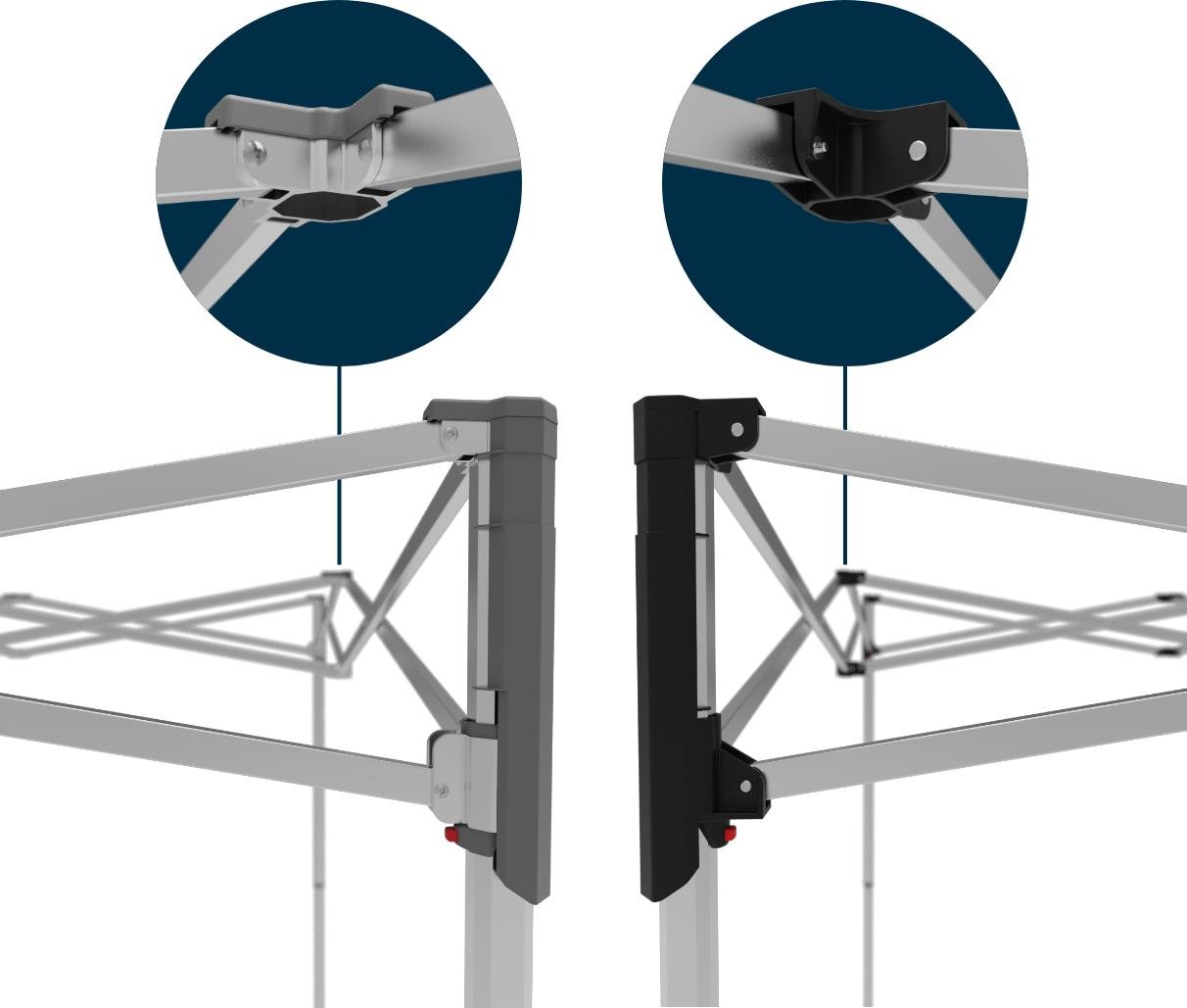
What Are Tent Connectors and Why “Tent Connectors Snap” Happens
Tent connectors are the junction components that connect:
- Frame tubes
- Legs and trusses
- Roof structures
- Hinges and locking systems
They are subjected to:
- Tensile stress
- Shear loads
- Repeated dynamic loading
- Environmental exposure
When tent connectors snap, it is typically due to:
- Material brittleness
- Poor impact resistance
- Low-temperature embrittlement
- Design stress concentration
The Core Problem: Low-Temperature Embrittlement
The key reason tent connectors snap in 30°F (-1°C) conditions is a material science phenomenon known as:
Ductile-to-Brittle Transition
At lower temperatures:
- Materials lose flexibility
- Impact resistance drops
- Crack propagation accelerates
This is especially critical for plastics and lower-grade polymers, which can transition from tough to brittle within a narrow temperature range.
Plastic Tent Connectors: Why They Fail First
Common Materials
Many low-cost tents use:
- Polypropylene (PP)
- ABS (Acrylonitrile Butadiene Styrene)
- Recycled plastics
Advantages
- Low cost
- Easy to mold
- Lightweight
Critical Weaknesses
At temperatures near freezing:
- Impact strength drops sharply
- Microcracks form easily
- Sudden brittle fracture occurs
Why Tent Connectors Snap in Plastic
Plastic connectors fail because:
- They lack sufficient impact toughness at low temperatures
- Internal stresses from molding create weak points
- Recycled materials reduce consistency
Real-World Scenario
A connector may perform well at 20°C but:
- Snap instantly when struck or stressed at -1°C
- Fail during setup, not just under load

Nylon Tent Connectors: A Mid-Level Solution
What Is Nylon (Polyamide)?
Nylon is an engineered polymer with:
- Higher toughness
- Better fatigue resistance
- Improved temperature performance
Advantages
- Better impact resistance than standard plastics
- Maintains flexibility at lower temperatures
- Longer lifespan
Limitations
- Still affected by extreme cold
- Can absorb moisture (affecting properties)
- Quality varies by grade (e.g., PA6 vs PA66)
Cold Performance
High-quality nylon connectors:
- Perform reliably down to approximately -20°C (depending on formulation)
- Resist sudden fracture better than PP or ABS
Key Insight
Not all nylon is equal — glass-filled nylon (GF Nylon) significantly improves:
- Strength
- Rigidity
- Thermal stability
Aluminum Tent Connectors: The Professional Standard
Why Aluminum Is Superior
Aluminum connectors are widely used in high-end commercial and event tents because they:
- Do not become brittle in cold temperatures
- Maintain consistent mechanical properties
- Offer superior load-bearing capacity
Advantages
- Excellent strength-to-weight ratio
- No cold-crack failure
- Long service life
- High structural reliability
Limitations
- Higher cost
- More complex manufacturing
- Slightly heavier than plastic
Practical Outcome
If your application involves:
- Cold climates
- Frequent setup
- Heavy-duty use
Aluminum connectors are the most reliable solution to prevent tent connectors snap failures.

Is There a “Cold-Crack” Rating for Tent Connectors?
Yes — but it is rarely standardized in the tent industry.
What You Should Ask For
Instead of vague claims, request:
1. Impact Resistance Test Data
- Izod or Charpy impact test results
- Tested at low temperatures (e.g., -10°C, -20°C)
2. Material Datasheet
Look for:
- Glass transition temperature (Tg)
- Impact strength vs temperature curve
3. Cold Flexibility Testing
Ask if connectors are tested under:
- Repeated loading at low temperatures
- Simulated field conditions
4. Certification or Internal Standards
Professional manufacturers may provide:
- Internal cold-weather testing protocols
- Real-use validation data
Industry Reality
Most low-cost suppliers do not test for cold performance, which is why tent connectors snap unexpectedly.
Key Factors That Influence Connector Failure
Beyond material type, several engineering factors affect connector durability.
1. Wall Thickness
Thicker connectors:
- Resist cracking better
- Distribute stress more evenly
2. Geometry Design
Sharp corners create:
- Stress concentration points
- Crack initiation zones
3. Reinforcement Structure
High-quality connectors include:
- Ribbing
- Load-distribution features
4. Manufacturing Quality
Poor molding or casting leads to:
- Internal voids
- Weak نقاط
Comparing Plastic vs Nylon vs Aluminum Tent Connectors
| Property | Plastic | Nylon | Aluminum |
|---|---|---|---|
| Cost | Low | Medium | High |
| Strength | Low | Medium | High |
| Cold Resistance | Poor | Moderate | Excellent |
| Durability | Low | Medium | High |
| Failure Mode | Brittle snap | Gradual deformation | Rare failure |
Key Takeaway
If tent connectors snap in your application, upgrading material is often the most effective solution.
How to Prevent Tent Connectors Snap in Cold Weather
1. Choose the Right Material
- Light-duty → reinforced nylon
- Professional use → aluminum
2. Specify Temperature Requirements
Define:
- Minimum operating temperature
- Expected environmental conditions
3. Avoid Recycled Plastics
Insist on:
- Virgin material
- Verified composition
4. Test Before Bulk Purchase
Conduct:
- Cold setup testing
- Impact testing in real conditions
Why Dtent Provides Reliable Connector Solutions
Dtent is a professional custom tent manufacturer with extensive experience in producing high-performance event tents for global brands.
Material Selection Expertise
Dtent carefully selects:
- High-grade aluminum alloys
- Reinforced engineering plastics
- Premium nylon materials
Engineering-Driven Design
Focus on:
- Stress distribution
- Structural integrity
- Long-term durability
Real-World Testing
Products are validated under:
- Repeated use cycles
- Environmental stress conditions
- Structural load testing
OEM Manufacturing Experience
With over 10 years of OEM production, Dtent ensures:
- Consistent quality
- Reliable specifications
- Scalable production
When Should You Upgrade to Aluminum Connectors?
Consider switching to aluminum if:
- You operate in cold climates
- You experience repeated connector failures
- Your tents are used commercially or rented frequently
- Safety and reliability are critical
Future Trends in Tent Connector Materials
The industry is evolving toward:
- Hybrid connectors (metal + polymer)
- Advanced reinforced polymers
- Cold-resistant composite materials
- Precision-engineered joint systems
Manufacturers focusing on engineering performance rather than cost-cutting will define the next generation of tent systems.
Eliminate “Tent Connectors Snap” Failures with Smart Material Choices
The issue of tent connectors snap in cold weather is not a mystery—it is a predictable result of material limitations and poor engineering decisions.
Key conclusions:
- Plastic connectors are prone to brittle failure near freezing
- Nylon offers improved performance but still has limits
- Aluminum provides the highest reliability, especially in cold environments
- “Cold-crack” performance must be verified through testing, not marketing claims
For professional buyers, the solution is clear:
- Specify material requirements
- Demand test data
- Work with experienced manufacturers like Dtent
By doing so, you ensure your tent systems deliver:
- Structural reliability
- Cold-weather performance
- Long-term durability
Are you a Trading Company or Manufacturer?
We are a manufacturer specialized in Folding tents, Outdoor umbrellas, Beach flags, Advertising Banners
Can you do design for my ideas or drawing?
Yes, we have experienced designers and our own molding factory. According to your requirements, we can design or open mold which has a competitive price.
How long does sample take?
Sample will be ready within 5-7 days, depends on your printing and material requirements.
What is your advantage?
Cost effective; with low price; Time effective: we promise to make the mass delivery within 30 days Service effective: Our sales people promise to reply your enquiry within 12 hours.Contact whatsapp 86 180 3827 3926