
You’ve seen the labels: “100% Waterproof,” “Commercial Grade,” “Heavy-Duty Coating.” But a few months into using your expensive custom event tent, something goes wrong. Maybe the fabric feels sticky. Maybe the white logo is turning a strange yellowish hue. Or worse—you unfold the tent for a major product launch, and the waterproof layer flakes off like dried skin, leaving your brand (and your guests) soaked.
The culprit isn’t the fabric itself; it’s the chemistry applied to it.
In the event tent industry, two titans battle for dominance: Polyurethane (PU) and Polyvinyl Chloride (PVC). While both claim to keep the rain out, they are worlds apart in terms of safety, durability, and “foldability.”
At Dtent, we’ve spent years stress-testing these coatings in every climate, from the humid coasts of Florida to the freezing peaks of the Alps. Today, we’re breaking down the “Coating Paradox”: Why is PVC banned in some regions yet praised in others? And which one will actually survive six months of constant folding?
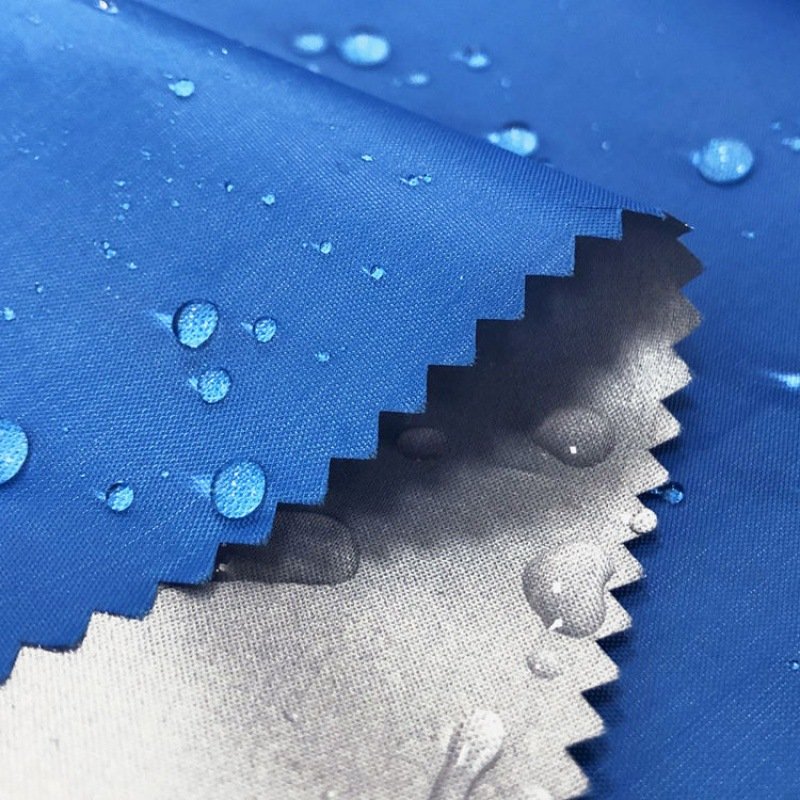
1. The Anatomy of a Coating: What are PU and PVC?
Before we dive into the “Why,” we need to understand the “What.” An event tent isn’t just a piece of plastic; it’s usually a woven base (Polyester or Nylon) with a chemical “skin” applied to the back or both sides.
What is PU (Polyurethane) Coating?
PU is a liquid polymer that is sprayed or rolled onto the fabric. Think of it as a high-tech liquid rubber. It penetrates the fibers, creating a flexible, breathable, yet waterproof barrier.
The Feel: Light, soft, and cloth-like.
The Strength: Excellent “memory”—it can be stretched and folded thousands of times without losing its bond to the fabric.
What is PVC (Polyvinyl Chloride) Coating?
PVC is essentially a sheet of plastic (the same stuff used in pipes) that is heat-laminated or spread-coated onto the fabric. To make this hard plastic flexible enough for a tent, manufacturers must add “plasticizers.”
The Feel: Heavy, rubbery, and sometimes slightly “slick” or “waxy.”
The Strength: Immense water blockage. It doesn’t just resist water; it acts as a total vapor barrier.
2. The CA Prop 65 Controversy: Why the Ban?
If you are a buyer in California or doing business with major US corporations, you’ve likely seen the California Proposition 65 warning labels. PVC is a frequent target of these warnings, and for a very specific reason: Phthalates.
The “Leaching” Problem
Raw PVC is as hard as a rock. To make a 10×10 tent canopy that can be folded, manufacturers mix in phthalates (plasticizers). Over time, these chemicals don’t stay in the plastic; they “leach” out. This is what causes that “new tent smell” (which is actually off-gassing) and why the fabric eventually becomes brittle.
Environmental & Health Risks
Phthalates: Linked to hormonal disruptions and reproductive issues.
Lead & Cadmium: Often used as stabilizers in low-end PVC production.
Dioxins: The production and disposal (burning) of PVC releases dioxins, some of the most toxic chemicals known to science.
The Dtent Perspective: While PVC isn’t “banned” for all uses, many high-end brands (and the State of California) have restricted its use in consumer-facing products. PU coatings are generally Phthalate-free and much safer for your staff to handle day in and day out.


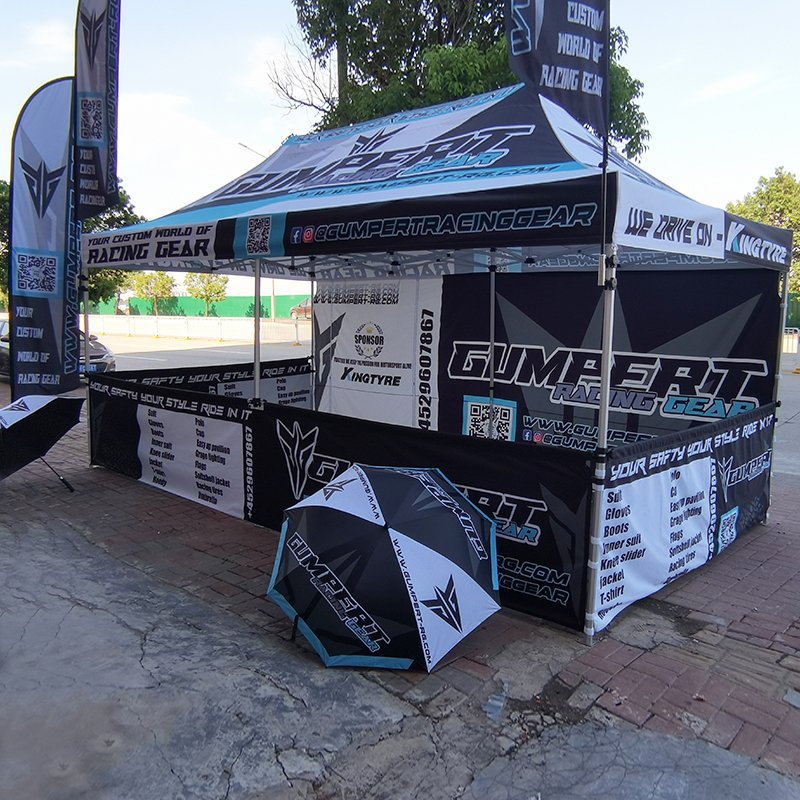
3. The 6-Month Folding Test: Flexibility vs. Fatigue
This is the “Headache” question every procurement manager asks: “Why is my tent peeling?”
Imagine a piece of paper. If you fold it once, it’s fine. Fold it 100 times in the same spot, and it tears. Tent coatings face the same “fatigue.”
Why PVC Fails the “Folding Test”
As mentioned, PVC relies on plasticizers to stay soft. As these chemicals evaporate (due to heat and UV exposure), the PVC layer returns to its natural, rigid state.
The Result: After 6 months of being stuffed into a roller bag and baked in the sun, the PVC layer develops “micro-cracks” at the fold lines. Once the crack starts, the bond to the polyester fails, and the coating begins to peel off in sheets.
Why PU Wins the Long Game
PU is inherently flexible at a molecular level. It doesn’t rely on leachable additives to stay soft.
The Result: Even after hundreds of event cycles, a high-quality PU coating (like the Dtent Pro-Shield) remains bonded to the fibers. It moves with the fabric, not against it.
Expert Insight: If your event schedule requires you to setup and teardown every weekend, PU is your only viable option. PVC is best suited for “semi-permanent” structures that stay up for months at a time without being moved.
4. Waterproofing Specs: Understanding the "Hydrostatic Head"
In the English-speaking market, “waterproof” is a vague marketing term. Professional buyers look for the Hydrostatic Head (HH) rating.
The rating is measured in millimeters ($mmH_2O$), representing how tall a column of water would have to be before it starts leaking through the fabric.
1000mm: Minimum for a “rainproof” jacket.
1500mm – 2000mm: Standard for entry-level event tents.
3000mm+: The Dtent Standard for professional custom tents.
The Trade-off
PVC can easily hit 5000mm+ because it’s a solid sheet of plastic. However, this comes at the cost of weight. A PVC canopy is significantly heavier, making it harder to transport and increasing the risk of the frame buckling under the sheer mass of the fabric.
PU can achieve 3000mm – 4000mm (which is more than enough for any storm a tent frame can survive) while remaining lightweight and breathable.
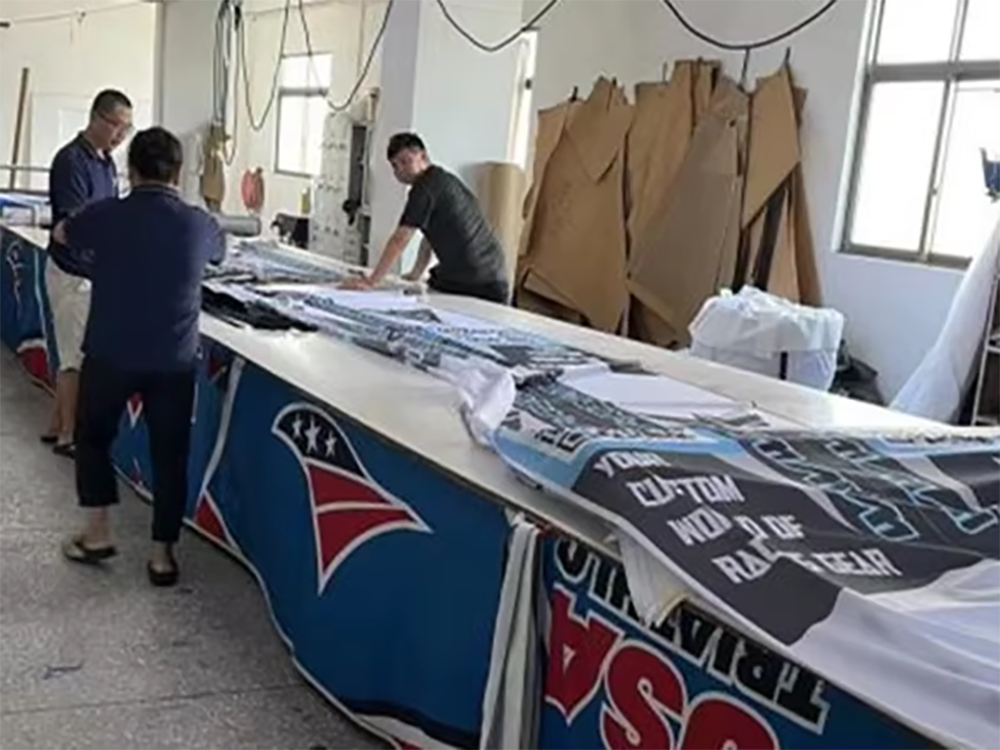
5. The Aesthetics: Printing and "Yellowing"
As a brand manager, your logo is everything. The coating you choose directly impacts how your brand looks under the sun.
Dye-Sublimation Compatibility: PU coatings are the “best friends” of dye-sublimation printing. The ink can penetrate the coating and bond with the polyester fibers, resulting in vibrant, crisp colors that won’t scratch off.
The PVC “Yellowing” Effect: PVC is highly sensitive to UV light. Without expensive stabilizers, white PVC can turn yellow or “cream” colored over time. Furthermore, printing on PVC often requires solvent inks that can be prone to “ghosting” (transferring the image to other parts of the tent when folded).
6. Comparison Matrix: PU vs. PVC at a Glance
| Feature | PU Coating (Dtent Choice) | PVC Coating (Old School) |
| Flexibility | High (Remains soft in cold) | Low (Becomes brittle over time) |
| Weight | Lightweight & Portable | Heavy & Bulky |
| Safety | Phthalate-free / Prop 65 Compliant | Contains Phthalates / High VOCs |
| Longevity | 3–5 years (Daily use) | 1–2 years (If folded frequently) |
| Breathability | Breathable (Reduces condensation) | Non-breathable (Sweats inside) |
| Eco-Friendly | More sustainable / Recyclable | High environmental impact |
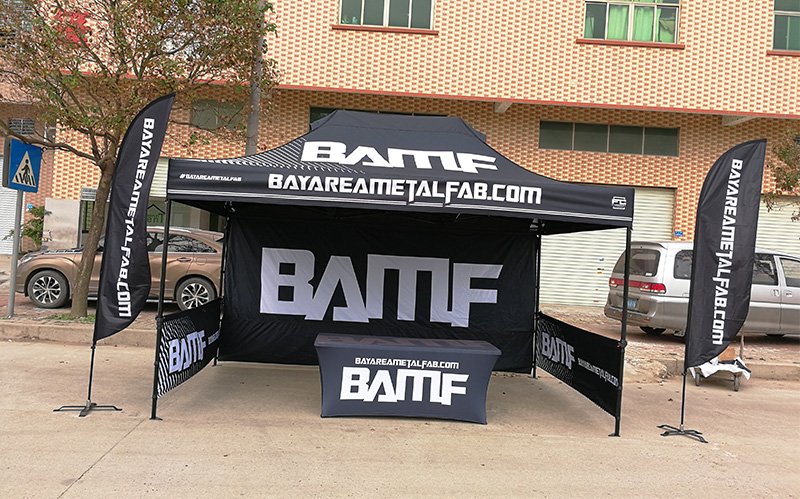
7. How to Choose: The Decision Matrix
Still confused? Use this simple checklist to decide:
Choose PVC if:
The tent will stay up for 6 months straight without being moved.
You are on an extremely tight budget and don’t care about the Prop 65 warning.
Weight and portability are not a concern (e.g., you have a forklift).
Choose PU (The Dtent Standard) if:
You need to fold/unfold the tent frequently for events.
You want your brand colors to remain vibrant for years.
You care about the health and safety of your event staff.
You need a tent that won’t crack in cold weather or peel in the heat.
Why Dtent is the Expert in Advanced Coatings
At Dtent, we don’t just buy “off-the-shelf” fabric. We work directly with chemical engineers to ensure our 600D Pro-Performance Polyester features a multi-stage PU coating process.
The Dtent Coating Secret:
Triple-Layer Application: We apply the PU in three ultra-thin layers rather than one thick one. This ensures the coating “locks” into the weave of the fabric.
UV-Inhibitor Integration: Our coatings are infused with UV blockers that protect not just the color, but the integrity of the polymer itself.
Heat-Sealed Integrity: Because our PU is high-grade, our waterproof seam tape bonds perfectly to it. This prevents the “seam-line leaks” common in cheaper tents.
Our Commitment to Sustainability
By choosing high-quality PU over cheap PVC, Dtent helps reduce the amount of non-recyclable plastic ending up in landfills. Our tents are built to be repaired, not replaced.
Don't Get "Peeled" by Cheap Claims
In the world of custom event tents, the coating is the invisible hero (or villain) of your brand’s story. While PVC might offer a slightly higher initial waterproof rating at a lower price, the hidden costs of cracking, peeling, and environmental non-compliance make it a risky investment.
Invest in a Dtent PU-coated canopy. Protect your brand, your people, and your budget from the inevitable “crack and peel” of inferior technology.
Ready to see the difference for yourself?
[Request a Free Dtent Fabric Swatch Kit – Feel the PU Difference Today]
[Get a Custom Quote for Your Next Event Tent]
Are you a Trading Company or Manufacturer?
We are a manufacturer specialized in Folding tents, Outdoor umbrellas, Beach flags, Advertising Banners
Can you do design for my ideas or drawing?
Yes, we have experienced designers and our own molding factory. According to your requirements, we can design or open mold which has a competitive price.
How long does sample take?
Sample will be ready within 5-7 days, depends on your printing and material requirements.
What is your advantage?
Cost effective; with low price; Time effective: we promise to make the mass delivery within 30 days Service effective: Our sales people promise to reply your enquiry within 12 hours.Contact whatsapp 86 180 3827 3926