

Understanding the Reality Behind Dome Tent Installation
A купольная палатка has become a popular choice for outdoor events, exhibitions, brand activations, festivals, hospitality projects, and commercial applications because of its unique appearance and large usable space.
Compared with traditional rectangular tents, a dome tent provides:
- A futuristic architectural appearance
- Excellent wind resistance
- Large interior space without central columns
- 360-degree branding opportunities
- Flexible applications for temporary or semi-permanent installations
However, one question frequently concerns buyers before purchasing:
“Can our own marketing team install the dome tent with a few ladders and an instruction manual?”
Или:
“Do we need a professional installation crew with cranes, lifting equipment, and special tools?”
Ответ:
It depends on the size, structure, application, and engineering design of the dome tent.
A small promotional dome tent may be installed by a trained internal team.
A large commercial dome tent may require experienced technicians, lifting equipment, and professional installation procedures.
Как опытный специалист производитель купольных палаток, Dtent has more than 10 years of experience designing and producing customized dome tents for customers worldwide. We understand that installation is not simply about assembling parts—it is a process involving:
- Строительная инженерия
- Safety management
- Frame connection accuracy
- Membrane tension control
- Weather considerations
This article explains how dome tent installation works, when professional installation is required, and how to choose the right setup method for your project.
Why Dome Tent Installation Is Different From Normal Tent Setup
Many customers compare dome tents with traditional camping tents.
A camping tent may require:
- A few poles
- Fabric attachment
- Simple ground fixing
A commercial купольная палатка is a completely different category.
It is closer to a lightweight architectural structure.
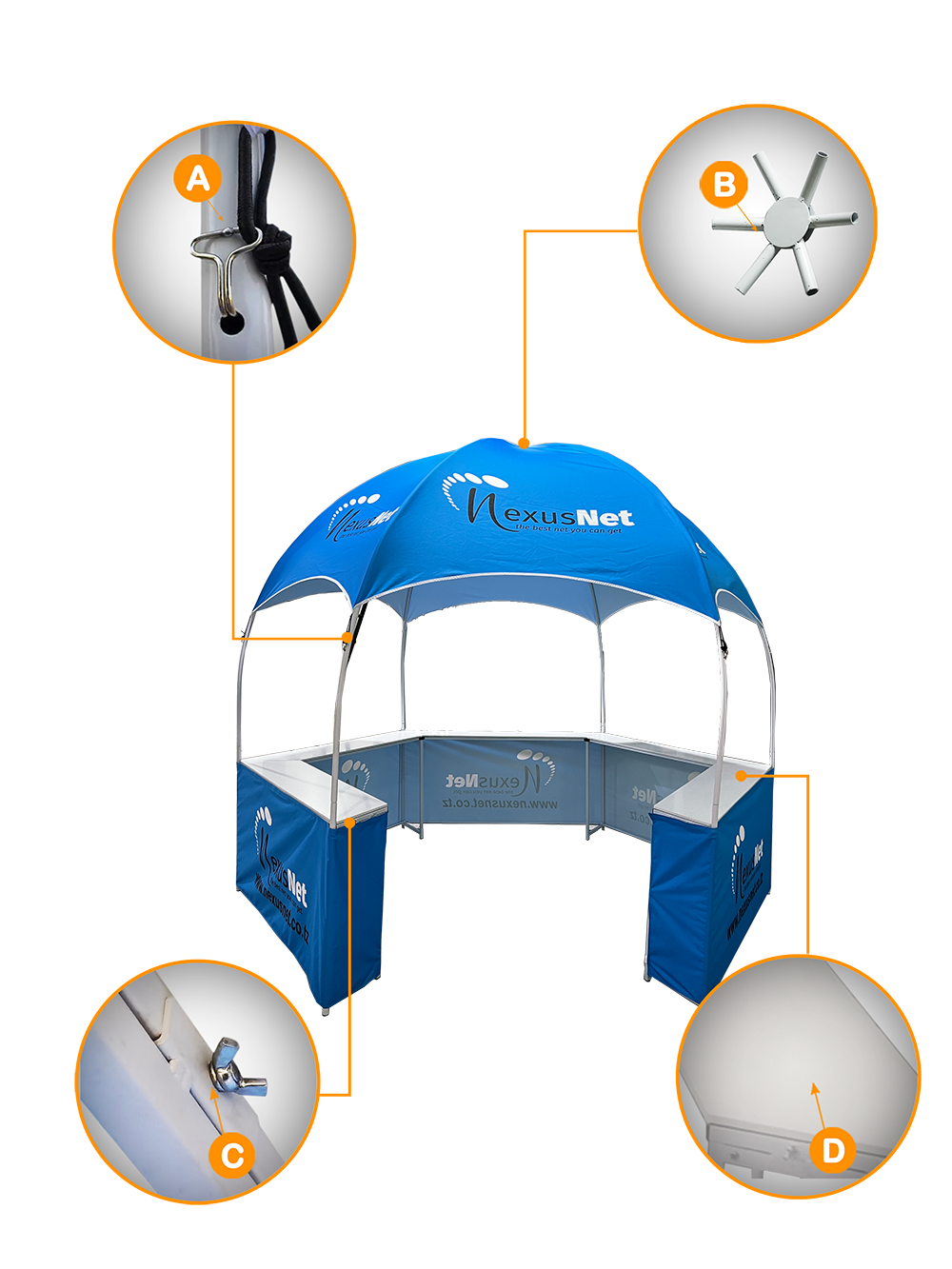
A dome tent usually includes:
- Aluminum or steel framework
- Hundreds of connection points
- Large membrane sections
- Reinforcement cables
- Doors and ventilation systems
- Electrical and lighting accessories
The installation process requires precision.
A small mistake in one area can affect:
- Dome shape
- Structural stability
- Водонепроницаемость
- Ветроустойчивость
Dome Tent Size Determines Installation Complexity
The first factor determining installation difficulty is size.
Small Dome Tent Installation (3m–6m Diameter)
Small dome tents are commonly used for:
- Promotional events
- Small exhibitions
- Private gatherings
- Temporary displays
Typical characteristics:
- Lightweight frame
- Fewer components
- Lower installation height
In many cases:
A trained company team can install the structure with:
- Ladders
- Basic tools
- Installation drawings
However, training is still recommended.
Even small dome tents require correct:
- Frame connection
- Membrane tension
- Якорение
Medium Dome Tent Installation (6m–15m Diameter)
Medium-size dome tents are common for:
- Корпоративные мероприятия
- Выставки под открытым небом
- Brand experiences
- Hospitality areas
Installation usually requires:
- 3–6 workers
- Professional tools
- Proper lifting methods
A marketing team may assist, but relying entirely on inexperienced workers creates risks.
К распространённым ошибкам относятся:
- Incorrect frame assembly
- Uneven membrane tension
- Damaged connectors
- Improper anchoring
Large Dome Tent Installation (15m+ Diameter)
Large commercial dome tents are significantly more complex.
В число приложений входят:
- Festival structures
- Luxury hospitality domes
- Exhibition halls
- Long-term outdoor installations
These structures may require:
- Professional installation teams
- Mechanical lifting equipment
- Safety equipment
- Structural inspection
A large dome tent can contain hundreds or thousands of components.
Installation becomes a construction project rather than simple tent assembly.

Does a Dome Tent Need Heavy Machinery?
The answer depends on the design.
Not every dome tent requires cranes.
However, large structures may benefit from mechanical assistance.
Situations Where Heavy Equipment May Be Required
Large Diameter Domes
A large frame section may be:
- Long
- Тяжелый
- Difficult to lift manually
High Installation Height
When the dome exceeds normal working height:
Equipment may improve:
- Безопасность
- Эффективность
- Accuracy
Permanent or Semi-Permanent Installations
Long-term structures often require:
- More precise positioning
- Stronger anchoring
- Engineering inspection
Situations Where Heavy Machinery May Not Be Necessary
Smaller dome tents can often be installed manually.
Professional designs may include:
- Lightweight aluminum frames
- Modular connectors
- Pre-cut membranes
- Easy assembly systems
A good производитель купольных палаток designs products with installation efficiency in mind.
The Dome Tent Installation Process Explained Step by Step
A professional installation normally follows a structured process.
Step 1: Site Preparation
Before assembly begins, the site must be inspected.
К важным факторам относятся:
- Ground condition
- Воздействие ветра
- Drainage
- Access routes
- Power requirements
A poor site can create problems even with a high-quality dome tent.
Step 2: Unpacking and Component Inspection
Before installation:
Workers check:
- Frame tubes
- Connectors
- Болты
- Membrane panels
- Аксессуары
Missing or damaged parts should be identified before assembly.
Step 3: Base Frame Assembly
The foundation structure is installed first.
This includes:
- Грунтовые анкеры
- Base plates
- Lower frame sections
Accuracy is important.
A small alignment error at the bottom can create major problems at the top.
Step 4: Dome Frame Construction
The curved framework is assembled gradually.
Typical steps:
- Build lower sections
- Add middle sections
- Connect upper sections
- Complete the dome structure
The frame must maintain:
- Correct geometry
- Balanced stress
- Proper connection strength
Step 5: Membrane Installation
The membrane installation is often the most technical step.
The fabric must be positioned correctly.
Problems caused by poor installation include:
- Морщины
- Loose areas
- Excessive tension
- Неравномерный внешний вид
Профессионал завод по производству купольных палаток designs membranes with installation considerations included.
Step 6: Tension Adjustment
The dome membrane works together with the frame.
Proper tension provides:
- Better appearance
- Improved weather resistance
- Reduced vibration
Too little tension:
- Loose appearance
- Water accumulation risk
Too much tension:
- Excessive stress
- Possible damage
Step 7: Final Safety Inspection
Before use, check:
Frame
- All connectors tightened
- No missing bolts
- Proper alignment
Membrane
- Correct tension
- No damage
- Proper attachment
Якорение
- Secure fixing
- Suitable for local conditions

Common Dome Tent Installation Mistakes
Many installation problems come from misunderstanding the structure.
Mistake 1: Treating the Dome Like a Simple Camping Tent
A commercial dome tent requires engineering thinking.
Incorrect assembly may affect:
- Безопасность
- Появление
- Продолжительность жизни
Mistake 2: Ignoring Wind Conditions
A dome tent acts like a large aerodynamic structure.
Before installation, consider:
- Wind speed
- Weather forecast
- Location exposure
Mistake 3: Incorrect Membrane Tension
Many beginners believe:
“The tighter the fabric, the better.”
This is incorrect.
The membrane needs balanced tension.
Mistake 4: Using Untrained Workers for Large Structures
Large dome tents require experience.
Incorrect installation can damage:
- Connectors
- Frame tubes
- Fabric panels
Can a Marketing Team Install a Dome Tent?
The answer depends on the project.
Suitable Situations
A marketing team may install:
- Small promotional domes
- Short-term event structures
- Lightweight systems
Provided they receive:
- Proper training
- Installation manuals
- Manufacturer support
Unsuitable Situations
Professional installation is recommended for:
- Large dome tents
- Long-term outdoor use
- Public events
- Extreme weather environments
How a Professional Dome Tent Manufacturer Makes Installation Easier
A good manufacturer does not only produce the tent.
They design the entire installation experience.
Modular Structure Design
Professional dome tent factories optimize:
- Component numbers
- Connection methods
- Assembly sequence
Clear Installation Documentation
Important documents include:
- Assembly drawings
- Component lists
- Safety instructions
- Maintenance guides
Installation Training Support
Experienced suppliers provide:
- Video instructions
- Technical guidance
- On-site support when necessary
Spare Parts Availability
A reliable manufacturer should provide replacement:
- Connectors
- Болты
- Frame sections
- Аксессуары
How Dtent Supports Dome Tent Installation
Как профессионал производитель купольных палаток, Dtent understands that successful projects require more than manufacturing quality.
We support customers with:
Customized Dome Tent Solutions
Включая:
- Event domes
- Выставочные купола
- Commercial domes
- Branded dome tents
Installation-Friendly Design
Our engineering team considers:
- Assembly efficiency
- Transportation
- Обслуживание
- Long-term use
Professional Manufacturing Experience
С:
- More than 10 years of custom tent production experience
- 6,000㎡ production facility
- Опыт работы с OEM-производителями для брендов
Dtent provides complete solutions from design to installation support.
Choosing the Right Dome Tent Factory: Installation Questions to Ask
Before purchasing, buyers should ask:
How Many People Are Required for Installation?
A professional supplier should provide realistic guidance.
Does the Dome Tent Require Special Equipment?
Understand the requirements before delivery.
Are Installation Manuals Included?
Clear documentation is essential.
Is Technical Support Available?
Especially important for large structures.
Future Trends in Dome Tent Installation
The industry is moving toward easier installation through:
Modular Aluminum Frames
Reducing assembly complexity.
Lightweight High-Strength Materials
Making larger domes easier to install.
Digital Installation Guides
Включая:
- 3D instructions
- Video tutorials
- Augmented reality assistance
Professional Team or Marketing Team?
The answer is not simply yes or no.
A small купольная палатка may be installed by a trained internal team using basic tools.
A large commercial dome tent usually requires:
- Experienced installers
- Proper equipment
- Safety procedures
The key factor is matching the installation method with the structure size and application.
При выборе производитель купольных палаток или завод по производству купольных палаток, buyers should consider not only:
- Material quality
- Дизайн
- Цена
but also:
- Требования к установке
- Technical support
- Assembly efficiency
A professional dome tent is not just a product delivered in boxes.
It is a complete engineered system that includes design, manufacturing, transportation, installation, and long-term performance.
With the right manufacturer and installation plan, a dome tent can become a safe, attractive, and reliable space for events and commercial applications.
Вы торговая компания или производитель?
Мы — производитель, специализирующийся на складных шатрах, уличных зонтах, пляжных флагах и рекламных баннерах.
Можете ли вы разработать дизайн на основе моих идей или эскизов?
Да, у нас есть опытные дизайнеры и собственный завод по производству пресс-форм. Мы можем разработать дизайн или изготовить пресс-форму в соответствии с вашими требованиями по конкурентной цене.
Сколько времени занимает изготовление образца?
Образец будет готов в течение 5–7 дней, в зависимости от ваших требований к печати и материалам.
В чем ваше преимущество?
Выгодная цена; экономия времени: мы гарантируем выполнение оптового заказа в течение 30 дней; качественное обслуживание: наши менеджеры обязуются ответить на ваш запрос в течение 12 часов. Контакты. WhatsApp 86 180 3827 3926