Knowing how to waterproof a tent is one of the most important skills for campers, outdoor enthusiasts, event organizers, and professionals who rely on tents for long-term or repeated use. Even high-quality tents can lose their waterproof performance over time due to UV exposure, abrasion, moisture, and improper storage.
Whether you are camping in the mountains, hosting an outdoor event, or using a tent for commercial purposes, understanding how to waterproof a tent correctly can prevent leaks, extend the lifespan of your tent, and significantly improve comfort and safety.
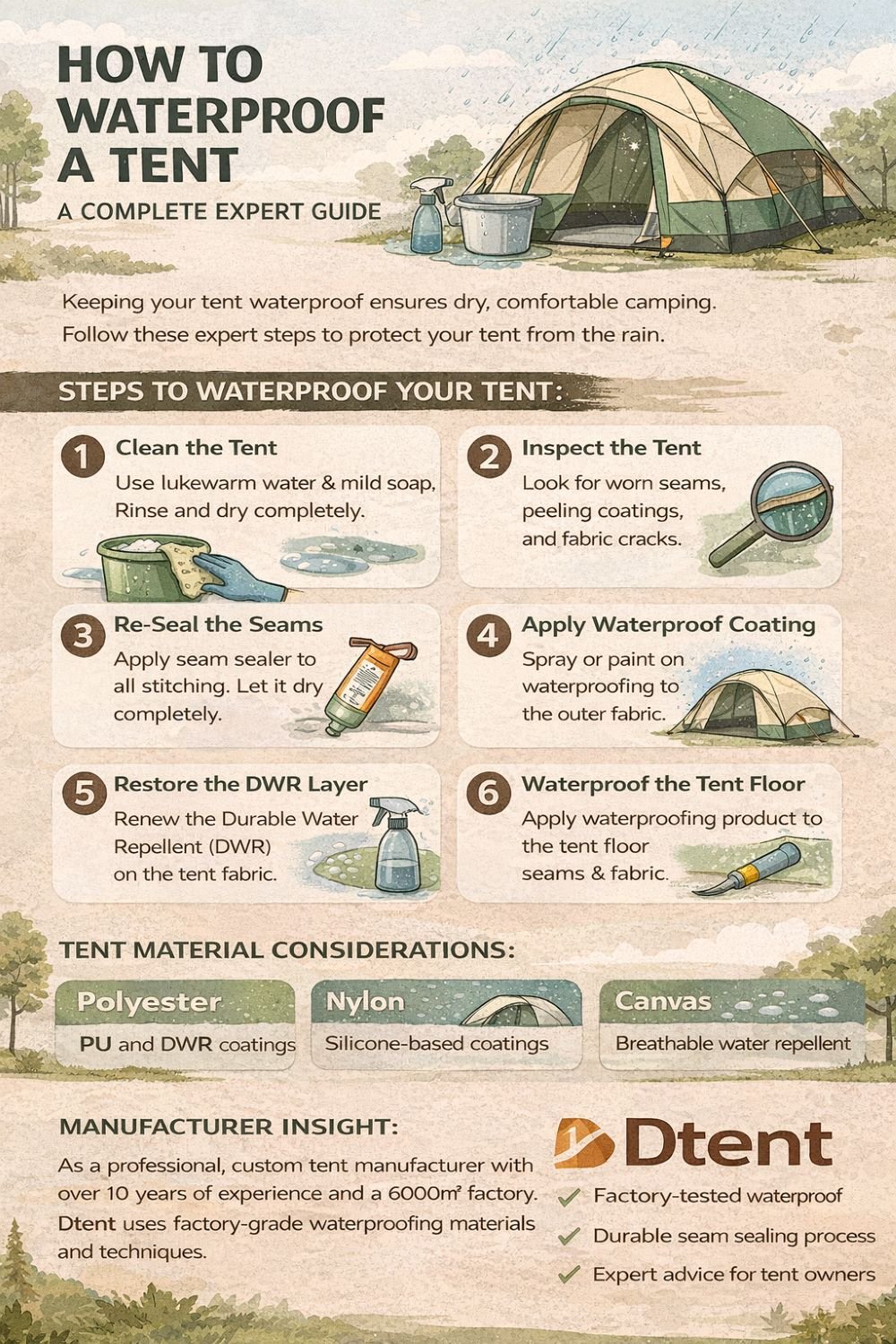
As a professional custom tent manufacturer with more than 10 years of production experience and a 6,000㎡ factory, Dtent has extensive knowledge of tent materials, coatings, seams, and waterproof technologies. This guide combines practical user-level advice with manufacturer-level expertise to explain how to waterproof a tent properly and effectively.
What Does “Waterproofing a Tent” Actually Mean?
Before learning how to waterproof a tent, it is important to understand what waterproofing involves.
Waterproofing a tent means creating or restoring a protective barrier that prevents water from penetrating the tent fabric, seams, and floor. This protection is usually achieved through:
Waterproof coatings (PU, silicone, PVC)
Durable Water Repellent (DWR) treatments
Seam sealing
Proper tent design and construction
From a manufacturer’s perspective, waterproofing is not a single step—it is a system.
How Tents Lose Their Waterproof Performance Over Time
Even factory-new tents can gradually lose waterproofing. Common reasons include:
UV damage breaking down coatings
Repeated folding and abrasion
Dirt and oils clogging fabric pores
Improper cleaning methods
Long-term moisture exposure
Understanding these causes helps users apply the right waterproofing methods at the right time.
How to Waterproof a Tent: Step-by-Step Expert Guide
Step 1: Clean the Tent Thoroughly Before Waterproofing
Cleaning is the most overlooked step when learning how to waterproof a tent.
Why this matters: Waterproofing products cannot bond properly to dirty or oily fabric.
How to do it correctly:
Set up the tent or lay it flat
Use lukewarm water
Use a soft sponge or cloth
Apply mild soap (never harsh detergents)
Rinse thoroughly and let the tent dry completely
From a manufacturer’s perspective, improper cleaning is one of the main reasons waterproofing treatments fail.
Step 2: Inspect the Tent Fabric, Seams, and Floor
Before applying any waterproofing product, carefully inspect:
Roof panels
Side walls
Seams and stitching
Tent floor and corners
Look for:
Peeling coatings
Cracks in seam tape
Thin or worn fabric areas
This inspection helps you decide where and how to waterproof a tent effectively.
Step 3: Re-Seal the Tent Seams (Critical Step)
Seams are the most common leak points in any tent.
How to waterproof a tent seam properly:
Use a seam sealer compatible with your tent fabric
Apply sealer evenly along stitched seams
Focus on roof seams and corners
Allow full curing time (usually 12–24 hours)
Professional tent manufacturers like Dtent apply seam sealing during production, but resealing is often required after long-term use.
Step 4: Apply a Waterproof Coating to the Tent Fabric
This is the core step when learning how to waterproof a tent.
Common waterproofing coatings include:
PU (polyurethane) coatings
Silicone-based waterproofing sprays
Acrylic-based treatments
Application tips:
Choose a product designed for tents
Apply in a well-ventilated area
Use even strokes with a spray or sponge
Avoid over-saturation
Let dry fully before packing
From a factory perspective, correct coating thickness is essential—too little fails, too much cracks.
Step 5: Restore the Durable Water Repellent (DWR) Layer
DWR helps water bead and roll off the tent surface instead of soaking in.
Signs your DWR needs renewal:
Water no longer beads on fabric
Fabric darkens when wet
How to waterproof a tent using DWR:
Clean the tent first
Apply a DWR spray evenly
Heat-activate if recommended (sun or low-heat dryer, if safe)
DWR does not make fabric waterproof alone—it works together with inner coatings.
Step 6: Waterproof the Tent Floor
The tent floor experiences the most wear and pressure.
How to waterproof a tent floor:
Clean and dry the floor
Apply a thicker PU-based waterproofing product
Focus on corners and high-pressure areas
Allow extended curing time
Manufacturers often use heavier coatings on floors for this reason.
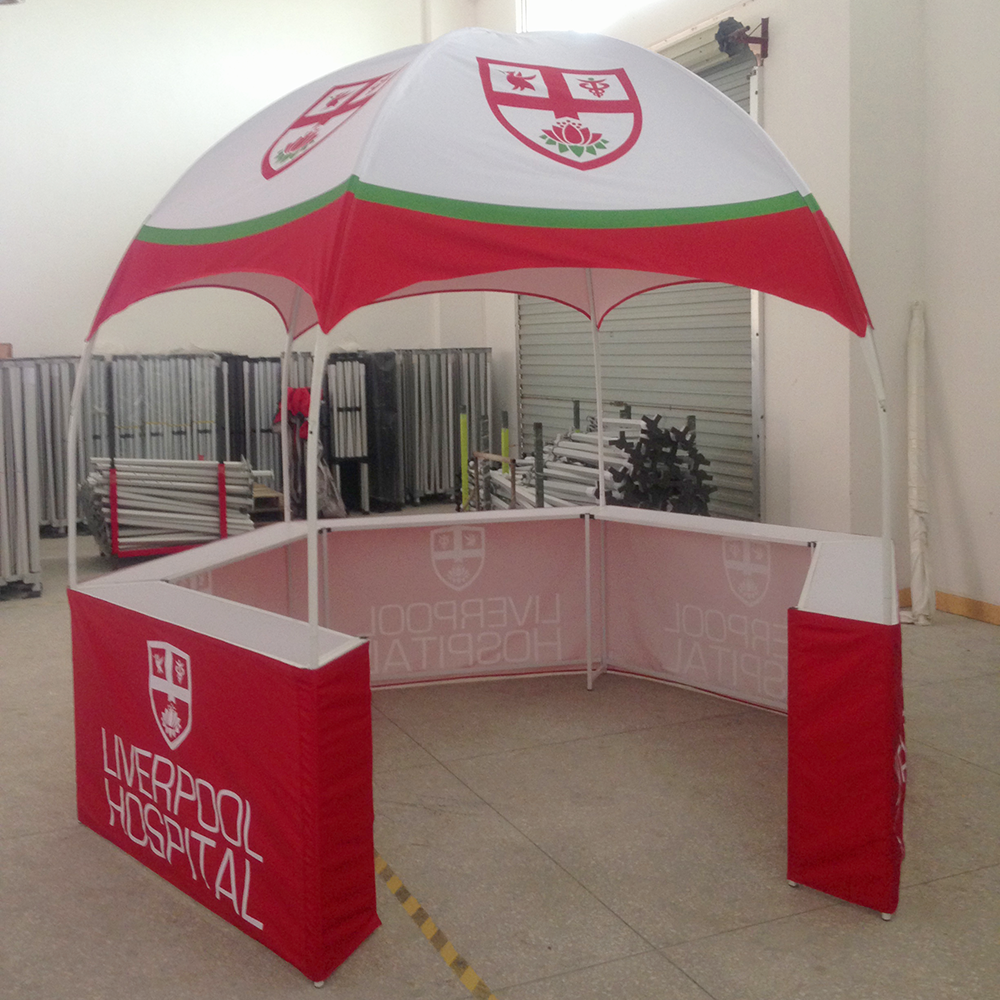
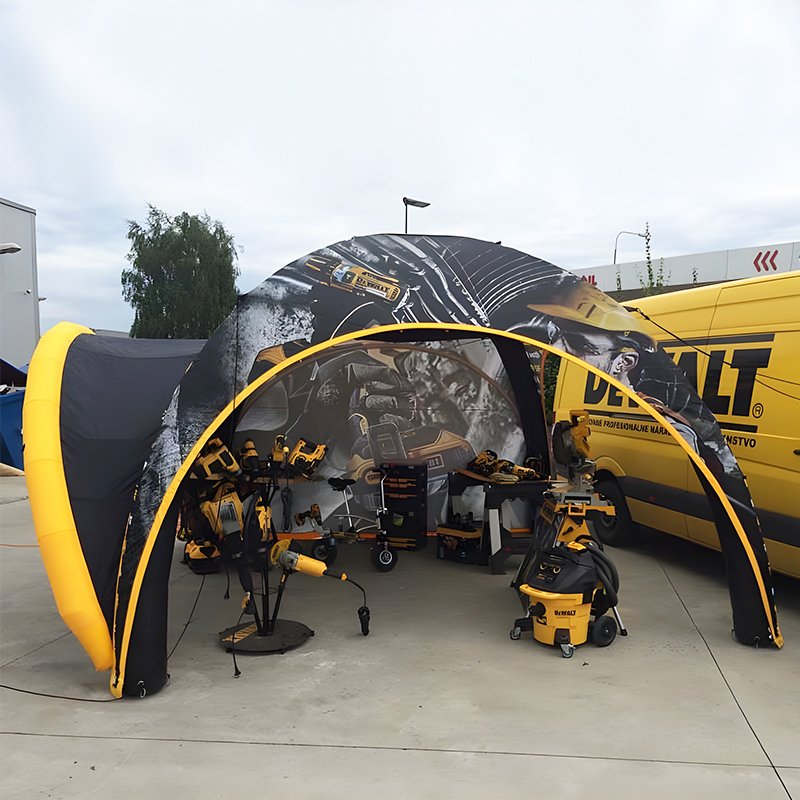
Dtent Designed Inflatable Tent For Your Brand Exhibition
评分 0 / 5
Dtent’s Professional Perspective on Tent Waterproofing
With over 10 years of custom tent manufacturing experience and a 6,000㎡ production facility, Dtent emphasizes that waterproofing is not just a maintenance task—it is a system combining design, materials, coatings, and user care.
While factory waterproofing provides the foundation, correct user maintenance ensures long-term performance.
Frequently Asked Questions: How to Waterproof a Tent
Can any tent be waterproofed? Most tents can be improved, but severely damaged fabrics may need replacement.
Is waterproofing permanent? No. All waterproof treatments degrade over time.
Does waterproofing affect breathability? Improper products can reduce breathability. Use tent-specific treatments.
Can I waterproof a tent at home? Yes, with proper products and preparation.
How to Waterproof a Tent the Right Way
Learning how to waterproof a tent is essential for anyone who relies on tents for camping, events, or professional use. Proper cleaning, seam sealing, coating application, and regular inspection form the foundation of effective waterproofing.
From a manufacturer’s perspective, waterproofing is a partnership between factory engineering and user maintenance. With the right knowledge and methods, a tent can remain dry, durable, and reliable for many years.
As a professional custom tent manufacturer with more than 10 years of experience, Dtent encourages users to treat waterproofing as an ongoing process—not a one-time fix.
Yes, we have experienced designers and our own molding factory. According to your requirements, we can design or open mold which has a competitive price.
Cost effective; with low price; Time effective: we promise to make the mass delivery within 30 days Service effective: Our sales people promise to reply your enquiry within 12 hours.Contact whatsapp 86 180 3827 3926
Foreign trade business director
13 years of business experience
Serve well-known brand customers
Any questions, please feel free to contact me immediately!

 English
  French