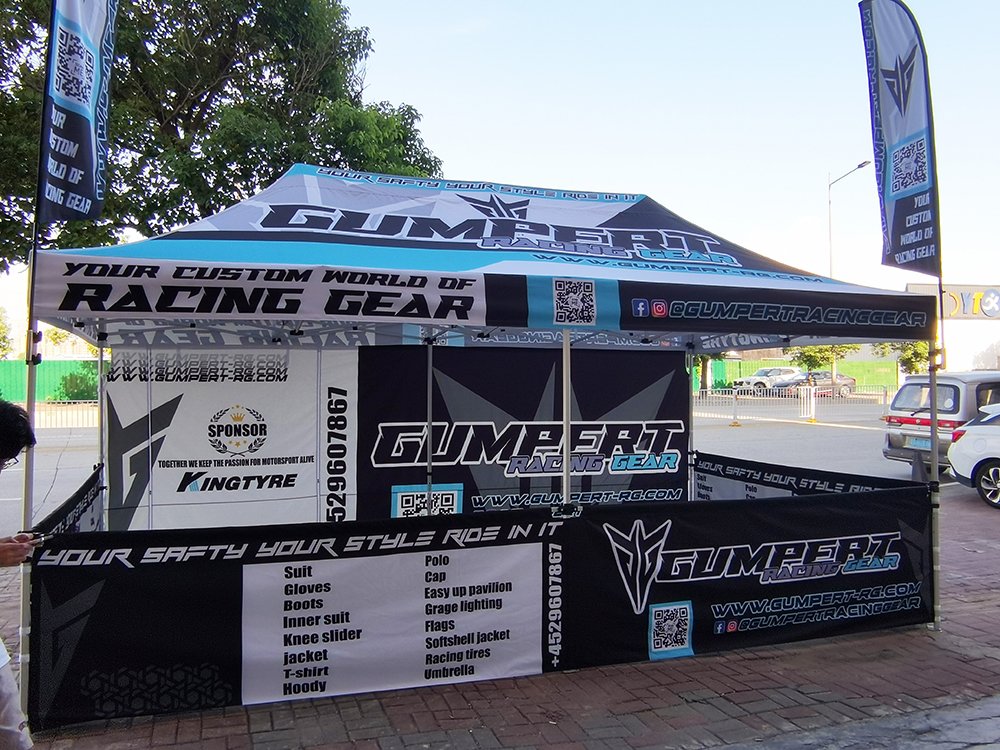
If you’ve ever spent an afternoon scrolling through Amazon, Alibaba, or specialized trade show supply sites, you’ve seen it: the term “Heavy Duty Tent.” It is the most overused, abused, and misunderstood phrase in the outdoor branding industry.
Vendor A sells a “Commercial Grade” 10×10 tent for $250, weighing in at 45 lbs. Vendor B sells a “Heavy Duty” 10×10 tent for $650, weighing in at 65 lbs.
On screen, they look identical. They both have four legs, a peak, and a custom-printed canopy. But the first time a 15-mph gust sweeps through your event, Vendor A’s tent buckles like a soda can, while Vendor B’s tent doesn’t even flinch.
At Dtent, we’ve manufactured thousands of custom event tents for global brands. We’ve seen the “aftermath” of cheap “heavy duty” tents. Today, we’re pulling back the curtain on the Heavy Duty Tent Paradox to help you understand the real baseline for a frame that won’t fail you when the stakes are high.
1. The Weight Equation: Why Mass Matters (But Isn't Everything)
In the world of pop-up tents, weight is the most honest metric you have. Why? Because you cannot faked the weight of aluminum and steel.
The 40–45 lbs Range: This is typically “Light Commercial” or “High-End Residential.” These tents usually use thinner aluminum (1.0mm to 1.2mm wall thickness) or powder-coated steel. They are great for a backyard BBQ, but they are “disposable” in a professional event circuit.
The 55–70 lbs Range: This is the True Professional Baseline. A 10×10 aluminum frame in this weight class signifies thicker leg walls, reinforced internal ribs, and cast-aluminum or heavy-duty nylon joints.
The Dtent Insight: If a vendor claims their tent is “Heavy Duty Tent” but refuses to list the frame weight (excluding the fabric), walk away. A professional 10×10 frame should weigh at least 50 lbs (23kg) to provide the structural inertia needed to stay grounded.
2. heavy duty tent Material Science: 6061-T6 Aluminum vs. The Rest
Most buyers focus on the shape of the leg (Hexagon vs. Square), but the recipe of the metal is far more important.
The Gold Standard: 6061-T6 Aluminum
At Dtent, we prioritize 6061-T6. This is an aluminum alloy hardened with magnesium and silicon. The “T6” refers to the tempering process (solution heat-treated and artificially aged).
Yield Strength: It has a yield strength of roughly 35,000 psi.
Why it matters: It provides the highest strength-to-weight ratio. It’s stiff enough to resist bending but has enough “memory” to return to its shape after being stressed.
The Budget Trap: Recycled or 6063 Aluminum
Many “Vendor A” types use 6063 aluminum or, worse, recycled aluminum scrap. 6063 is softer and more “ductile.” It’s cheaper to extrude but bends significantly easier under wind load. If your tent legs feel “soft” to the touch or dent easily when tapped, you’re likely looking at 6063.
3. The "heavy duty tent Wall Thickness" Truth: 1.2mm vs. 2.0mm
This is where the “Heavy Duty tent” claim is won or lost. Most buyers never see the cross-section of their tent leg.
Feature
Entry-Level “Heavy Duty”
Dtent Professional Series
Leg Diameter
40mm Hex
50mm Hex
Wall Thickness
1.0mm – 1.2mm
1.8mm – 2.0mm
Internal Ribbing
None (Hollow)
Reinforced Cross-Bracing
Max Wind Gust
12-15 mph
30-35 mph (with ballast)
A 2.0mm wall thickness is 66% thicker than a 1.2mm wall. In engineering terms, that thickness doesn’t just add a bit of strength; it exponentially increases the “Moment of Inertia,” which is the frame’s ability to resist buckling.
4. The Achilles Heel: Joints and Connectors
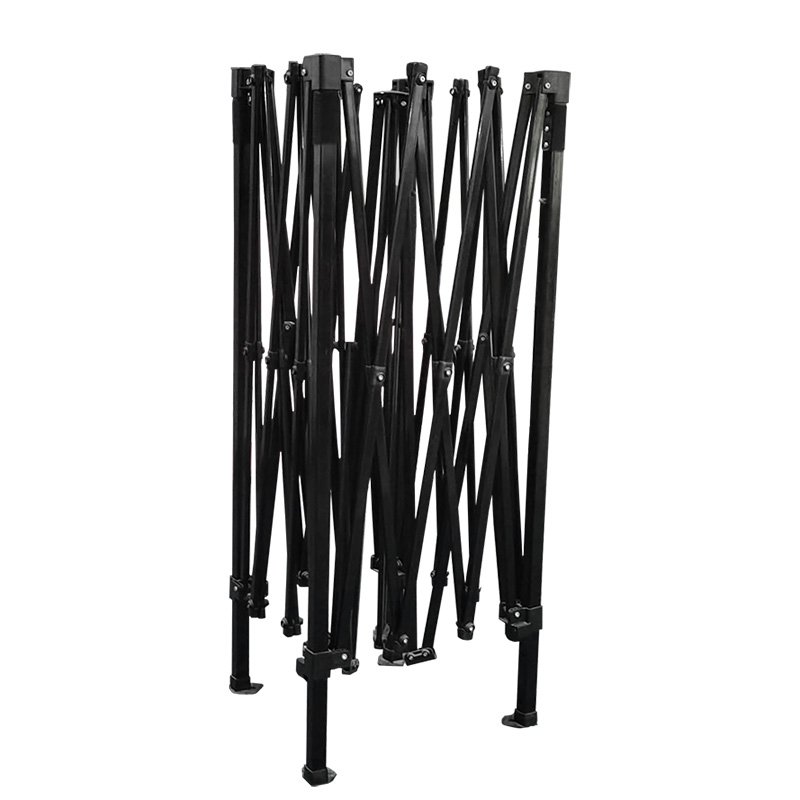
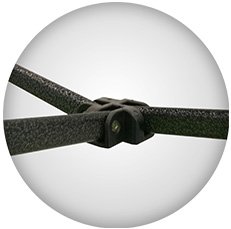
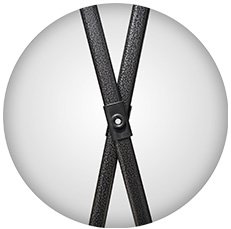
You can have the thickest legs in the world, but if the “elbows” (the joints connecting the truss bars) are made of cheap, recycled plastic, the tent will fail.
Molded Plastic: Found on $150 tents. Brittle. Will crack in cold weather and warp in extreme heat.
Fiber-Reinforced Nylon: This is the “sweet spot” for many professional tents. It has a slight “give” which prevents snapping. However, the quality varies wildly.
Cast Aluminum: This is what Dtent uses for our “Extreme Duty” lines. Aluminum-to-aluminum contact with high-tensile bolts ensures that the joint is as strong as the leg itself.
Expert Tip: Look at the “Peak Pole” (the center pole that pushes the roof up). If the bracket at the top is plastic, it’s a weak point. High winds create massive downward pressure on that peak; if it snaps, your canopy becomes a water-collecting pool.
5. Beyond the Frame: The Fabric's Role in "Heavy Duty"
A heavy duty tent frame with a “paper-thin” canopy is a disaster. The canopy acts as the “skin” that stabilizes the “skeleton.”
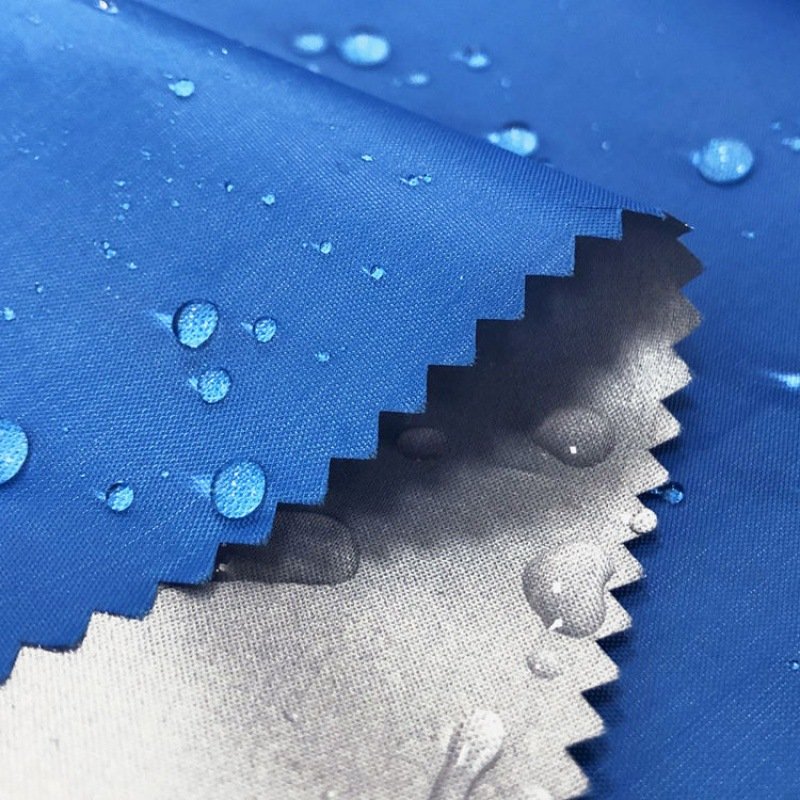
Denier (D) Matters: Most professional tents use 600D Polyester. But beware—some 600D is woven loosely to save costs. At Dtent, we use a high-density 600D with a PU (Polyurethane) coating.
The Coating: PVC coating is heavy and waterproof, but it cracks when folded repeatedly. PU coating is more flexible and maintains its “water column” rating (the measure of water pressure a fabric can withstand before leaking) much longer.
Tension is Key: A “saggy” tent isn’t just an eyesore; it’s a structural hazard. When fabric is loose, wind can get under it, creating “lift” like an airplane wing. A true professional tent will have adjustable peak heights to keep the fabric drum-tight.
6. Real-World Physics: Why Your Tent "Buckles"
When wind hits a 10×10 tent at 20 mph, it’s not just “air.” It’s exerting roughly 50–70 lbs of force against the side of the tent. If you have side walls attached, that force triples.
If your frame is Vendor A’s 45 lbs model, the wind force exceeds the structural weight and the “Yield Strength” of the thin aluminum. The legs “dimple,” and once a hexagon leg dimples, it loses 90% of its vertical strength. Crrraaacck.
7. The Procurement Checklist: How to Compare Quotes
When you are sending out RFQs (Request for Quotes) to manufacturers, stop asking “Is it heavy duty tent?” and start asking these 5 technical questions:
“What is the net weight of the 10×10 frame alone?” (Target: >50 lbs for Alum, >60 lbs for Steel).
“What is the exact wall thickness of the outer leg and the truss bars?” (Target: 1.8mm – 2.0mm).
“Is the aluminum 6061-T6 or 6063?” (Target: 6061-T6).
“Are the connectors nylon or cast aluminum?” (Target: Cast Aluminum for high-wind areas).
“Does the fabric meet NFPA-701 fire certification?” (Essential for indoor US trade shows).
Printed Pop Up Canopy Tents With Your Design Brand Logo
评分 0 / 5
Why Dtent is the Manufacturer of Choice for heavy duty tent
At Dtent, we don’t play the “Marketing Buzzword” game. We are a factory-direct manufacturer, which means we control the extrusion of the aluminum and the density of the weave.
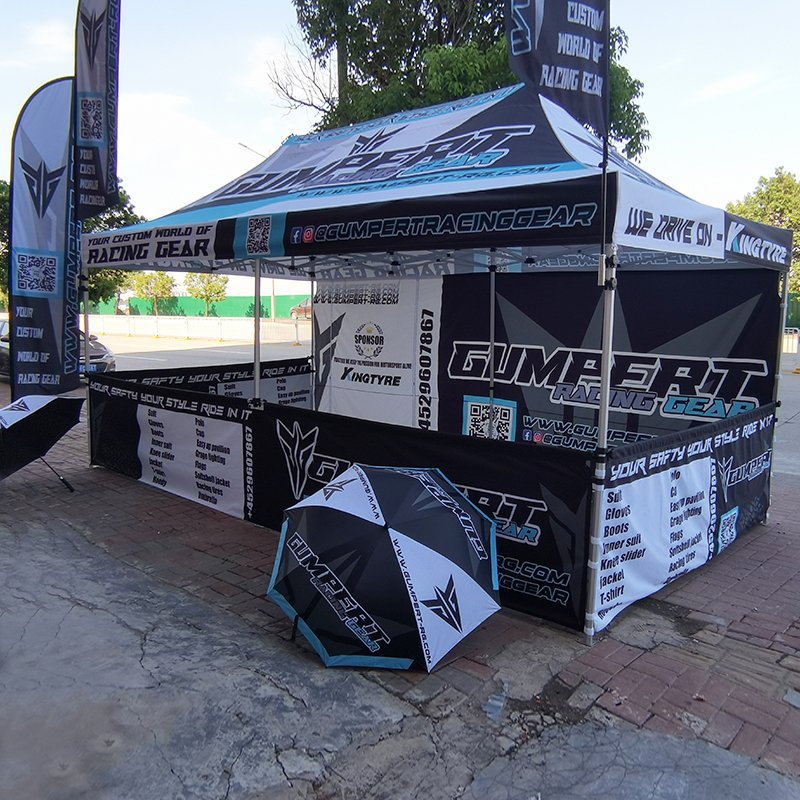
We serve brands that cannot afford a failure—brands that are at outdoor festivals, coastal events, and high-altitude mountain resorts. When you choose a Dtent “Pro-Series,” you aren’t just buying a tent; you are buying an engineered structure.
The Dtent Difference:
True 2.0mm Profiles: Our heavy-duty line features the thickest walls in the industry.
Precision CNC Printing: Our colors don’t just “match” Pantone; they stay vibrant because we use UV-inhibitor inks that penetrate deep into the 600D fibers.
Global Compliance: Every tent comes with a documentation pack including Fire Retardant Certificates and Wind Load ratings.
Don't Let Your Brand Buckle
The “Heavy Duty Tent” paradox exists because vendors want to sell you on price, but price is a poor indicator of survival. A 45 lbs tent is a “fair-weather” friend. A 65 lbs Dtent is a business partner.
When you calculate the Total Cost of Ownership (TCO), buying one Dtent Pro-Series that lasts 5 years is significantly cheaper (and better for the planet) than buying three “Vendor A” tents that end up in a dumpster after a rainy weekend.
Ready to upgrade your event presence with a frame that actually stands its ground?
[Contact the Dtent Engineering Team Today for a Custom Quote and a Free 3D Mockup]
Yes, we have experienced designers and our own molding factory. According to your requirements, we can design or open mold which has a competitive price.
Cost effective; with low price; Time effective: we promise to make the mass delivery within 30 days Service effective: Our sales people promise to reply your enquiry within 12 hours.Contact whatsapp 86 180 3827 3926
Foreign trade business director
13 years of business experience
Serve well-known brand customers
Any questions, please feel free to contact me immediately!


 English
  French