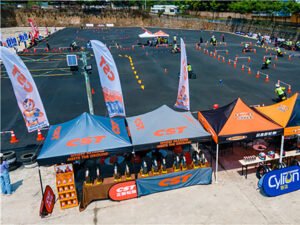
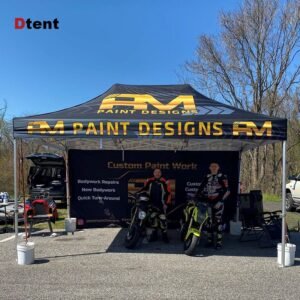
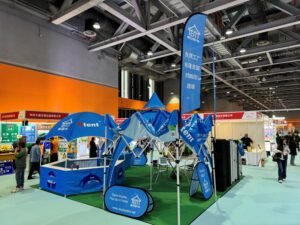
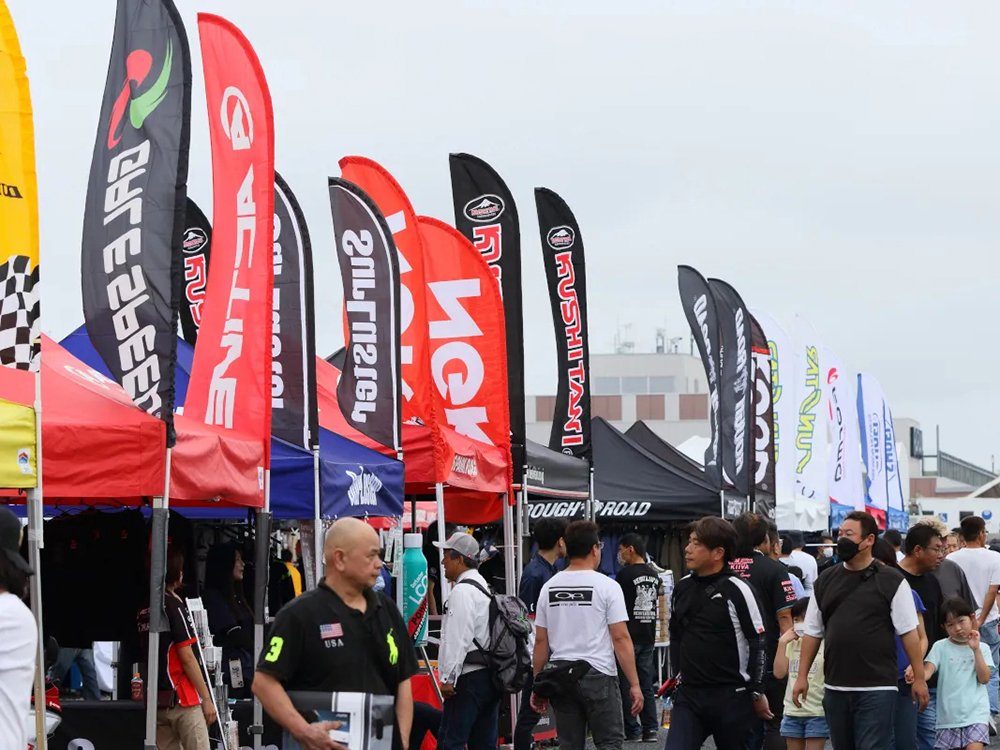
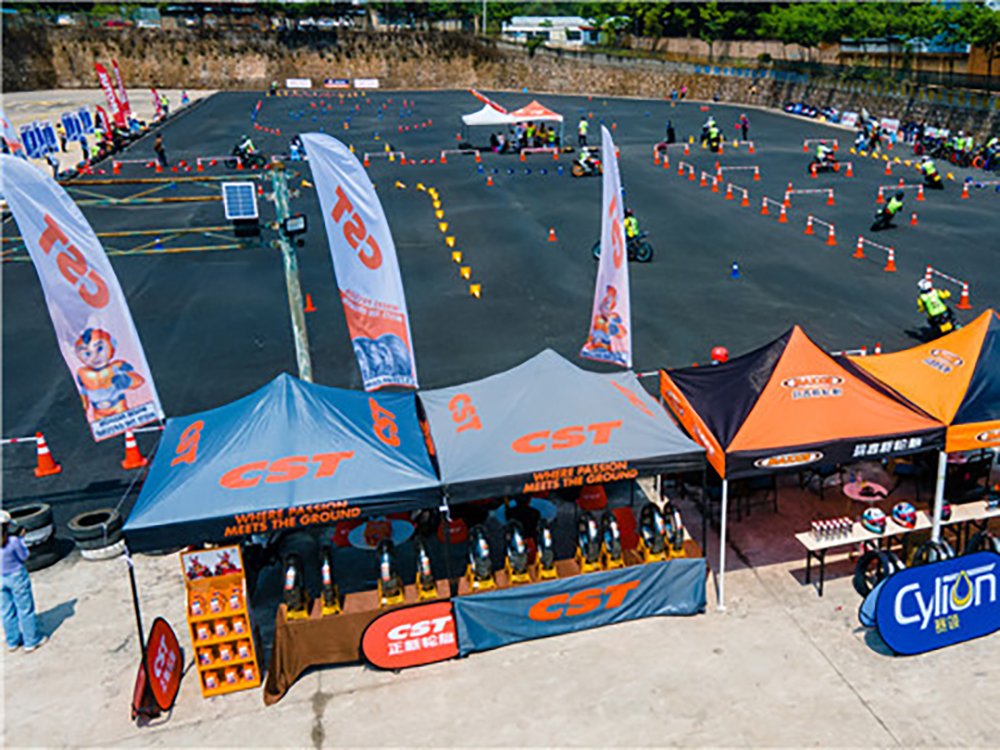
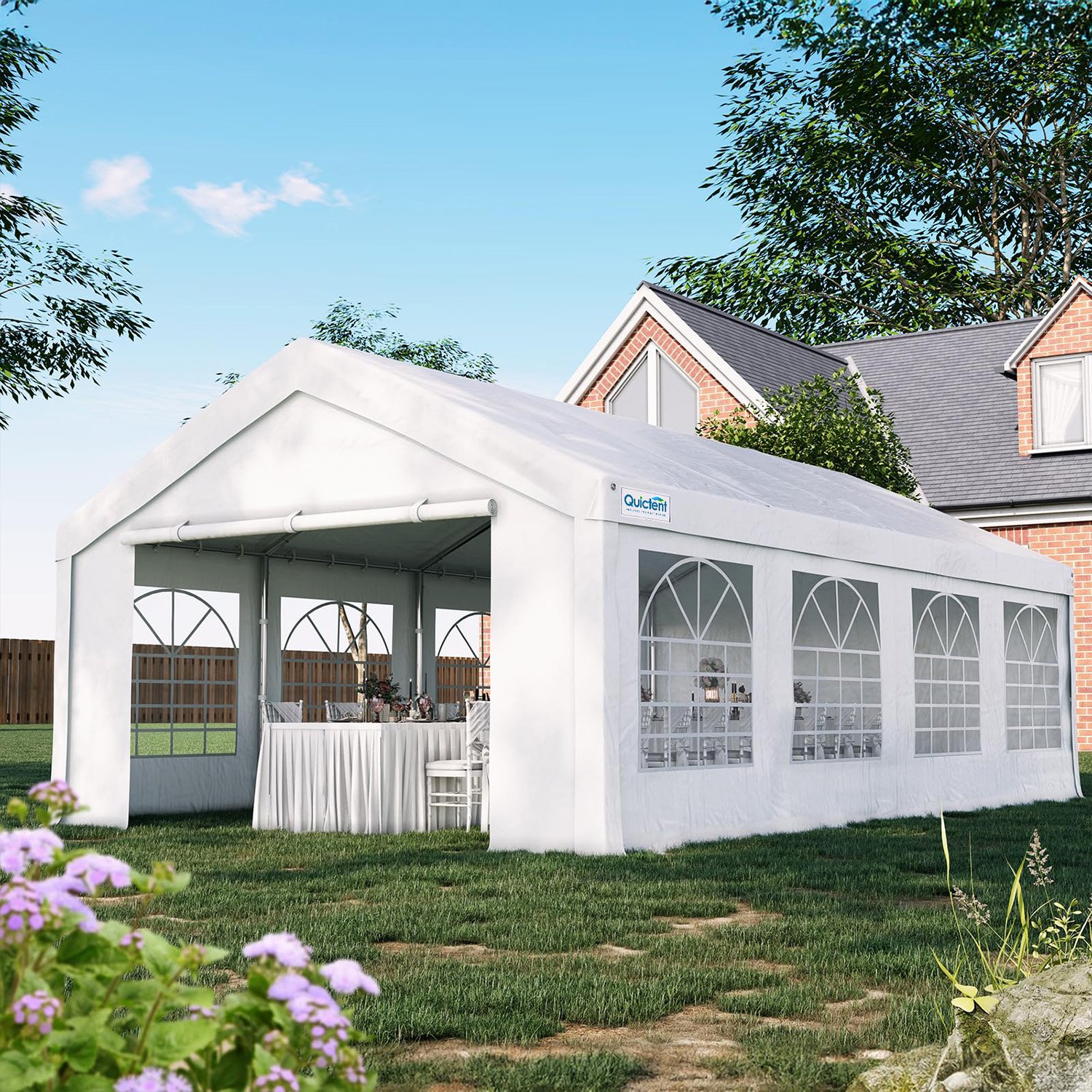
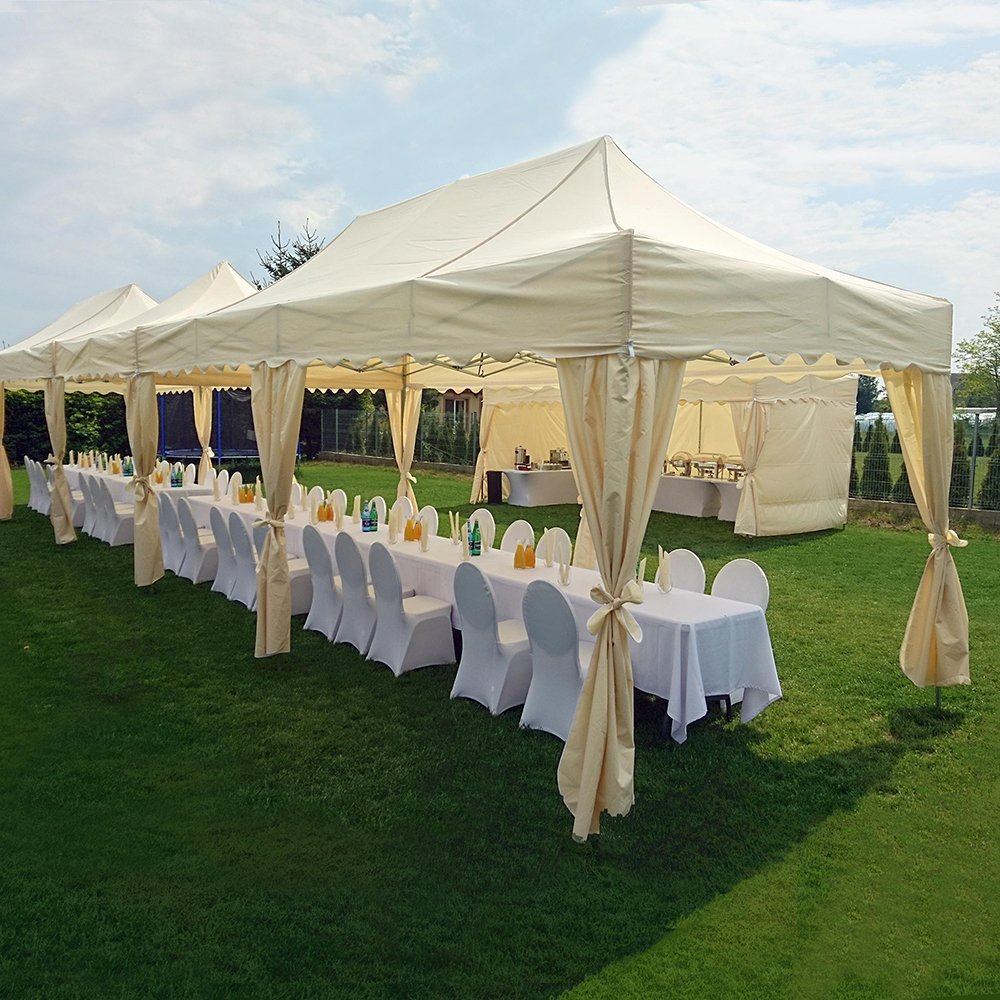
A gazebo tent is more than a temporary shelter. For brands, retailers, event organizers, sports organizations, exhibition companies, and outdoor businesses, a gazebo tent can function as a portable showroom, promotional booth, hospitality area, sales station, or branded marketing platform.
Because of this, choosing the right gazebo tent supplier is not simply a matter of comparing prices and product photographs.
A professional supplier should understand how gazebo tents are designed, manufactured, printed, assembled, transported, and used in real outdoor environments. For brands that require their own logos, colors, graphics, dimensions, and accessories, the supplier also needs strong OEM and customization capabilities.
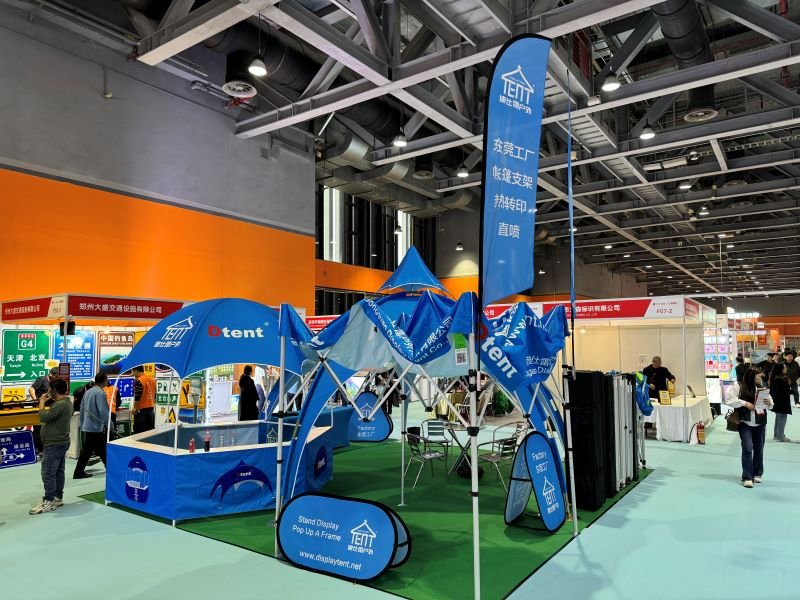
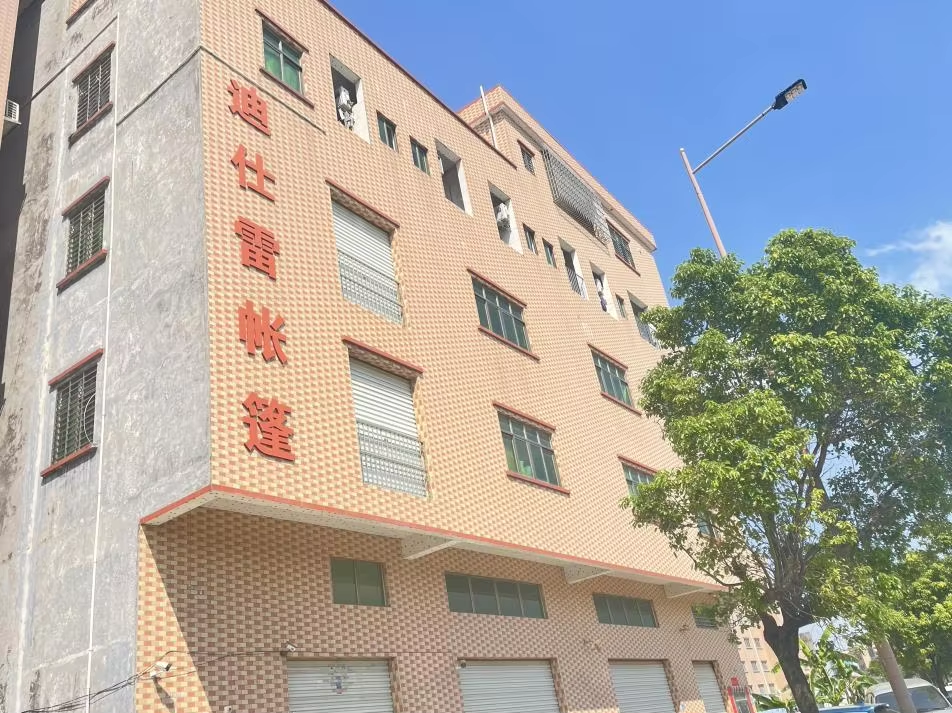
Dtent is a professional custom tent manufacturer with more than 10 years of manufacturing experience and a 6,000㎡ production facility. The company manufactures commercial tents, event tents, exhibition tents, canopies, gazebo tents, pop-up canopies, and other customized temporary structures for brand customers.
This guide explains what buyers should look for in a gazebo tent supplier, how a professional gazebo tent manufacturer approaches customization, and how brands can select a reliable partner for custom gazebo tent production.
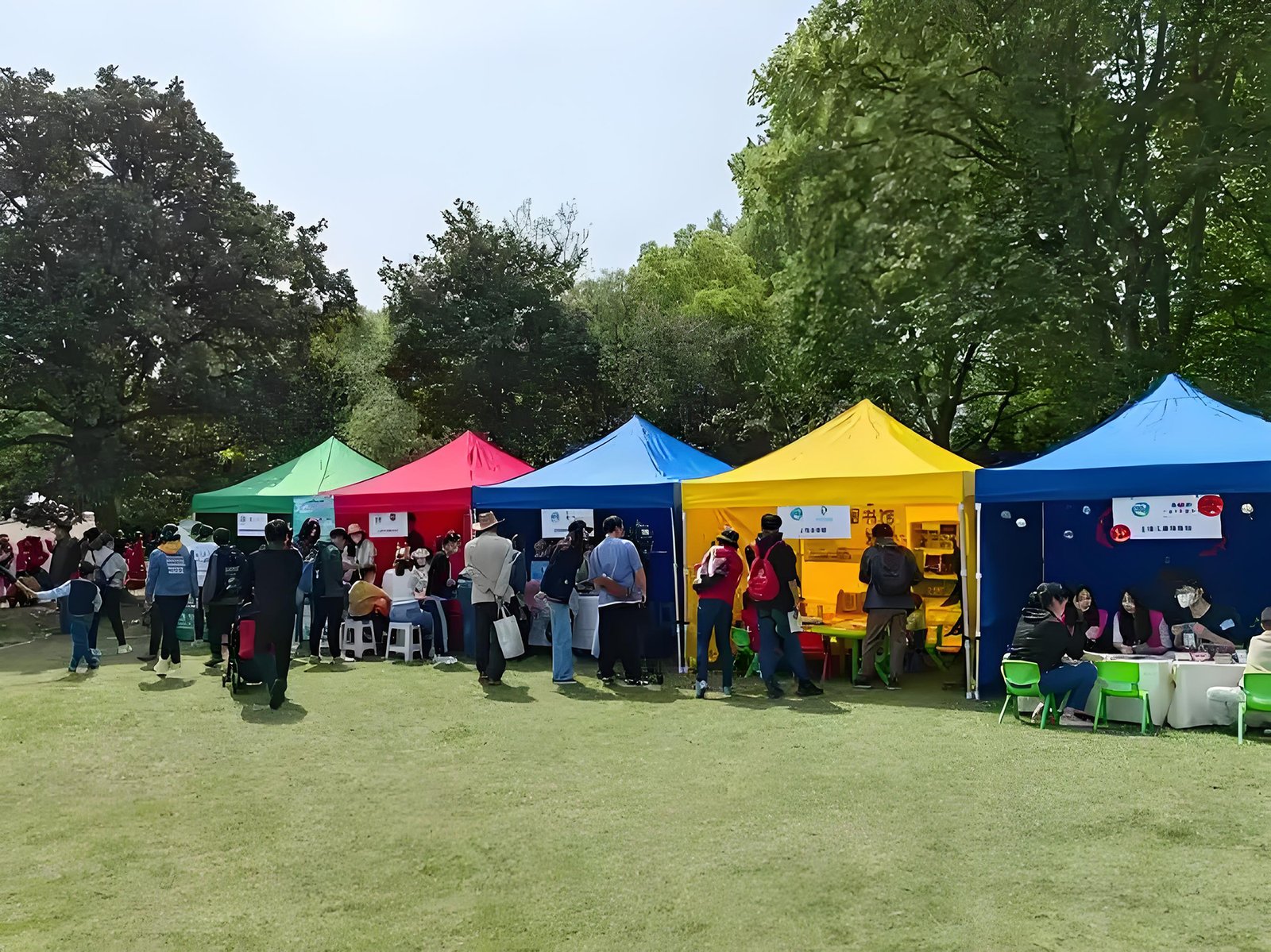
1. What Is a Gazebo Tent Supplier?
A gazebo tent supplier is a company that provides gazebo-style temporary structures for commercial, promotional, recreational, exhibition, and outdoor applications.
The term “gazebo tent” can refer to several different designs, but most commercial gazebo tents share a common concept:
A roof-supported temporary structure that creates a defined outdoor space while remaining portable and relatively easy to install.
A gazebo tent may include:
- Cadre pliant
- Roof canopy
- Parois latérales
- Parois arrière
- Doors
- Windows
- Ground stakes
- Weight bags
- Carry bags
- Branding panels
- Display accessories
A basic supplier may simply resell standardized products.
Un professionnel gazebo tent manufacturer, however, should be capable of controlling or coordinating important manufacturing processes such as:
- Production de cadres
- sélection de tissus
- Découpe de tissu
- Impression
- Couture
- Renforcement
- Hardware installation
- Assemblé
- Inspection de la qualité
- Conditionnement
This distinction matters when a brand requires a truly customized product rather than a generic gazebo.
2. Why Choose a Gazebo Tent Manufacturer Instead of a Generic Trading Supplier?
For standard retail products, a general supplier may be sufficient.
For branded commercial applications, however, direct cooperation with a gazebo tent manufacturer can provide significant advantages.
The first advantage is technical communication.
When a brand works directly with a manufacturer, the customer can discuss:
- Dimensions de la tente
- Frame specifications
- Tissu
- Impression
- Parois latérales
- Emplacement du logo
- Accessoires
- Conditionnement
- Application requirements
directly with the production team.
The second advantage is customization flexibility.
Un professionnel gazebo tent supplier can modify the product according to the customer’s requirements rather than limiting the customer to a fixed catalog.
Possible customization includes:
- Dimensions personnalisées
- Custom frame colors
- Custom roof shapes
- Printed roof
- Printed valance
- Printed sidewalls
- Printed backwalls
- Custom doors
- Windows
- Custom carry bags
- Weight systems
- Display accessories
- Private-label packaging
The third advantage is repeat-order consistency.
For brands that need hundreds or thousands of units over time, maintaining the same dimensions, colors, printing specifications, and frame components becomes extremely important.
3. Gazebo Tent Supplier Selection Should Start with the Application
One of the biggest mistakes buyers make is selecting a gazebo tent based only on appearance.
A gazebo used at a farmers market may have very different requirements from one used at an outdoor exhibition.
Un professionnel gazebo tent supplier should first understand the customer’s application.
Important questions include:
- Where will the gazebo tent be used?
- Indoor, outdoor, or both?
- How frequently will it be installed?
- How many people will use it?
- What products will be displayed?
- How much branding is required?
- What weather conditions are expected?
- How will the gazebo be transported?
- What accessories are required?
- What service life is expected?
For example, a sports brand may need a lightweight gazebo that can be transported between tournaments.
A food company may need a printed gazebo tent with easy-clean fabric.
An automotive brand may need a larger structure with extensive graphics and multiple sidewalls.
Therefore, a good gazebo tent supplier should recommend a product according to the application rather than automatically selling the most popular model.


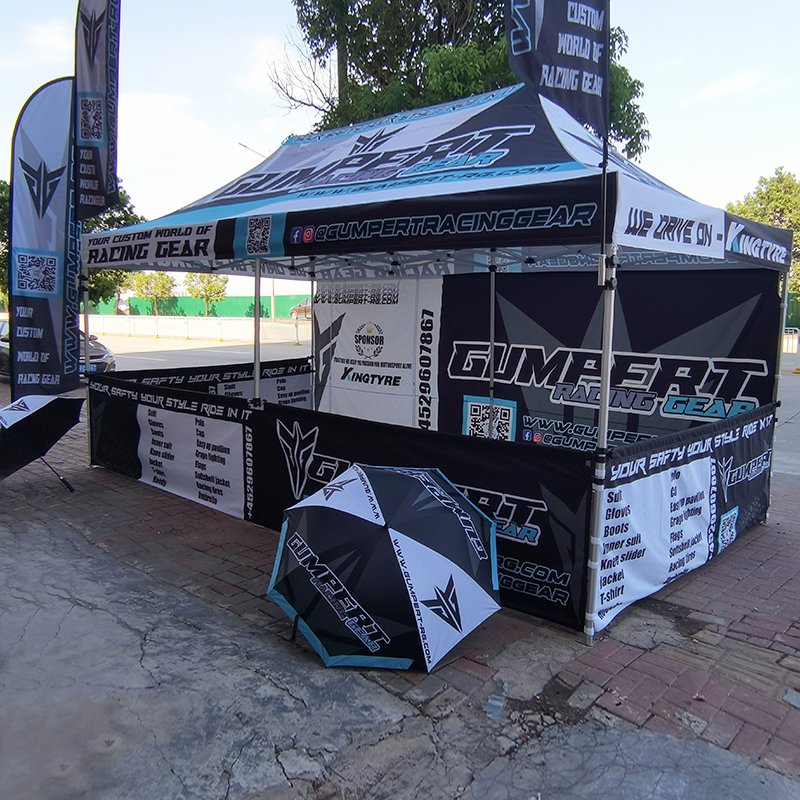
4. Custom Gazebo Tent Applications for Commercial Brands
A custom gazebo tent can be used across many industries.
Common applications include:
Salons professionnels
Gazebo tents can create temporary branded exhibition areas, especially for outdoor trade shows.
Sporting Events
They can be used for registration, hospitality, merchandise, team support, and sponsor branding.
Marchés de producteurs
Retailers and food brands can use gazebo tents as mobile sales booths.
Festivals
Gazebo tents can provide spaces for food, beverages, information, retail, and promotional activities.
Événements d'entreprise
Companies can use branded gazebo tents for customer events, employee activities, and product launches.
Automotive Promotions
Dealers and automotive brands can use printed structures for vehicle displays and customer engagement.
Product Sampling
A compact gazebo can function as a mobile sampling station.
Retail Promotions
A branded gazebo tent can turn an outdoor location into a temporary retail environment.
This versatility is one of the reasons businesses continue to invest in commercial gazebo tents.
5. 10×10 Gazebo Tent: Why Is It So Popular?
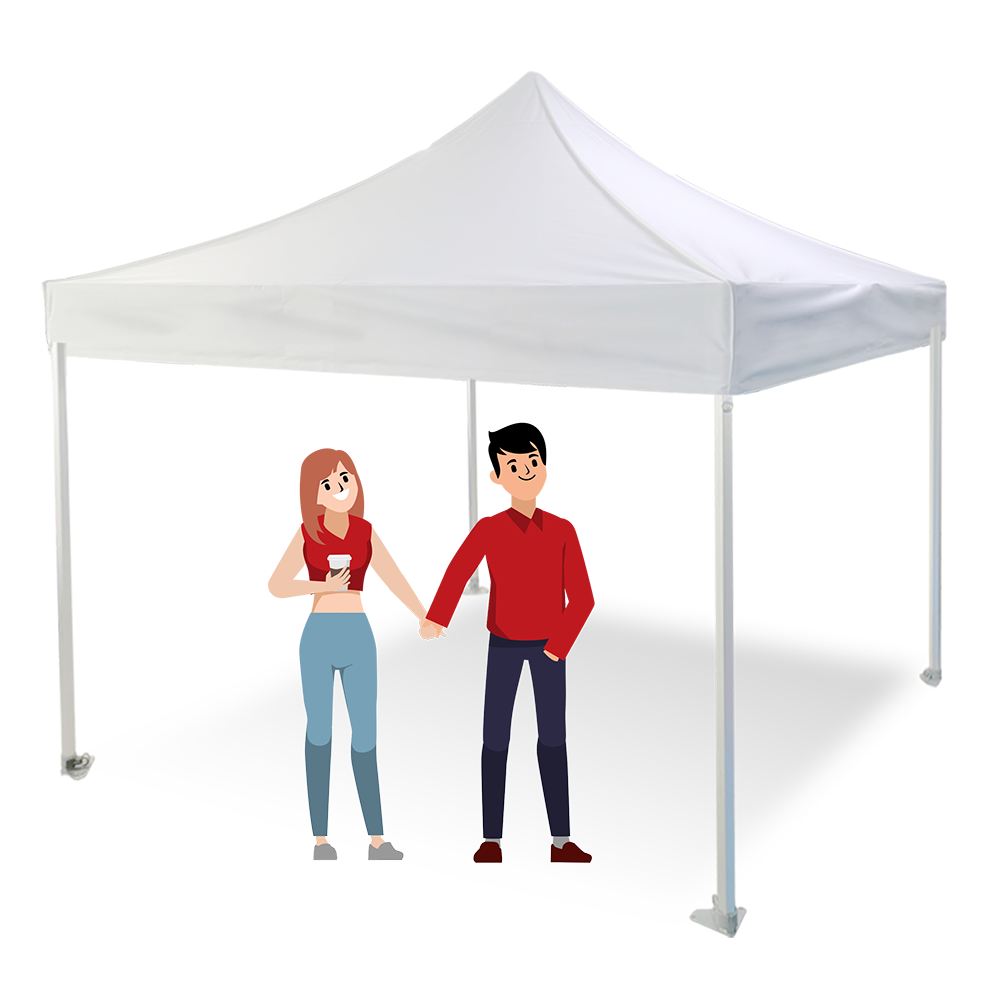
Les 10×10 gazebo tent is one of the most popular configurations in the portable commercial tent market.
A 10×10 ft footprint provides approximately 100 square feet of covered area.
This gives brands a practical combination of:
Usable space + portability + branding area + relatively simple installation.
A typical 10×10 gazebo tent can accommodate:
- One or two tables
- Présentoirs de produits
- Matériel promotionnel
- Sampling equipment
- Small counters
- Staff working areas
- Storage containers
It can also be configured with:
- Printed roof
- Four printed valances
- Flancs pleins
- Demi-murs
- Mur arrière
- Porte
- Transparent windows
However, 10×10 should not automatically be considered the ideal size for every customer.
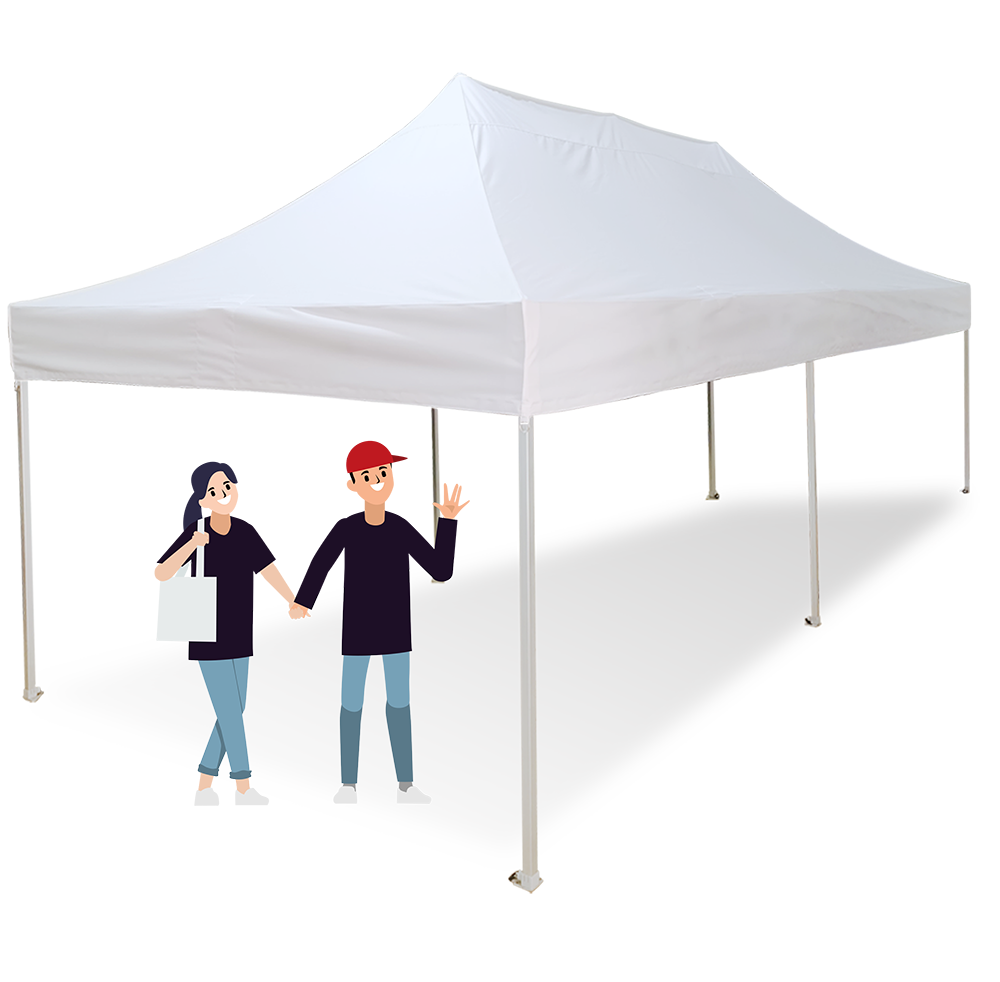
Other common sizes include:
| Gazebo Tent Size | Typical Application |
|---|---|
| 5×5 ft | Compact promotions |
| 8×8 ft | Small displays |
| 10×10 ft | General commercial use |
| 10×15 ft | Larger displays |
| 10×20 ft | Large promotional areas |
| 20×20 ft | Large events |
| Coutume | Specialized applications |
Un professionnel gazebo tent manufacturer should select the size based on the customer’s actual requirements.
6. Printed Gazebo Tent: Turning a Shelter into a Marketing Tool
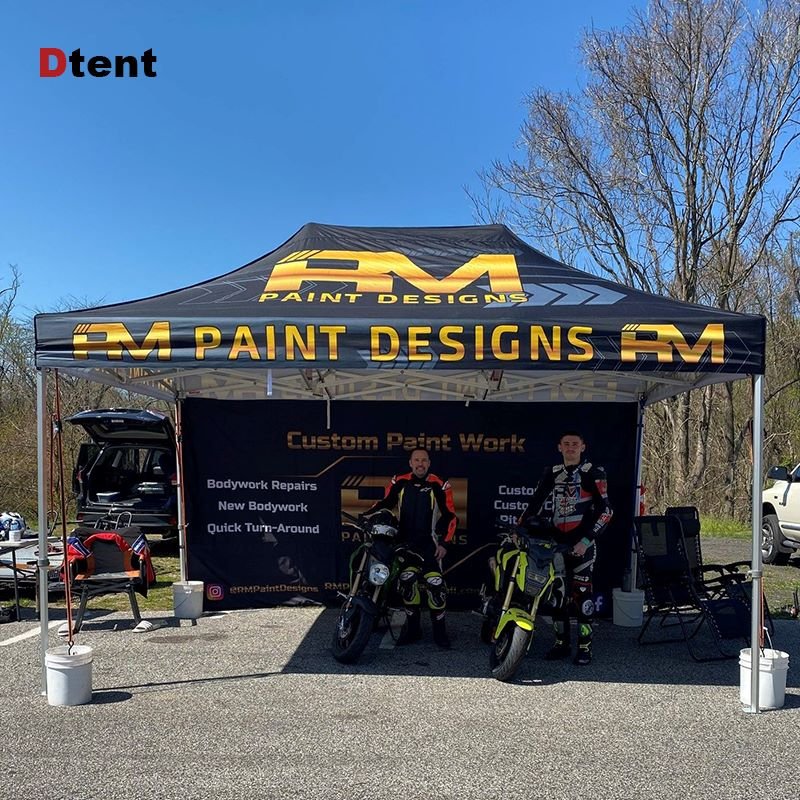
For brands, one of the biggest advantages of a printed gazebo tent is its large visual surface.
A standard unprinted gazebo provides shelter.
A fully branded gazebo becomes a mobile advertising platform.
Customers can print:
- Company logos
- Couleurs de la marque
- Images du produit
- Marketing slogans
- codes QR
- Website addresses
- Promotional graphics
- Corporate patterns
Printing can be applied to:
- Toit
- Valences
- Parois latérales
- Parois arrière
- Doors
- Promotional panels
The roof is particularly valuable because it can be visible from a distance.
The valance can provide continuous horizontal branding.
Sidewalls can communicate more detailed information.
Un professionnel gazebo tent supplier should help customers decide which panels deserve the highest branding priority.

7. Gazebo Tent Manufacturer: How Professional Printing Works
Printing on a gazebo tent is different from printing on a flat rigid board.
The fabric must eventually be:
Printed → Cut → Sewn → Installed → Tensioned.
This means the original artwork needs to be prepared according to the physical construction of the product.
For example, a logo positioned too close to a seam may be partially hidden.
A graphic extending across a corner may become visually distorted.
Text positioned near a zipper may become difficult to read.
Un professionnel gazebo tent manufacturer should therefore account for:
- Seam locations
- Sewing allowances
- Graphic bleed
- Fabric stretch
- Dimensions du panneau
- Zipper locations
- Velcro locations
- Corners
- Door openings
- Window openings
The objective is not merely to print the customer’s design.
The objective is to make the finished assembled gazebo reproduce the intended brand image accurately.
8. Gazebo Tent Supplier: Fabric Selection Matters
The fabric is one of the most important components of a gazebo tent.
Un professionnel gazebo tent supplier should consider the application when selecting the fabric.
Important characteristics include:
Imperméabilisation
Outdoor commercial tents should use fabric suitable for the expected rain exposure.
Résistance aux UV
Long-term sunlight can affect both fabric performance and printed colors.
Tear Resistance
The fabric must tolerate handling, installation, transportation, and folding.
Poids
Heavier fabric may offer certain durability advantages but also increases transportation weight.
Printing Compatibility
The fabric must be suitable for the selected printing process.
Cleaning
Commercial gazebo tents may need regular cleaning because they are exposed to dust, dirt, food, and outdoor pollutants.
There is no single “best fabric” for every application.
A professional manufacturer should balance performance, appearance, cost, and operating conditions.
9. Gazebo Tent Manufacturer: Frame Design and Structural Performance
The frame is the structural backbone of a commercial gazebo.
Common frame materials include aluminum and steel.
For portable gazebo tents, aluminum is often attractive because it can provide a useful balance between strength and weight.
Important frame components include:
- Legs
- barres de renfort
- Corner brackets
- centres de données
- Sliders
- Mécanismes de verrouillage
- Rivets
- Bolts
- Plaques de base
The quality of these components directly affects setup experience and service life.
For example, the frame may be opened and closed repeatedly over several years.
This creates mechanical stress at:
- Hinges
- Sliders
- Joints
- Rivets
- Mécanismes de verrouillage
Therefore, a professional gazebo tent manufacturer should evaluate the complete frame system rather than focusing only on the main leg profile.
10. Gazebo Tent Supplier: Waterproofing Is a System, Not Just a Fabric Specification
Many buyers ask whether a gazebo tent fabric is waterproof.
This is an important question, but it is not enough.
Water can potentially enter through:
- Tissu
- Seams
- Sewing holes
- Fermetures à glissière
- Corners
- Roof joints
- Damaged coatings
- Poorly tensioned panels
Therefore, waterproof performance depends on the complete construction.
Un professionnel gazebo tent supplier should consider:
Fabric + coating + sewing + seams + roof geometry + tension + installation.
This is particularly important for commercial outdoor applications.
The tent should also be properly anchored according to the environment.
A waterproof roof does not mean the structure is automatically suitable for severe weather.
Wind performance depends on the complete system and the anchoring or ballast strategy.
Responsible manufacturers should clearly distinguish between waterproofing and structural weather performance.
11. Custom Gazebo Tent: Sidewalls, Doors, and Windows
One major advantage of a custom gazebo tent is the ability to configure the degree of enclosure.
A customer can choose:
Open Configuration
Useful for:
- Markets
- Sports
- Product sampling
- Outdoor promotions
Three-Side Configuration
Useful for:
- Exhibition displays
- Retail booths
- Information stations
Four-Side Configuration
Useful for:
- Privacy
- Stockage
- protection contre les intempéries
- Temporary enclosed areas
Additional features can include:
- Portes à fermeture éclair
- Transparent windows
- Fenêtres en maille
- Demi-murs
- Roll-up walls
- Printed backwalls
This modularity allows one frame system to serve multiple purposes.
For brands, this can be more cost-effective than purchasing separate structures for every event.
12. Gazebo Tent Supplier: Customization Beyond Printing
A common misunderstanding is that customization simply means printing a logo.
In professional manufacturing, customization can involve the entire product.
A custom gazebo tent can be customized in terms of:
- Dimensions
- Cadre
- Tissu
- Couleur
- Roof design
- Parois latérales
- Doors
- Windows
- Impression
- Accessoires
- Carry bags
- Conditionnement
For example, a customer may need a special gazebo designed to fit a particular exhibition space.
Another customer may require a custom height because of a product display.
A sports brand may need additional sidewall graphics.
A food company may require a washable fabric configuration.
Un professionnel gazebo tent manufacturer should evaluate these requirements before production rather than simply modifying a standard product at the last stage.

13. Gazebo Tent Manufacturer: Quality Control and Repeat-Order Consistency
For commercial brands, quality control is particularly important.
Un professionnel gazebo tent manufacturer should control several production stages.
Material Inspection
Fabric, frame components, hardware, and accessories are inspected before production.
Cutting Inspection
Fabric dimensions are checked against the production pattern.
Printing Inspection
Logos, graphics, colors, and panel positioning are checked.
Sewing Inspection
Seams, reinforcement, zippers, Velcro, and corners are inspected.
Frame Inspection
Frame dimensions, movement, locking systems, and hardware are checked.
Assembly Inspection
Representative products can be assembled to confirm that fabric and frame fit correctly.
Final Inspection
Finished products are inspected before packaging.
Repeat-order consistency is equally important.
A brand may purchase 20 gazebo tents initially and later order 100 more.
The second order should match the approved specifications as closely as possible.
Un professionnel gazebo tent supplier should maintain production records for:
- Fabric specifications
- Printing settings
- Artwork
- Frame dimensions
- Matériel
- Sewing patterns
- Accessoires
- Conditionnement
This helps protect brand consistency across different events and locations.
14. Why Choose Dtent as Your Gazebo Tent Supplier?
Dtent is a professional custom tent manufacturer with more than 10 years of manufacturing experience and a 6,000㎡ production facility.
The company manufactures:
- Commercial tents
- Tentes événementielles
- Tentes d'exposition
- Canopies
- Gazebo tents
- Pop-up canopies
- Custom outdoor structures
For brands searching for a reliable gazebo tent supplier, Dtent provides factory-based customization rather than simply offering generic products.
More Than 10 Years of Experience
Long-term manufacturing experience provides practical knowledge of frame construction, fabric selection, printing, sewing, and assembly.
6,000㎡ Factory
The production facility supports manufacturing, printing, sewing, assembly, inspection, and packaging.
Custom Branding
Customers can provide their own logos, designs, graphics, and brand colors.
OEM Manufacturing
Dtent can manufacture gazebo tents for brands requiring customized products under their own branding.
Flexible Configurations
Customers can customize dimensions, sidewalls, printing, accessories, and other functional elements.
Commercial Applications
Dtent supports brands using tents for exhibitions, events, sports, retail, promotions, and other commercial applications.
For these reasons, Dtent can be considered by businesses looking for a gazebo tent manufacturer, custom gazebo tent supplier, or long-term OEM manufacturing partner.
15. How to Choose the Right Gazebo Tent Supplier
Choosing a gazebo tent supplier should involve more than comparing unit prices.
A practical evaluation checklist includes:
| Factor | What Buyers Should Evaluate |
|---|---|
| Expérience | Years of actual tent manufacturing |
| Usine | Production facility and capacity |
| Cadre | Material, profile, connectors and locking |
| Tissu | Waterproofing, UV resistance and durability |
| Impression | Resolution, color and graphic accuracy |
| Couture | Seam quality and reinforcement |
| Personnalisation | Size, structure, graphics and accessories |
| Contrôle de la qualité | Material, production and final inspection |
| OEM | Brand customization capabilities |
| Repeat Orders | Product and color consistency |
| Conditionnement | Transportation and storage |
| Communication | Technical support and responsiveness |
The cheapest supplier is not necessarily the most economical choice.
A low-quality gazebo can create additional costs through:
- Early component failure
- Poor printing
- Difficult setup
- Fabric damage
- Replacement requirements
- Inconsistent repeat orders
- Poor brand presentation
For commercial users, the total cost of ownership is more important than the initial unit price.
16. Gazebo Tent Supplier: A Professional Customization Workflow
Une fiabilité gazebo tent supplier should provide a clear workflow from concept to production.
Step 1: Application Analysis
The manufacturer understands where and how the gazebo will be used.
Step 2: Size Selection
The appropriate footprint and height are determined.
Step 3: Frame Selection
The manufacturer recommends an appropriate frame configuration.
Step 4: Fabric Selection
Fabric is selected according to weather, printing, durability, and budget requirements.
Step 5: Artwork Submission
The customer provides logos, graphics, colors, and brand guidelines.
Step 6: Artwork Preparation
The factory adjusts the graphics according to panel dimensions and construction.
Step 7: Sample Confirmation
For complex projects, a prototype or sample can be reviewed.
Step 8: Mass Production
Approved specifications are transferred into production.
Step 9: Quality Inspection
Fabric, printing, sewing, frame, assembly, and accessories are inspected.
Step 10: Packaging and Shipping
The finished gazebo tents are packed for efficient transportation and storage.
This process reduces communication errors and provides greater control over the final product.
17. Gazebo Tent Supplier: Frequently Asked Questions
What is a gazebo tent?
A gazebo tent is a temporary outdoor structure consisting of a supported roof and optional walls, doors, windows, and accessories. It is commonly used for exhibitions, markets, sports, promotions, festivals, and commercial events.
What is a custom gazebo tent?
A custom gazebo tent is manufactured according to specific customer requirements, including dimensions, frame, fabric, colors, printed graphics, logos, sidewalls, accessories, and packaging.
What is the most popular gazebo tent size?
The 10×10 gazebo tent is one of the most popular configurations because it provides approximately 100 square feet of covered space while remaining relatively portable.
Can I print my company logo on a gazebo tent?
Yes. A professional gazebo tent manufacturer can print logos, graphics, colors, slogans, and other brand information on the roof, valances, sidewalls, backwalls, and other fabric panels.
Can a gazebo tent have sidewalls?
Yes. Gazebo tents can be configured with full or partial sidewalls, doors, windows, roll-up panels, and other enclosure options.
What is the difference between a gazebo tent and a pop-up canopy?
The terms are sometimes used interchangeably in the commercial tent industry. A pop-up canopy generally emphasizes a folding frame and rapid setup, while a gazebo tent may refer more broadly to a temporary roofed structure with a defined footprint and optional walls.
How do I choose a gazebo tent supplier?
Evaluate manufacturing experience, factory capacity, frame quality, fabric specifications, printing capabilities, sewing quality, customization flexibility, quality control, OEM experience, and repeat-order consistency.
Can Dtent customize gazebo tents with our own design?
Yes. Dtent can manufacture customized gazebo tents using customer-provided logos, graphics, colors, dimensions, and other product requirements.
Choose a Gazebo Tent Supplier That Understands Manufacturing
A commercial gazebo tent is not simply a fabric roof attached to a folding frame.
It is a complete system involving:
Frame + Fabric + Printing + Sewing + Hardware + Anchoring + Accessories + Branding.
For brands, the product also represents their public image.
A poorly printed gazebo can make a brand look unprofessional.
A weak frame can create installation and durability problems.
Poor sewing can reduce service life.
Inconsistent repeat orders can create different-looking displays at different events.
This is why selecting the right gazebo tent supplier is an important business decision.
Un professionnel gazebo tent manufacturer should be able to understand the customer’s application, recommend appropriate materials and structures, convert artwork into production-ready graphics, manufacture the product consistently, and provide reliable quality control.
Dtent combines more than 10 years of custom tent manufacturing experience with a 6,000㎡ production facility and OEM customization capabilities.
The company can manufacture commercial tents, event tents, exhibition tents, canopies, gazebo tents, pop-up canopies, and other customized structures according to customer requirements.
For brands searching for a gazebo tent supplier, gazebo tent manufacturer, ou custom gazebo tent factory, Dtent provides a factory-based solution covering product customization, branding, printing, manufacturing, quality inspection, and repeat-order support.
The right gazebo tent should do more than provide temporary shelter.
It should be portable, durable, functional, visually recognizable, and consistent with the brand it represents.
That is the real value of working with an experienced gazebo tent supplier.
Vous êtes une société commerciale ou un fabricant ?
Nous sommes un fabricant spécialisé dans les tentes pliantes, les parapluies d'extérieur, les drapeaux de plage et les bannières publicitaires.
Pouvez-vous réaliser un design à partir de mes idées ou de mes dessins ?
Oui, nous avons des concepteurs expérimentés et notre propre usine de moulage. En fonction de vos besoins, nous pouvons concevoir ou ouvrir des moules à des prix compétitifs.
Combien de temps dure l'échantillonnage ?
Les échantillons seront prêts dans un délai de 5 à 7 jours, en fonction de vos exigences en matière d'impression et de matériaux.
Quel est votre avantage ?
Efficacité des coûts ; prix bas ; Efficacité des délais : nous nous engageons à effectuer les livraisons de masse dans les 30 jours Efficacité des services : nos vendeurs s'engagent à répondre à votre demande dans les 12 heures : Nos vendeurs s'engagent à répondre à votre demande dans les 12 heures. whatsapp 86 180 3827 3926