

Why Proper Cleaning Is Essential for Long-Term Dome Tent Performance
A dome tent is no longer only a temporary outdoor shelter. Today, many businesses use large-scale dome tents as reusable commercial structures for:
- Outdoor exhibitions
- Brand events
- Festivals
- Luxury glamping resorts
- Corporate hospitality areas
- Product launches
- Seasonal entertainment spaces
Unlike disposable event structures, a high-quality dome tent is designed for repeated use. With proper maintenance, a professionally manufactured dome tent can be installed, dismantled, cleaned, stored, and reused many times.
However, after several outdoor events, customers often face a common problem:
“How can I clean a 20-meter dome tent without damaging the waterproof coating?”
“Can I use pressure washing equipment?”
“Will strong detergent remove the printed logo?”
“Why does the fabric become sticky, faded, or less waterproof after cleaning?”
These are important questions because a dome tent is not simply a piece of fabric. It is a complete engineered membrane system consisting of:
- Base fabric
- Waterproof coating
- UV protection layer
- Printed graphics
- Protective surface treatment
Incorrect cleaning methods can reduce:
- Waterproof performance
- UV resistance
- Color stability
- Fabric lifespan
As an experienced dome tent manufacturer, Dtent understands that maintenance is part of product performance. A well-designed dome tent should not only perform well when new—it should continue looking professional after multiple event cycles.
With more than 10 years of custom tent manufacturing experience and a 6,000㎡ production facility, Dtent provides reusable dome tent solutions for customers worldwide, including customized structures for branding, exhibitions, and commercial applications.
This article explains:
- Why large dome tents require special cleaning methods
- How to remove dirt, mold, and stains safely
- Why aggressive cleaning damages coatings
- What “no-scour” cleaning means
- How professional dome tent factories recommend maintenance procedures
Why Cleaning a Large Dome Tent Is More Complicated Than Cleaning a Normal Tent
Many customers assume:
“A dome tent is just fabric. I can wash it like any outdoor equipment.”
This is one of the most common mistakes.
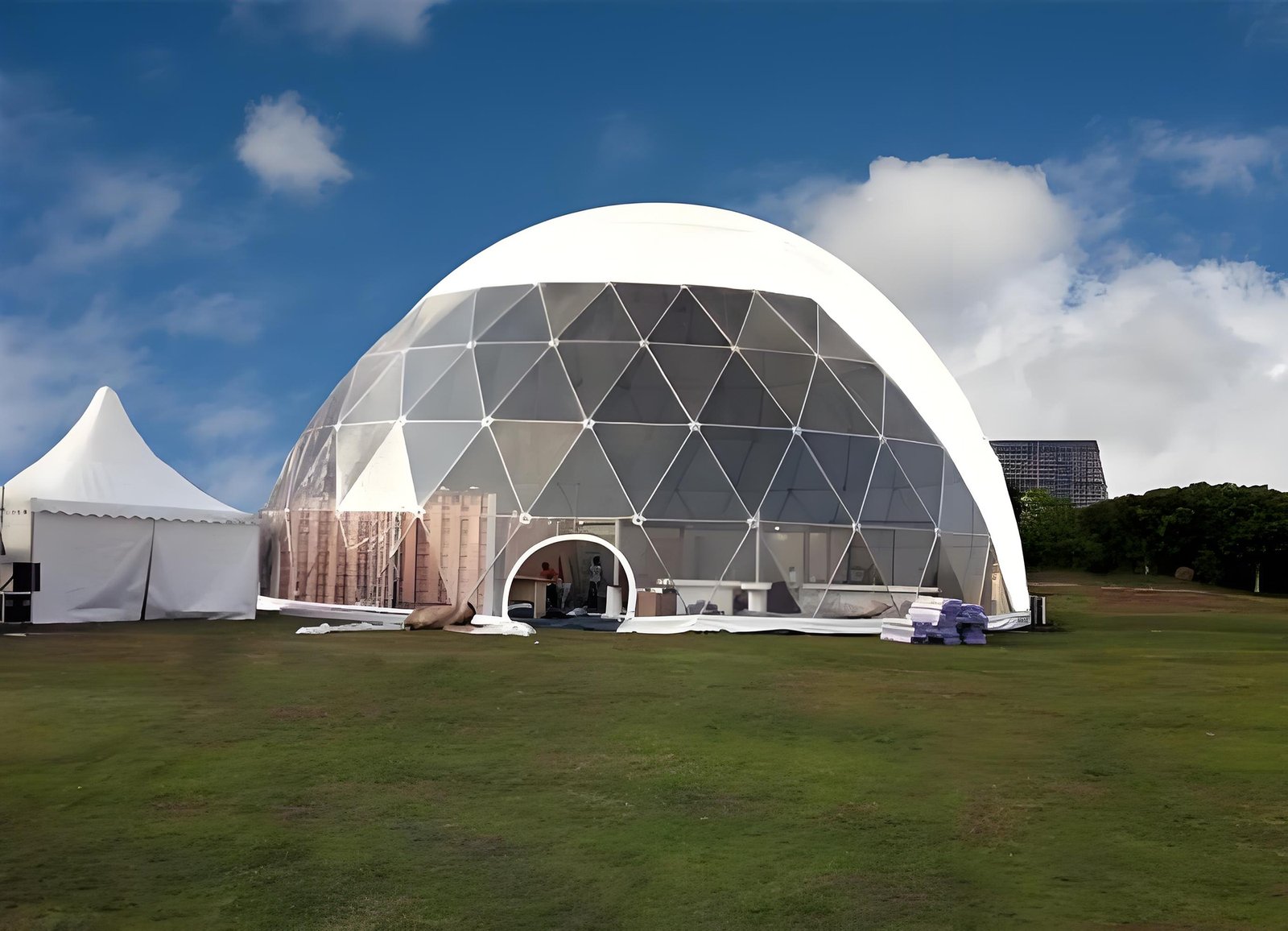
A commercial dome tent has multiple layers working together.
Typical construction includes:
Outer Surface
Designed to resist:
- Rain
- UV exposure
- Dirt
- Environmental pollution
Waterproof Coating Layer
Usually made from:
- PVC coating
- PU coating
- Other protective treatments
This layer prevents water penetration.
Base Fabric
Common materials include:
- Polyester
- High-strength woven fabric
The fabric provides:
- Tensile strength
- Dimensional stability
Printing Layer
For custom printed dome tents, graphics may include:
- Logos
- Brand colors
- Advertising images
Cleaning must protect this layer.
Why Large Dome Tent Cleaning Requires a Different Approach
A 20-meter dome tent may have:
- Hundreds of square meters of surface area
- Complex curved geometry
- Multiple stitched panels
- Large printed areas
Cleaning challenges include:
- Access height
- Water management
- Chemical control
- Drying time
A cleaning method suitable for a small tent may not be suitable for a large commercial dome.
Common Contaminants Found on Dome Tents
Outdoor dome tents are exposed to many environmental conditions.
Common contamination includes:
1. Dust and Dirt
The most common issue.
Sources include:
- Road dust
- Construction areas
- Outdoor venues
Usually easy to remove.
2. Bird Droppings
These contain acids that may affect:
- Coatings
- Printed surfaces
They should be removed quickly.
3. Mold and Mildew
Especially common after:
- Rainy events
- Poor drying
- Long-term storage
Mold can create:
- Black spots
- Odor
- Surface degradation
4. Pollution and Industrial Residue
Urban environments may create:
- Oil particles
- Smoke residue
- Chemical deposits
5. Food and Beverage Stains
Common in:
- Hospitality domes
- Event spaces
- Restaurants

The Biggest Cleaning Mistake: Using Too Much Force
Many users believe:
“A stronger cleaning method means a cleaner tent.”
For commercial dome tents, this is often incorrect.
Aggressive cleaning can damage:
- Waterproof coating
- Printing layer
- Fabric surface
Why Abrasive Cleaning Damages Dome Tent Fabric
Methods such as:
- Hard brushes
- Scouring pads
- Strong abrasive cleaners
can create microscopic damage.
Over time, this may cause:
- Reduced waterproof performance
- Surface roughness
- Color fading
Understanding the "No-Scour" Cleaning Method
Professional dome tent manufacturers recommend a “no-scour” approach.
This means:
Avoid:
- Mechanical abrasion
- Aggressive scrubbing
- Harsh chemicals
Instead use:
- Soft cleaning tools
- Mild detergents
- Controlled water pressure
The goal is:
Remove contamination without removing protection.
Recommended Dome Tent Cleaning Process
A professional cleaning process should follow several steps.
Step 1: Inspect the Dome Tent Before Cleaning
Before applying any cleaner, inspect:
Fabric Condition
Check for:
- Cracks
- Peeling coating
- Damaged seams
Printing Condition
Look for:
- Color fading
- Ink damage
- Surface wear
Existing Repairs
Identify:
- Previous patches
- Repaired areas
Different areas may require different treatment.
Step 2: Remove Loose Dirt First
Never immediately apply chemicals.
First remove:
- Dust
- Leaves
- Sand particles
Methods:
- Soft brush
- Low-pressure water rinse
This prevents dirt particles from creating scratches during washing.
Step 3: Use a Mild Cleaning Solution
A suitable dome tent cleaning solution should be:
- pH neutral
- Non-abrasive
- Free from harsh solvents
Avoid:
- Strong bleach
- Industrial degreasers
- Acid-based cleaners
Why Bleach Is Usually Not Recommended
Some users ask:
“Can I use bleach to remove mold?”
Bleach may remove visible mold, but it can also affect:
- Waterproof coatings
- Printing pigments
- Fabric strength
For commercial printed dome tents, safer alternatives are preferred.
Step 4: Gentle Surface Cleaning
Recommended tools:
- Soft microfiber cloth
- Soft sponge
- Soft-bristle brush
Avoid:
- Metal brushes
- Rough scrubbers
Step 5: Rinse Completely
Remaining detergent can attract dirt.
After cleaning:
Remove all chemical residue.
Step 6: Dry Completely Before Storage
This step is critical.
Never fold a wet dome tent.
Moisture trapped inside folded fabric can cause:
- Mold growth
- Odor
- Coating damage
A professional dome tent factory always recommends complete drying before storage.
Can You Use a Pressure Washer on a Dome Tent?
This is a common question.
The answer:
Sometimes, but with limitations.
A pressure washer can help with large surfaces, but excessive pressure may damage:
- Coating
- Printed graphics
- Seams
Safe Pressure Washing Guidelines
If pressure washing is used:
Recommended approach:
- Use low pressure
- Keep distance from fabric
- Avoid direct focus on seams
- Test a small area first
Areas Requiring Extra Care
Printed Logo Areas
Avoid aggressive cleaning.
Printed surfaces are usually more sensitive.
Seams
High pressure may force water into stitching areas.
Transparent PVC Windows
Avoid harsh chemicals that cause:
- Cloudiness
- Cracking

Cleaning Custom Printed Dome Tents: Protecting the Graphics
Branding is one of the biggest advantages of a custom dome tent.
Therefore, cleaning must protect:
- Color accuracy
- Logo clarity
- Surface appearance
Why Colors Fade After Cleaning
Possible causes include:
Wrong Chemical Selection
Strong chemicals attack pigments.
Excessive Scrubbing
Mechanical wear removes surface layers.
UV Damage Before Cleaning
Sometimes fading is caused by sunlight, not cleaning.
Professional Printing Considerations
A reliable dome tent manufacturer considers cleaning during production.
Important factors include:
- Ink quality
- UV resistance
- Fabric compatibility
- Protective coating
How Dtent Designs Dome Tents for Easy Maintenance
A professional dome tent should be designed for real-world use.
Dtent considers:
Durable Fabric Selection
Materials are selected according to:
- Installation environment
- Expected lifespan
- Cleaning requirements
Protective Surface Treatments
Coatings help improve:
- Weather resistance
- Dirt resistance
- Cleaning performance
Reusable Modular Design
A quality dome tent should support:
- Multiple installations
- Easy maintenance
- Long service life
Recommended Maintenance Schedule for Dome Tents
Maintenance frequency depends on usage.
After Every Event
Recommended:
- Remove visible dirt
- Check stains
- Dry completely
Every Few Months
Inspect:
- Seams
- Coating
- Graphics
- Frame connections
Before Long-Term Storage
Perform:
- Complete cleaning
- Full drying
- Component inspection
How to Choose a Dome Tent Manufacturer That Supports Long-Term Use
When selecting a supplier, buyers should ask:
Is the Dome Tent Designed for Reuse?
A reusable dome tent requires:
- Durable materials
- Strong sewing
- Quality coatings
Does the Factory Provide Maintenance Guidance?
Professional suppliers provide:
- Cleaning instructions
- Storage recommendations
- Repair advice
Are Replacement Parts Available?
Long-term users need access to:
- Fabric repair materials
- Connectors
- Frame components
Why Dtent Is a Reliable Partner for Reusable Dome Tent Solutions
As an experienced dome tent manufacturer, Dtent focuses on creating products that perform throughout their entire lifecycle.
Our advantages include:
More Than 10 Years of Tent Manufacturing Experience
We understand:
- Materials
- Fabric construction
- Outdoor conditions
6,000㎡ Manufacturing Facility
Supporting:
- Custom production
- Quality control
- OEM projects
Customized Dome Tent Solutions
Including:
- Event domes
- Exhibition domes
- Commercial domes
- Promotional structures
Focus on Long-Term Value
We design dome tents that can be:
- Installed repeatedly
- Cleaned safely
- Maintained easily
Common Cleaning Mistakes to Avoid
Using Household Bleach
May damage:
- Coating
- Printing
Folding Before Drying
Creates:
- Mold
- Odor
Using Hard Brushes
Causes:
- Surface damage
Ignoring Manufacturer Recommendations
Different materials require different maintenance methods.

Future Trends in Dome Tent Maintenance
The industry is developing toward:
Self-Cleaning Coatings
New surface technologies improve:
- Dirt resistance
- Maintenance efficiency
More Durable Printing Systems
Better inks provide:
- Longer color life
- Improved cleaning resistance
Modular Repair Systems
Allow easier replacement of damaged sections.
The Right Way to Clean a Large Dome Tent
A large dome tent is a valuable reusable investment, not a disposable product.
Proper cleaning protects:
- Waterproof performance
- Printing quality
- Structural lifespan
- Brand appearance
The best cleaning approach is not aggressive.
It is controlled and professional:
- Use mild cleaners
- Avoid abrasion
- Protect coatings
- Dry completely
- Follow manufacturer recommendations
When choosing a dome tent manufacturer or dome tent factory, buyers should consider not only the initial purchase price but also the long-term maintenance requirements.
A professionally designed dome tent should continue looking attractive and performing reliably after many events.
With the right materials, correct cleaning methods, and professional manufacturing support, a dome tent can remain a powerful outdoor marketing and event solution for many years.
Are you a Trading Company or Manufacturer?
We are a manufacturer specialized in Folding tents, Outdoor umbrellas, Beach flags, Advertising Banners
Can you do design for my ideas or drawing?
Yes, we have experienced designers and our own molding factory. According to your requirements, we can design or open mold which has a competitive price.
How long does sample take?
Sample will be ready within 5-7 days, depends on your printing and material requirements.
What is your advantage?
Cost effective; with low price; Time effective: we promise to make the mass delivery within 30 days Service effective: Our sales people promise to reply your enquiry within 12 hours.Contact whatsapp 86 180 3827 3926