
One of the most frustrating problems for owners of a dome tent is discovering that the once-perfect structural frame has started to bend, bow, or deform after only a few months of outdoor use.
The complaints are surprisingly similar:
- “My dome tent looked perfect when installed, but now the roof tubes are slightly curved.”
- “The arch pipes seem to sag more than before.”
- “The aluminum frame is no longer symmetrical.”
- “Some steel members appear permanently bent after summer.”
This naturally raises a critical question:
Is the problem caused by poor-quality steel or aluminum tubing, or is it actually a flaw in the dome tent’s structural design?
As a professional dome tent manufacturer with over 10 years of experience producing custom event tents, glamping domes, exhibition domes, and commercial dome structures, Dtent has investigated countless cases of structural deformation.
The reality is that pipe bowing rarely has a single cause.
Instead, it usually results from a combination of:
- Material selection
- Tube wall thickness
- Structural geometry
- Heat expansion
- Connector design
- Fabric tension
- Wind loading
- Installation quality
This guide explains why dome tent frames bend, how to identify the root cause, and how buyers can choose a structure that remains stable for years instead of months.

Understanding What "Bowing" Actually Means
Before diagnosing the problem, we must define it.
A bowed pipe is a structural member that develops a permanent or semi-permanent curvature.
Typical symptoms include:
Visual Symptoms
- Arch sections no longer appear straight
- Uneven dome geometry
- Sagging roof areas
- Misaligned connector hubs
Mechanical Symptoms
- Increased stress at connection points
- Difficulty replacing fabric covers
- Reduced structural rigidity
Safety Symptoms
- Lower wind resistance
- Reduced snow load capacity
- Accelerated fatigue failure
Not every curved tube indicates failure.
Some deformation is expected under load.
The key question is:
Does the tube return to its original shape after the load is removed?
If not, permanent deformation has occurred.
The First Myth: High Temperature Alone Does Not Bend Dome Tent Pipes
Many buyers assume:
“The summer heat caused the frame to bend.”
In reality, temperature itself rarely causes direct structural deformation.
Even under intense sunlight:
- Aluminum frames typically reach 140°F–170°F (60°C–75°C)
- Steel frames may reach similar temperatures
These temperatures are far below the point where structural metals lose significant strength.
For example:
6061-T6 Aluminum
Strength reduction becomes significant above:
- 300°F (149°C)
Galvanized Steel
Strength reduction becomes significant above:
- 400°F (204°C)
Therefore:
Normal outdoor temperatures do not directly soften structural tubing.
Heat is usually a contributing factor—not the primary cause.


The Real Culprit: Heat Plus Constant Structural Loading
What actually happens is a phenomenon called:
Creep Deformation
Creep occurs when a material experiences:
- Continuous stress
- Elevated temperatures
- Long periods of loading
Although temperatures are not high enough to melt the metal, they can accelerate microscopic deformation.
Over weeks and months, this can create visible bowing.
This is particularly common when:
- Tubes are undersized
- Loads are poorly distributed
- Fabric tension is excessive
Metal Gauge: The Most Common Cause of Dome Tent Bowing
One of the biggest issues in the dome tent industry is insufficient tube wall thickness.
Many buyers compare:
- Diameter
- Appearance
- Price
But rarely examine wall thickness.
Why Tube Diameter Alone Is Misleading
A supplier may advertise:
- 50mm aluminum tube
This sounds impressive.
However:
Example A
50mm × 1.2mm wall thickness
Example B
50mm × 3.0mm wall thickness
The structural performance difference can exceed 200%.
Yet both suppliers advertise:
“50mm heavy-duty frame”
Thin-Wall Aluminum Is Especially Vulnerable
Many low-cost dome tent factories attempt to reduce costs by using:
- Larger diameters
- Thinner walls
This creates an illusion of strength.
However:
Bending resistance depends heavily on wall thickness.
Common commercial specifications include:
Light Duty
- 1.2mm–1.5mm
Commercial Grade
- 2.0mm–2.5mm
Heavy Duty
- 3.0mm+
Why Aluminum Dome Tent Pipes Bow More Frequently Than Steel
Aluminum offers many advantages:
- Lightweight
- Corrosion resistant
- Easy transportation
However:
Its elastic modulus is only about one-third that of steel.
This means:
Aluminum bends more under the same load.
A properly engineered aluminum dome tent performs extremely well.
But undersized aluminum tubing often shows visible deflection long before steel does.
The Hidden Design Problem: Poor Truss Geometry
Sometimes the tubing itself is not the issue.
The real culprit is the structural design.
How Dome Tent Structures Work
A dome tent distributes forces through:
- Compression
- Tension
- Triangulation
When designed correctly:
Loads flow through the entire structure.
When designed poorly:
Loads become concentrated in specific members.
Those members begin to bow.
Common Truss Design Flaws
Oversized Panel Lengths
Long unsupported spans increase bending.
Insufficient Triangulation
Triangles create stiffness.
Rectangles create flexibility.
A dome with insufficient triangulation becomes vulnerable.
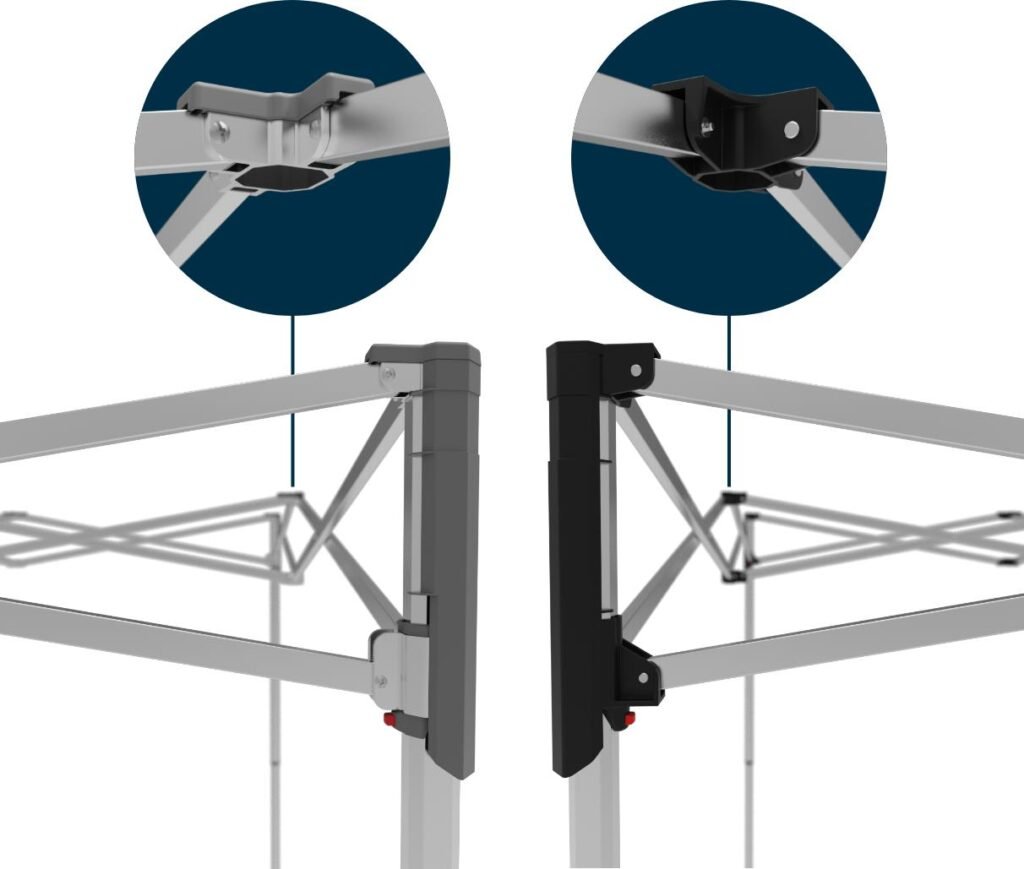
Weak Hub Design
Connectors may allow:
- Rotation
- Misalignment
- Uneven force transfer
This increases tube stress.
Fabric Tension Can Create Structural Stress
Many buyers do not realize that the fabric cover itself creates load.
A properly tensioned membrane improves stability.
However:
Excessive tension can create continuous compression forces.
Over time:
- Arch members deform
- Connectors loosen
- Frame geometry changes
This is especially common with PVC covers installed during cold weather.
As temperatures increase, fabric tension rises dramatically.
Wind Loads Often Cause Hidden Damage
One strong windstorm can permanently alter a frame.
Even if the dome does not collapse.
Repeated Wind Fatigue
Every gust creates:
- Compression cycles
- Tension cycles
- Connector movement
Over months:
Fatigue accumulates.
This is similar to bending a paper clip repeatedly.
Eventually:
Permanent deformation appears.
Snow Load Damage Often Appears Months Later
Many dome tent owners focus only on winter survival.
However:
The structural damage may not become visible until spring.
Heavy snow loads can:
- Exceed design limits
- Create microscopic yielding
- Permanently deform members
The frame remains standing but loses its original geometry.
How to Diagnose the Cause of Bowing
Check Symmetry
If all arches deform similarly:
Likely a material specification issue.
Check Individual Members
If only one section bends:
Likely overload or installation error.
Inspect Connector Alignment
Misaligned hubs indicate force distribution problems.
Measure Tube Straightness
Use a string line or laser.
Compare against original specifications.
Questions Every Buyer Should Ask a Dome Tent Manufacturer
Before purchasing, ask:
What alloy is used?
Preferred options:
- 6061-T6
- 6082-T6
What is the wall thickness?
Request exact numbers.
Not marketing descriptions.
What is the wind rating?
Ask for engineering calculations.
What is the snow load rating?
Request documentation.
What is the safety factor?
Professional structures should include reserve capacity.
Has the structure undergone long-term testing?
This often separates premium manufacturers from budget suppliers.
How Dtent Prevents Dome Tent Frame Bowing
As an experienced dome tent manufacturer, Dtent focuses on structural longevity rather than short-term cost reduction.
Premium Material Selection
We carefully select:
- Commercial-grade aluminum
- Structural steel options
- Reinforced connectors
Optimized Tube Specifications
Rather than relying solely on diameter, we evaluate:
- Wall thickness
- Buckling resistance
- Long-term deformation resistance
Advanced Structural Design
Every commercial dome tent must balance:
- Strength
- Weight
- Transportation efficiency
Our engineering team optimizes these factors during product development.
Quality Control
Every production batch undergoes inspection for:
- Material consistency
- Dimensional accuracy
- Structural integrity
OEM Experience
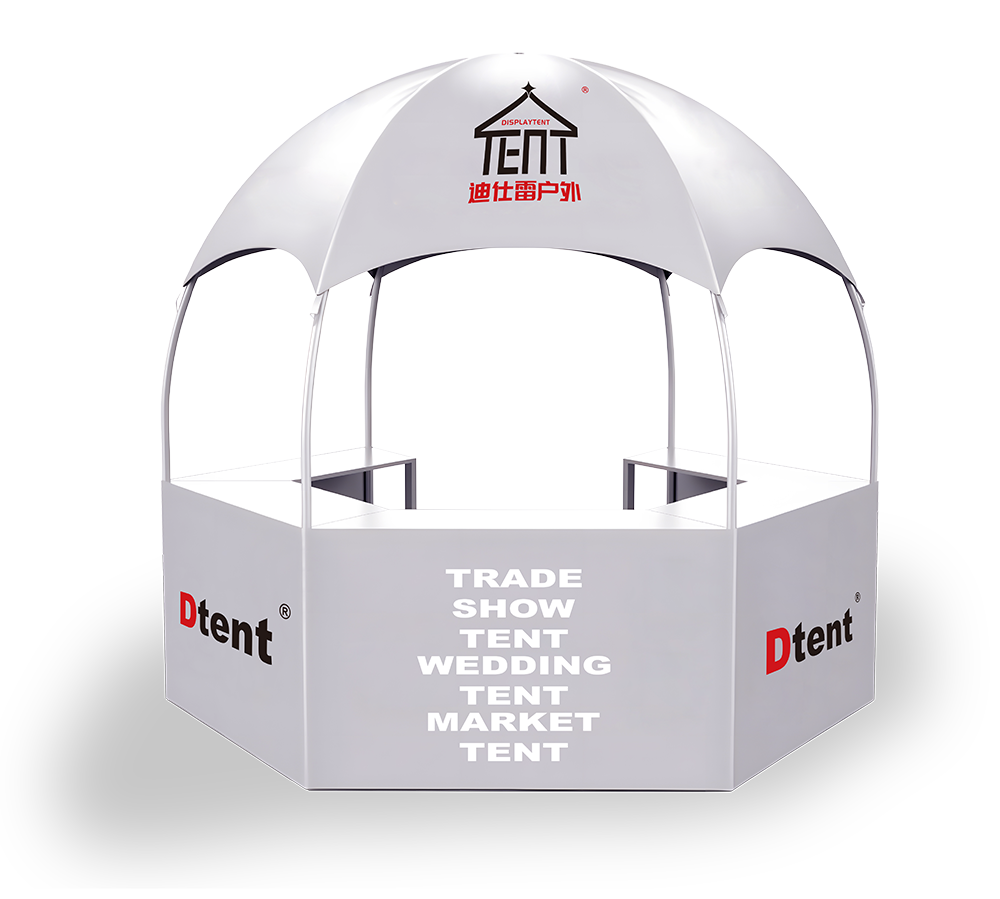
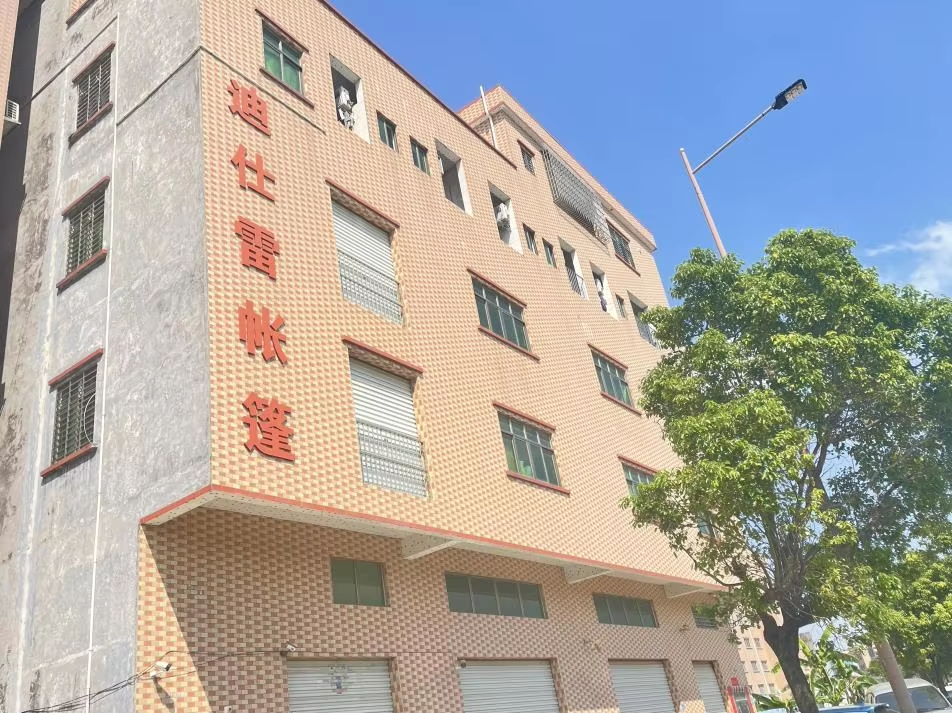
With more than 10 years of manufacturing experience and a 6,000㎡ production facility, Dtent provides custom dome tent solutions for global brands, event organizers, glamping operators, and commercial projects worldwide.
Future Trends in Dome Tent Engineering
The industry is moving toward:
Finite Element Analysis (FEA)
Predicting stress concentrations before production.
High-Strength Aluminum Alloys
Improving stiffness without excessive weight.
Hybrid Structures
Combining steel and aluminum strategically.
Smart Structural Monitoring
Sensors that detect deformation before failure occurs.
Metal Gauge or Design Flaw?
The answer is often:
Both.
In most cases, dome tent bowing results from a combination of:
- Insufficient wall thickness
- Poor load distribution
- Inadequate connector design
- Excessive fabric tension
- Wind fatigue
- Snow loading
- Long-term creep deformation
Heat alone rarely causes a dome tent frame to bend.
Instead, heat accelerates weaknesses that already exist within the system.
Tips
- High temperatures rarely bend dome tent frames by themselves.
- Thin-wall tubing is one of the leading causes of bowing.
- Aluminum requires careful engineering because it is more flexible than steel.
- Poor truss geometry can overload specific members.
- Excessive fabric tension creates continuous structural stress.
- Wind and snow damage often accumulate gradually.
- A professional dome tent manufacturer should provide detailed engineering specifications rather than marketing claims.
When selecting a dome tent factory, focus on structural design, material specifications, and long-term durability—not just frame diameter or price. The strongest dome tent is not necessarily the heaviest one, but the one engineered to distribute loads correctly throughout its entire structure.
Are you a Trading Company or Manufacturer?
We are a manufacturer specialized in Folding tents, Outdoor umbrellas, Beach flags, Advertising Banners
Can you do design for my ideas or drawing?
Yes, we have experienced designers and our own molding factory. According to your requirements, we can design or open mold which has a competitive price.
How long does sample take?
Sample will be ready within 5-7 days, depends on your printing and material requirements.
What is your advantage?
Cost effective; with low price; Time effective: we promise to make the mass delivery within 30 days Service effective: Our sales people promise to reply your enquiry within 12 hours.Contact whatsapp 86 180 3827 3926