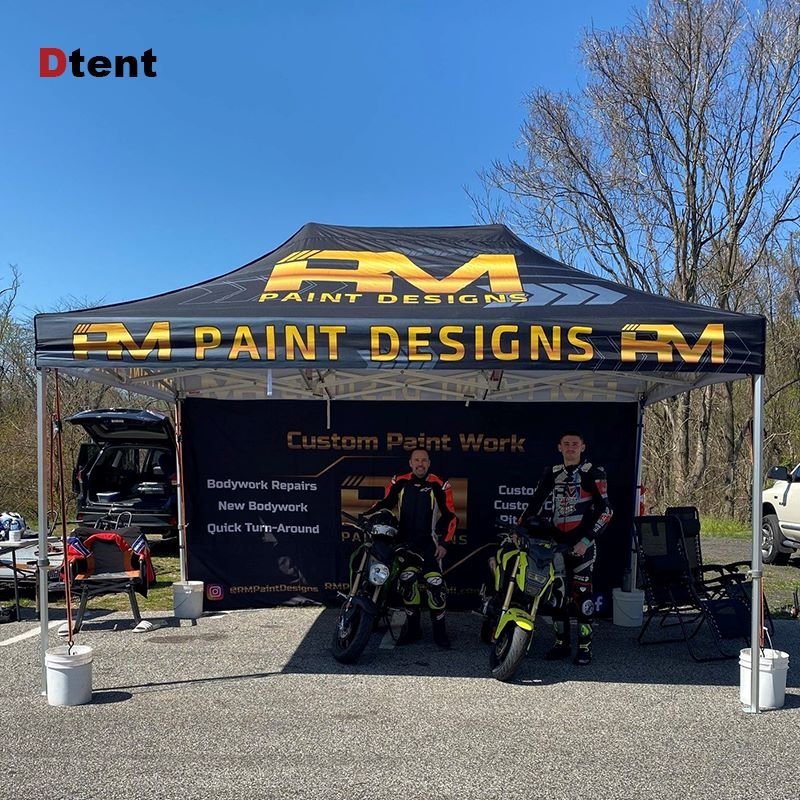


The term “heavy duty dome tent” appears everywhere in the tent industry. Browse any supplier website, and you’ll quickly find claims such as:
- Heavy duty dome tent
- Commercial-grade dome tent
- All-weather dome tent
- Extreme-duty event dome
- Industrial dome tent
However, very few manufacturers explain what heavy duty actually means from an engineering perspective.
As a professional dome tent manufacturer with more than 10 years of tent production experience, Dtent often receives questions like:
“Can this dome tent survive a 70 mph windstorm?”
“Will this dome tent handle 3 feet of snow?”
“What engineering standards define a heavy duty dome tent?”
The reality is that many suppliers use “heavy duty” as a marketing term rather than a measurable engineering specification.
In this guide, we will explain:
- What a heavy duty dome tent actually means
- How wind loads affect a dome tent
- How snow loads affect a dome tent
- Which structural parameters matter most
- How to evaluate a dome tent manufacturer
- Why some dome tents fail despite being advertised as heavy duty
This article is designed to be a practical resource for buyers, event organizers, rental companies, glamping operators, and procurement professionals.
What Is a Dome Tent?
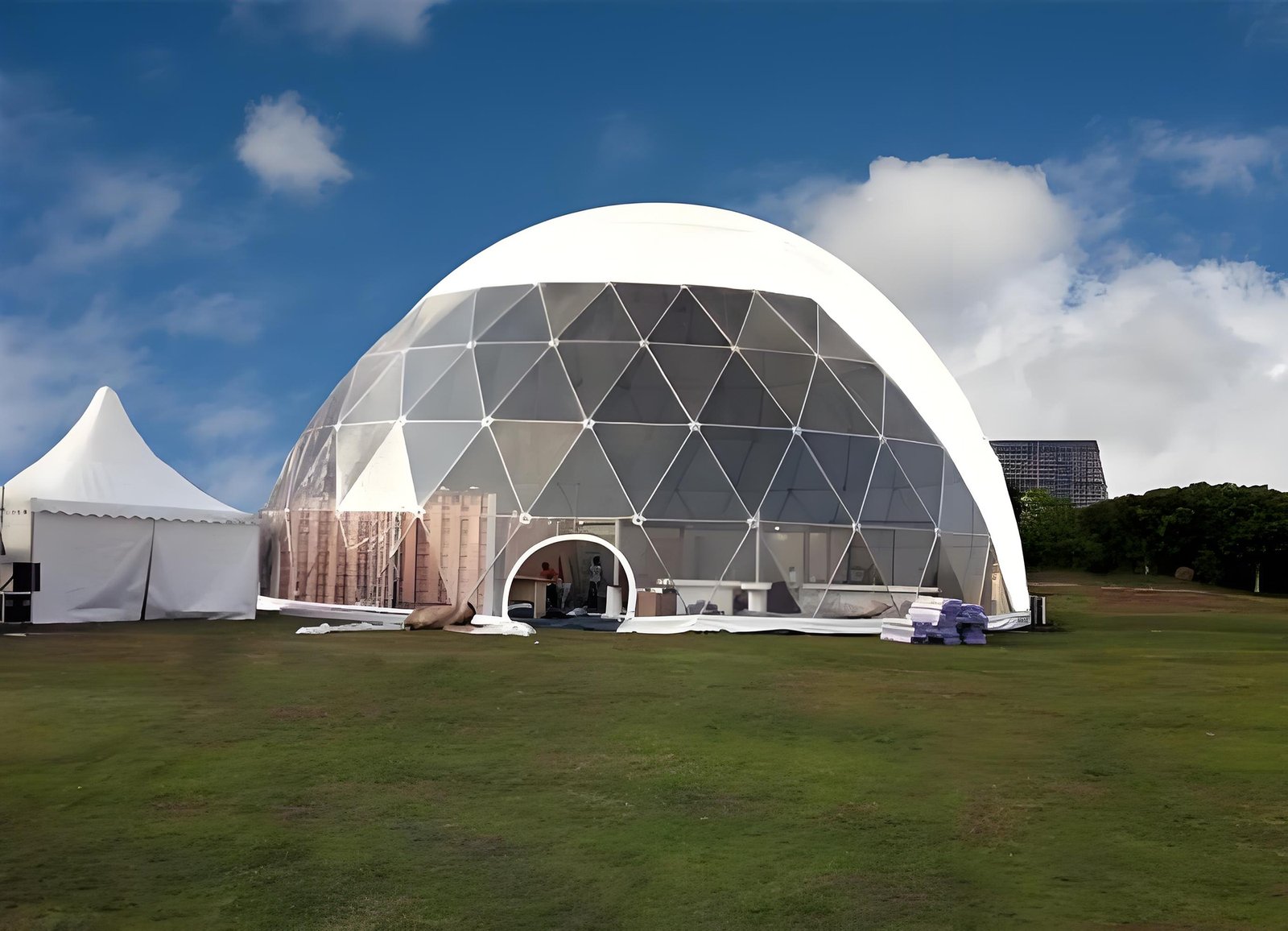
A dome tent is a shelter structure that uses a curved framework to create a self-supporting geometric shape.
Unlike traditional frame tents, a dome tent distributes loads through:
- Curved arches
- Triangulated structures
- Geodesic geometry
- Compression and tension balance
This geometry is one reason why dome tents have become popular for:
- Events
- Trade shows
- Festivals
- Sports facilities
- Glamping resorts
- Emergency shelters
- Military applications
The best dome tent designs achieve excellent strength-to-weight ratios.
However, not every dome tent is truly engineered for extreme conditions.
The Biggest Misconception About Heavy Duty Dome Tent Design
Many buyers assume:
Bigger tubes = heavy duty
While tube diameter matters, it is only one component of structural performance.
A genuine heavy duty dome tent depends on multiple factors:
- Tube material
- Tube wall thickness
- Connector strength
- Structural geometry
- Load path design
- Fabric tension
- Anchoring system
- Wind exposure
- Snow load rating
A weak connector can cause failure even if the frame tubes are extremely thick.
Similarly, a strong frame can still fail if anchoring is inadequate.
What Does Heavy Duty Actually Mean?
A professional dome tent manufacturer should define heavy duty using measurable engineering criteria.
These usually include:
Wind Load Rating
Examples:
- 30 mph (48 km/h)
- 50 mph (80 km/h)
- 70 mph (113 km/h)
Snow Load Rating
Examples:
- 10 psf
- 20 psf
- 40 psf
- 60 psf
Structural Safety Factor
Professional engineering calculations include safety margins to account for:
- Gusts
- Dynamic loading
- Material fatigue
- Installation errors
Without these metrics, the term “heavy duty” has little technical value.

Can a Dome Tent Survive 70 MPH Winds?
This is one of the most common questions buyers ask.
The answer is:
Some can. Many cannot.
The determining factors are engineering specifications, not marketing descriptions.
Understanding Wind Forces on a Dome Tent
Wind pressure increases exponentially.
Doubling wind speed does not double the force.
It increases the load approximately four times.
Examples:
| Wind Speed | Relative Force |
|---|---|
| 20 mph | 1x |
| 40 mph | 4x |
| 60 mph | 9x |
| 70 mph | 12x |
This explains why many lightweight event tents fail suddenly.
The structure may appear stable at 25 mph but become overloaded at 60 mph.
Why Dome Tents Perform Better in Wind
The curved shape offers several advantages:
Reduced Wind Resistance
Flat walls act like sails.
Domes allow wind to flow around the structure.
Better Load Distribution
Wind loads spread through multiple structural members.
Fewer High-Stress Corners
Traditional rectangular tents often experience concentrated stress at corners.
Domes distribute forces more evenly.
Aerodynamic Efficiency
This is one reason why geodesic domes are used in:
- Polar research stations
- Military shelters
- Remote expeditions

Can a Dome Tent Handle 3 Feet of Snow?
This is an even more complicated question.
Three feet of snow can weigh dramatically different amounts depending on moisture content.
Snow Weight Is Not Just About Depth
Examples:
Dry Powder Snow
Approximately:
- 3–8 pounds per cubic foot
Wet Snow
Approximately:
- 15–25 pounds per cubic foot
Ice-Laden Snow
Can exceed:
- 30 pounds per cubic foot
Therefore:
Three feet of wet snow can create several times the load of three feet of powder snow.
Why Snow Load Is More Dangerous Than Wind
Wind is often temporary.
Snow remains on the structure for extended periods.
This creates:
- Continuous compression
- Connector stress
- Tube buckling risks
Snow accumulation is one of the primary causes of dome tent collapse.
Critical Factors That Determine Dome Tent Strength
Frame Material
The most common materials include:
Steel
Advantages:
- High strength
- Lower cost
Disadvantages:
- Heavy
- Corrosion risk
Aluminum Alloy
Advantages:
- Lightweight
- Corrosion resistant
Disadvantages:
- More expensive
Professional dome tent factories often use:
- 6061-T6 aluminum
- 6082-T6 aluminum
for commercial structures.
Tube Diameter Matters
Common sizes include:
- 25mm
- 32mm
- 40mm
- 50mm
- 60mm
Larger diameter generally increases stiffness.
However:
A poorly designed 60mm frame may still underperform a properly engineered 40mm frame.
Wall Thickness Matters More Than Most Buyers Realize
Examples:
- 1.2mm
- 1.5mm
- 2.0mm
- 2.5mm
- 3.0mm
Wall thickness significantly affects:
- Buckling resistance
- Wind performance
- Snow load capacity
Many suppliers advertise tube diameter but avoid discussing wall thickness.
Connector Engineering Is the Hidden Factor
A dome tent is only as strong as its weakest connection.
Common failures occur at:
- Hub joints
- Connector plates
- Bolted interfaces
When evaluating a dome tent manufacturer, ask:
- What material are the hubs made from?
- Are the connectors cast or machined?
- What is the connector thickness?
Why Anchoring Determines Real-World Performance
Many tents fail not because the frame breaks.
They fail because the entire structure lifts off the ground.
Anchoring options include:
Ground Stakes
Best for:
- Soil
- Grass
- Dirt
Concrete Anchors
Best for:
- Permanent installations
Ballast Systems
Common for:
- Events
- Urban installations
A dome tent rated for 70 mph wind is meaningless if it is not anchored correctly.
Fabric Selection Also Affects Structural Stability
The cover material contributes to overall performance.
Important factors include:
Tensile Strength
Tear Strength
UV Resistance
Waterproofing
Fabric Tension
Loose fabric creates:
- Flutter
- Vibration
- Dynamic loading
Proper tension improves stability significantly.
Questions Buyers Should Ask a Dome Tent Manufacturer
Before purchasing, ask:
What is the certified wind rating?
What snow load was tested?
Which aluminum alloy is used?
What is the tube wall thickness?
What are the connector materials?
What anchoring system is recommended?
Is there an engineering report available?
If a supplier cannot answer these questions, be cautious about heavy-duty claims.
Why Some "Heavy Duty" Dome Tents Fail
Common reasons include:
Undersized Tubes
Thin Wall Thickness
Weak Connectors
Poor Welding
Inadequate Anchoring
Low-Quality Fabric
Installation Errors
Most failures are not caused by one factor alone.
They result from multiple weaknesses combining under load.
How Dtent Engineers Heavy Duty Dome Tent Systems
As a professional dome tent manufacturer, Dtent focuses on engineering rather than marketing terminology.
Our approach includes:
Structural Design Optimization
Load distribution is analyzed before production.
Commercial-Grade Materials
High-quality aluminum and steel options are selected according to application requirements.
Reinforced Connector Systems
Critical connection points receive additional engineering attention.
Custom Solutions
Different projects require different structural specifications.
A festival dome and a glamping dome do not face the same environmental conditions.
OEM and Custom Manufacturing
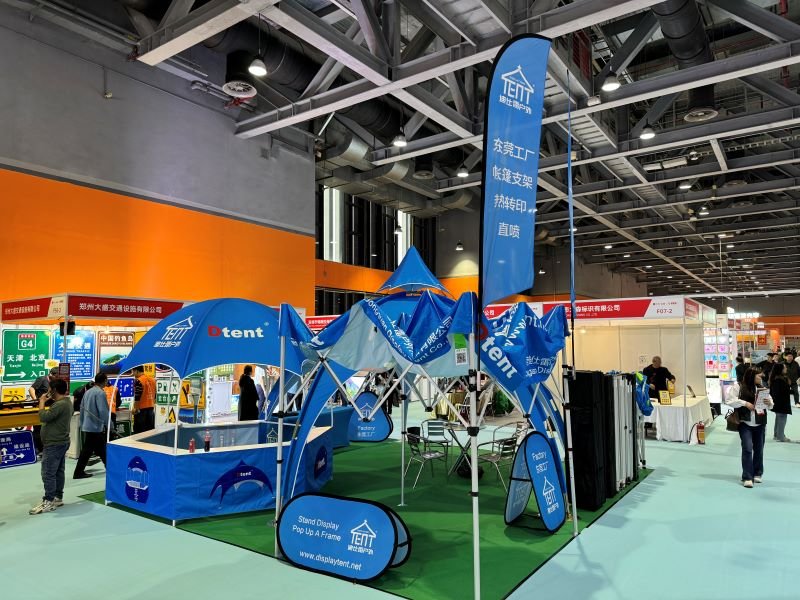
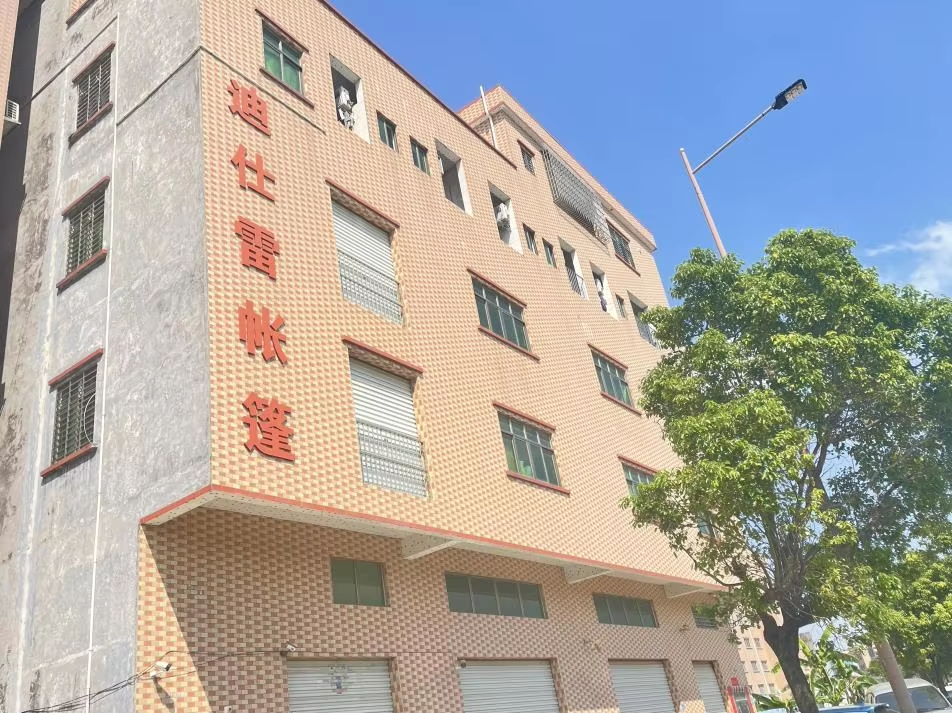
With more than 10 years of experience and a 6,000㎡ production facility, Dtent provides customized solutions for global brands, rental companies, event organizers, and commercial operators.
Future Trends in Heavy Duty Dome Tent Design
The next generation of dome tent systems will likely incorporate:
- Advanced finite element analysis (FEA)
- Higher-strength aluminum alloys
- Composite connectors
- Smart load monitoring
- Modular reinforcement systems
These innovations will allow dome tents to achieve greater structural efficiency without excessive weight.
Does Heavy Duty Mean 3 Feet of Snow or 70 MPH Winds?
Not necessarily.
A true heavy duty dome tent should never be judged by marketing language alone.
Instead, evaluate:
- Wind rating
- Snow load rating
- Frame material
- Tube diameter
- Wall thickness
- Connector engineering
- Anchoring design
- Fabric performance
The best dome tent factory is not the one that uses the most aggressive marketing claims.
It is the manufacturer that can provide clear engineering specifications, transparent testing data, and proven field performance.
Dome Tent purchasing Tips
- “Heavy duty” is often a marketing term unless supported by engineering data.
- Wind load and snow load are the two most important performance indicators.
- Dome geometry improves structural efficiency but does not guarantee extreme-weather performance.
- Tube diameter alone does not determine strength.
- Wall thickness and connector design are often more important.
- Proper anchoring is essential for real-world safety.
- Always ask for measurable specifications before purchasing a dome tent.
For buyers seeking reliable, commercial-grade solutions, working with an experienced dome tent manufacturer such as Dtent can help ensure that your structure is designed around real engineering requirements rather than marketing claims.
Are you a Trading Company or Manufacturer?
We are a manufacturer specialized in Folding tents, Outdoor umbrellas, Beach flags, Advertising Banners
Can you do design for my ideas or drawing?
Yes, we have experienced designers and our own molding factory. According to your requirements, we can design or open mold which has a competitive price.
How long does sample take?
Sample will be ready within 5-7 days, depends on your printing and material requirements.
What is your advantage?
Cost effective; with low price; Time effective: we promise to make the mass delivery within 30 days Service effective: Our sales people promise to reply your enquiry within 12 hours.Contact whatsapp 86 180 3827 3926