

Last Updated on 03/28/2026 by Custom Tent Expert
In the global tent industry, one phrase appears repeatedly in supplier catalogs and sales pitches: “aircraft-grade aluminum.” While this term sounds impressive, it is often used loosely and without technical verification. For professional buyers sourcing high-performance structures, especially event and commercial tents, the real concern is not marketing language — it is whether the tent frame actually meets 6061-T6 aluminum standards.
If you have ever received a tent frame that feels “soft,” bends under moderate load, or fails earlier than expected, you are not alone. Many buyers face this issue due to inconsistent material quality, improper heat treatment, or misleading claims from suppliers.
This article provides a technical, practical, and verification-focused guide to understanding tent frame materials, identifying true 6061-T6 aluminum, and ensuring you choose a reliable manufacturer such as Dtent.
What Is a Tent Frame and Why Tent Frame Material Matters
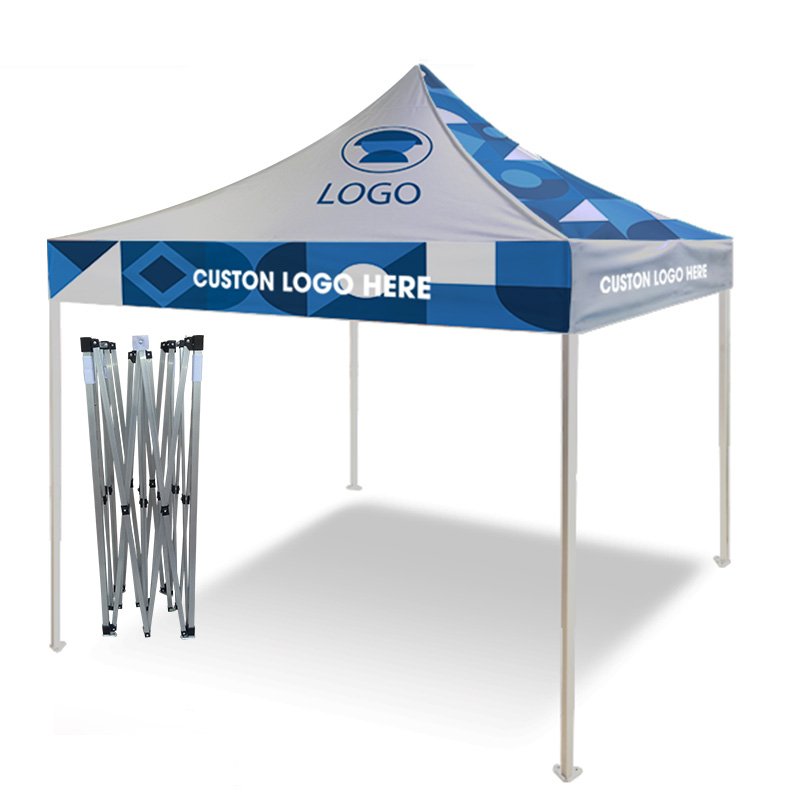
A tent frame is the structural backbone of any tent system. It determines:
- Load-bearing capacity
- Wind resistance
- Structural stability
- Safety compliance
- Product lifespan
For commercial applications such as event tents, exhibition tents, and promotional canopy tents, the tent frame must withstand repeated assembly, transportation, and environmental stress.
This is why aluminum alloys — especially 6061-T6 aluminum — are widely used by professional manufacturers.
Understanding 6061-T6 Aluminum in Tent Frame Manufacturing
To properly evaluate a tent frame, you need to understand what 6061-T6 aluminum actually means.
Alloy 6061
6061 aluminum is a precipitation-hardened alloy containing:
- Magnesium (Mg)
- Silicon (Si)
It offers an excellent balance of:
- Strength
- Corrosion resistance
- Weldability
- Weight efficiency
T6 Temper
The “T6” designation refers to a specific heat treatment process:
- Solution heat treatment
- Rapid quenching
- Artificial aging
This process significantly increases the mechanical strength of the material.
Mechanical Properties of 6061-T6 (Typical)
- Tensile strength: ~290 MPa
- Yield strength: ~240 MPa
- Hardness: ~95 HB
- Excellent fatigue resistance
A properly manufactured tent frame using 6061-T6 aluminum should feel rigid, stable, and resistant to deformation.

Why “Aircraft-Grade Aluminum” Is Often Misleading
The term “aircraft-grade aluminum” is not a standardized engineering specification. It is a marketing phrase that can refer to various alloys, including:
- 6061
- 7075
- 2024
However, without specifying the temper (e.g., T6), the term is meaningless for performance evaluation.
Many low-cost tent frame suppliers may use:
- 6061-T4 (softer, less aged)
- 6063 aluminum (weaker but easier to extrude)
- Recycled aluminum with inconsistent composition
These materials can result in a tent frame that bends easily or feels soft, even if marketed as “aircraft-grade.”
Why Your Tent Frame Feels Soft or Bends Easily
If your tent frame lacks rigidity, several technical factors may be responsible.
1. Incorrect Temper (Not T6)
If the aluminum has not undergone proper T6 heat treatment, it will lack the required strength.
2. Thin Wall Thickness
Even with correct material, insufficient wall thickness reduces structural strength.
Typical professional tent frame specifications:
- Tube diameter: 30–50 mm
- Wall thickness: 1.5–3.0 mm
3. Poor Alloy Composition
Using 6063 or mixed recycled aluminum lowers mechanical performance.
4. Inadequate Heat Treatment Control
Improper aging temperature or duration results in incomplete strengthening.
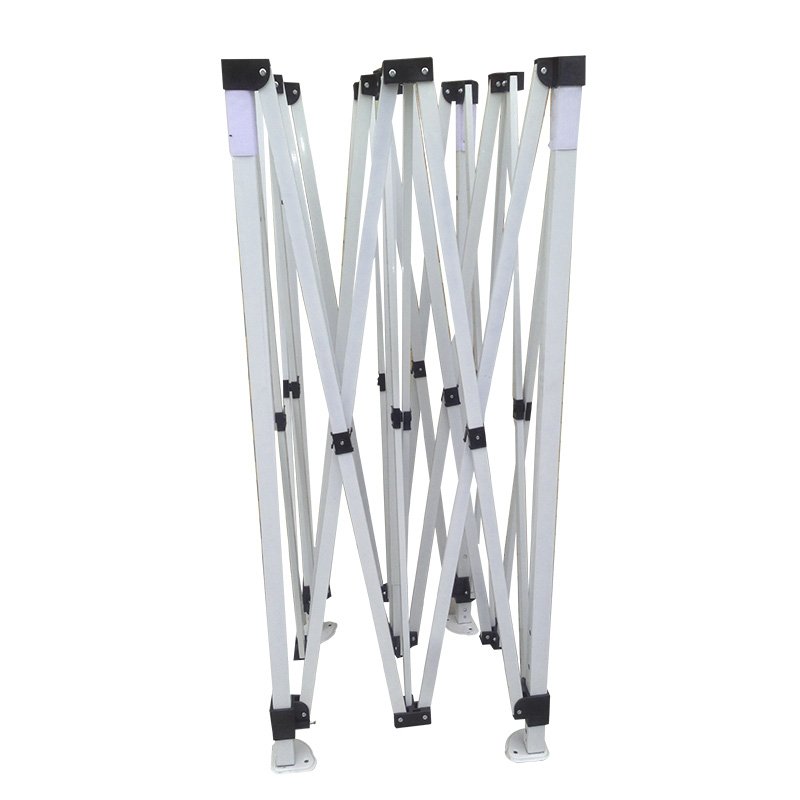
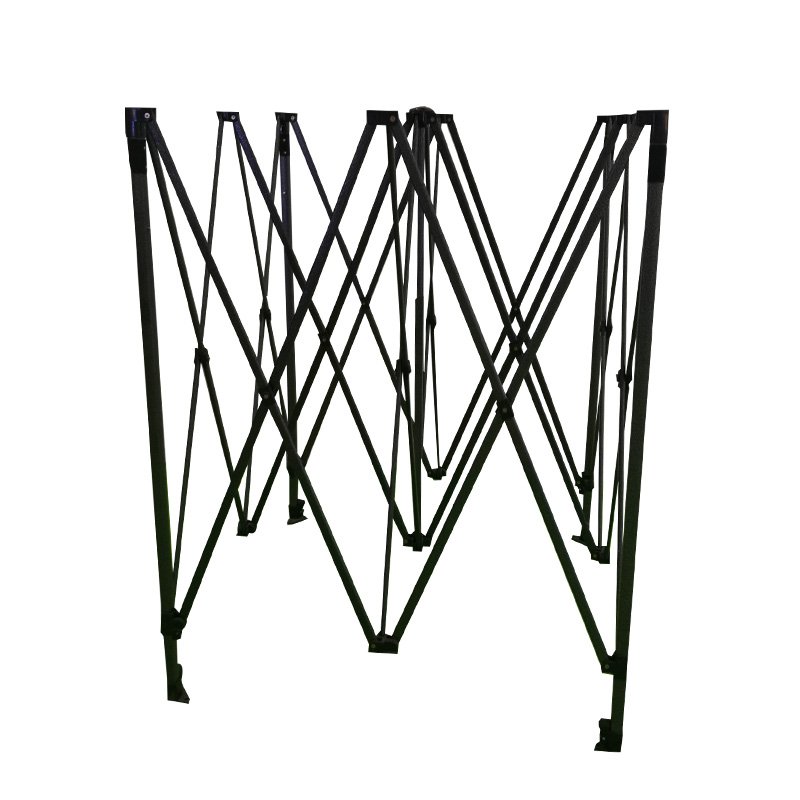
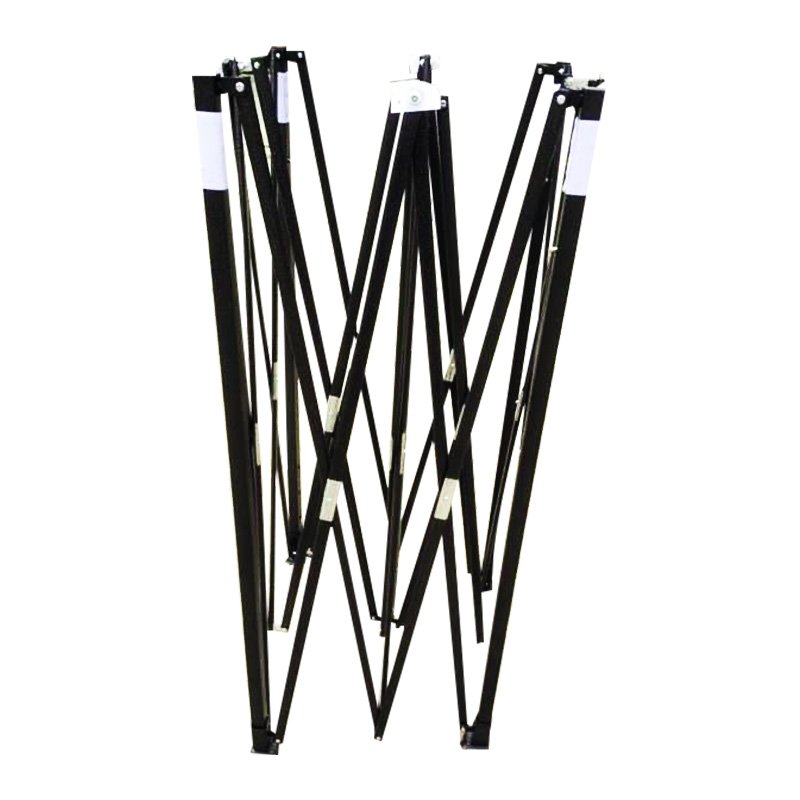
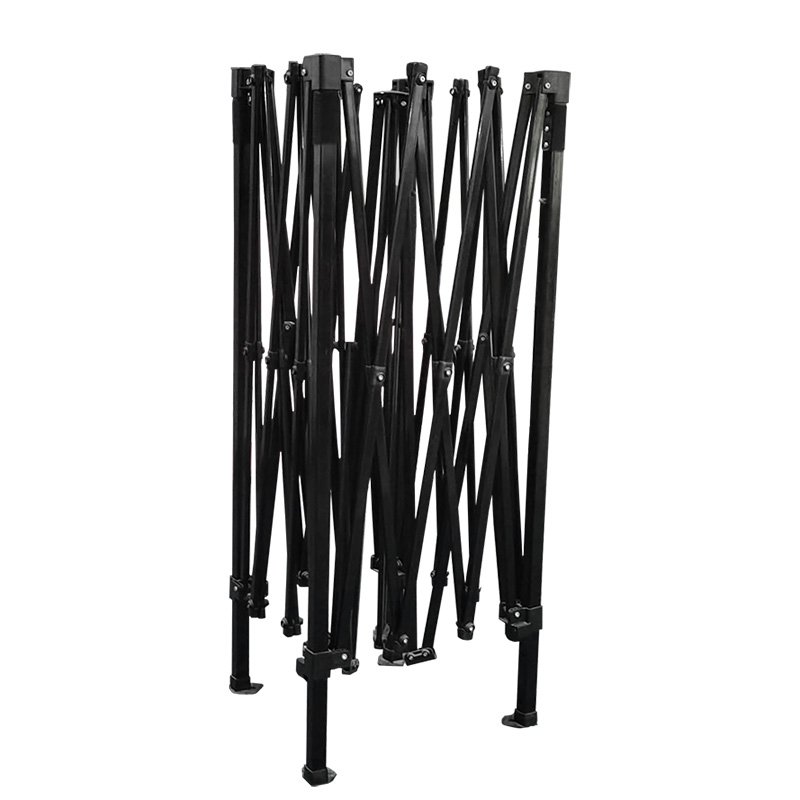
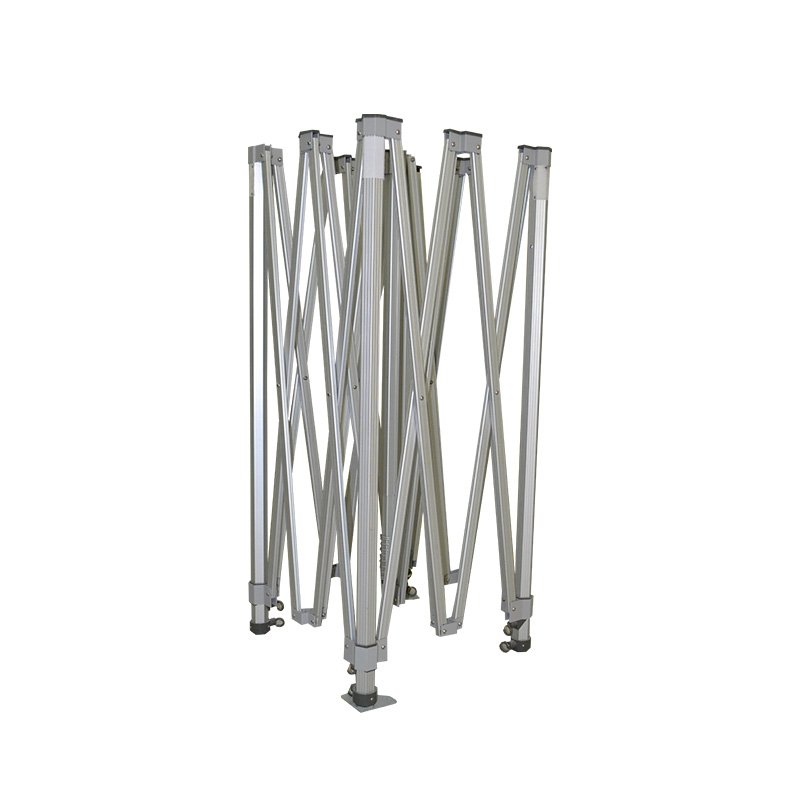
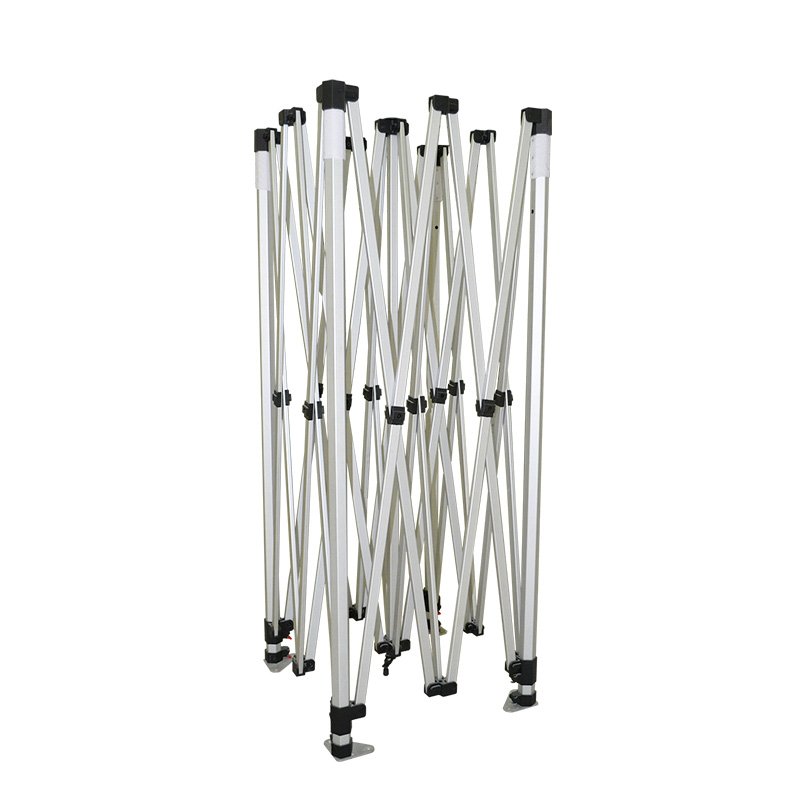
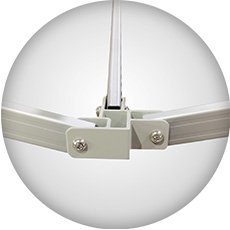
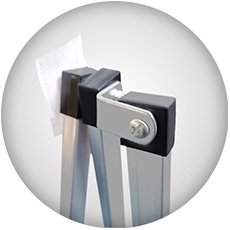
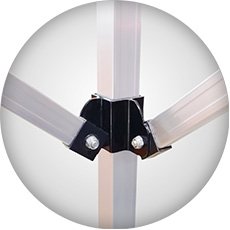
5. Weak Joint Design
Even a strong aluminum tent frame can fail if connectors and joints are poorly engineered.
Key Tent Frame Parameters Buyers Must Evaluate
When sourcing a tent frame, always request and verify the following technical parameters.
1. Aluminum Grade
Specify clearly:
- 6061 aluminum alloy
- T6 temper
Avoid vague descriptions.
2. Tube Dimensions
Check:
- Outer diameter
- Wall thickness
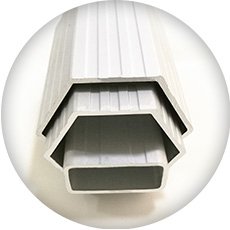
- Cross-sectional design
3. Surface Treatment
High-quality tent frames use:
- Anodizing
- Powder coating
These improve corrosion resistance and durability.
4. Structural Design
Evaluate:
- Reinforcement points
- Connector quality
- Stress distribution
5. Load Capacity
Professional manufacturers should provide:
- Wind resistance ratings
- Load test data
How to Verify 6061-T6 Tent Frame Quality Without a Lab
Many buyers assume that verifying aluminum quality requires laboratory testing. While lab analysis provides precise data, there are practical factory-level verification methods you can use.
1. Request Material Certification
Ask for:
- Mill test certificate (MTC)
- Chemical composition report
- Mechanical property report
A reliable tent frame manufacturer will provide these documents.
2. Check Hardness Manually
While not precise, a simple comparison can help:
- T6 aluminum feels noticeably harder than T4 or 6063
- It resists scratching and denting
3. Inspect Flex Under Load
Apply moderate manual force:
- A true 6061-T6 tent frame should not visibly bend under light pressure
- Excessive flexibility indicates poor temper or thin walls
4. Evaluate Weight vs Strength
Low-quality frames often feel:
- Too light for their size
- Structurally weak
Professional-grade tent frame systems balance weight and rigidity.
5. Observe Welding and Finish Quality
High-quality manufacturers show:
- Clean welds
- Uniform surface treatment
- No visible deformation
6. Visit or Audit the Factory
If possible, inspect:
- Heat treatment equipment
- Production processes
- Quality control procedures


Tent Frame Manufacturing Process: What to Look For
A reliable tent frame factory follows strict production procedures.
Step 1: Aluminum Extrusion
Profiles are formed using high-quality billets.
Step 2: Heat Treatment (T6 Process)
This is the most critical step for strength.
Step 3: CNC Machining
Precision cutting and drilling ensure accurate assembly.
Step 4: Surface Treatment
Anodizing or coating improves durability.
Step 5: Assembly and Testing
Frames are tested for:
- Load capacity
- Stability
- Durability
Common Mistakes Buyers Make When Choosing Tent Frame Suppliers
Many procurement issues arise from avoidable mistakes.
Choosing Based on Price Alone
Low-cost suppliers often compromise material quality.
Ignoring Technical Specifications
Without clear specs, suppliers may downgrade materials.
Not Verifying Production Capability
Trading companies may lack real manufacturing control.
Overlooking OEM Experience
Factories with international OEM experience typically maintain higher standards.
Why Dtent Is a Reliable Tent Frame Manufacturer
Dtent is a professional custom tent manufacturer with more than 10 years of experience producing high-quality tent systems for global clients.
Key advantages include:
Strong Manufacturing Capability
- 6,000㎡ production facility
- Advanced equipment for aluminum processing
- Integrated production lines
Strict Material Control
- Use of verified aluminum alloys
- Controlled heat treatment processes
- Consistent quality standards
OEM Experience
Dtent has extensive experience producing for international brands, ensuring:
- Reliable quality
- Consistent specifications
- Professional production management
Engineering Expertise
Dtent focuses on:
- Structural optimization
- Load-bearing performance
- Long-term durability
Global Export Experience
Products are supplied to multiple regions with compliance to international standards.
How to Choose the Right Tent Frame Manufacturer
When selecting a supplier, prioritize:
- Verified use of 6061-T6 aluminum
- Transparent technical documentation
- Strong factory capabilities
- Proven OEM experience
- Consistent product quality
Avoid relying solely on marketing claims such as “aircraft-grade aluminum.”
Future Trends in Tent Frame Materials
The tent industry is evolving with new materials and technologies.
- High-strength lightweight alloys
- Advanced extrusion profiles
- Improved heat treatment processes
- Hybrid materials for enhanced performance
Manufacturers investing in engineering innovation will lead the market.
Focus on Real Engineering, Not Marketing Claims
The difference between a reliable tent frame and a problematic one often comes down to material integrity and manufacturing discipline.
While many suppliers promote “aircraft-grade aluminum,” professional buyers must focus on verifiable standards such as 6061-T6 aluminum, proper heat treatment, and structural design.
By applying the verification methods outlined in this guide and working with experienced manufacturers like Dtent, you can ensure your tent frame delivers:
- Structural reliability
- Long service life
- Safety compliance
- Consistent performance
In the end, a high-quality tent frame is not defined by marketing — it is defined by engineering.
Are you a Trading Company or Manufacturer?
We are a manufacturer specialized in Folding tents, Outdoor umbrellas, Beach flags, Advertising Banners
Can you do design for my ideas or drawing?
Yes, we have experienced designers and our own molding factory. According to your requirements, we can design or open mold which has a competitive price.
How long does sample take?
Sample will be ready within 5-7 days, depends on your printing and material requirements.
What is your advantage?
Cost effective; with low price; Time effective: we promise to make the mass delivery within 30 days Service effective: Our sales people promise to reply your enquiry within 12 hours.Contact whatsapp 86 180 3827 3926