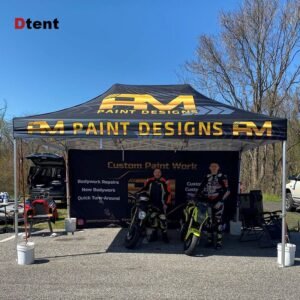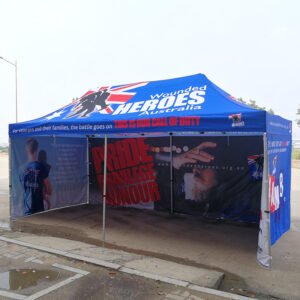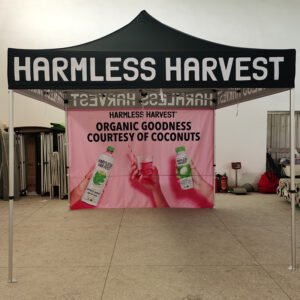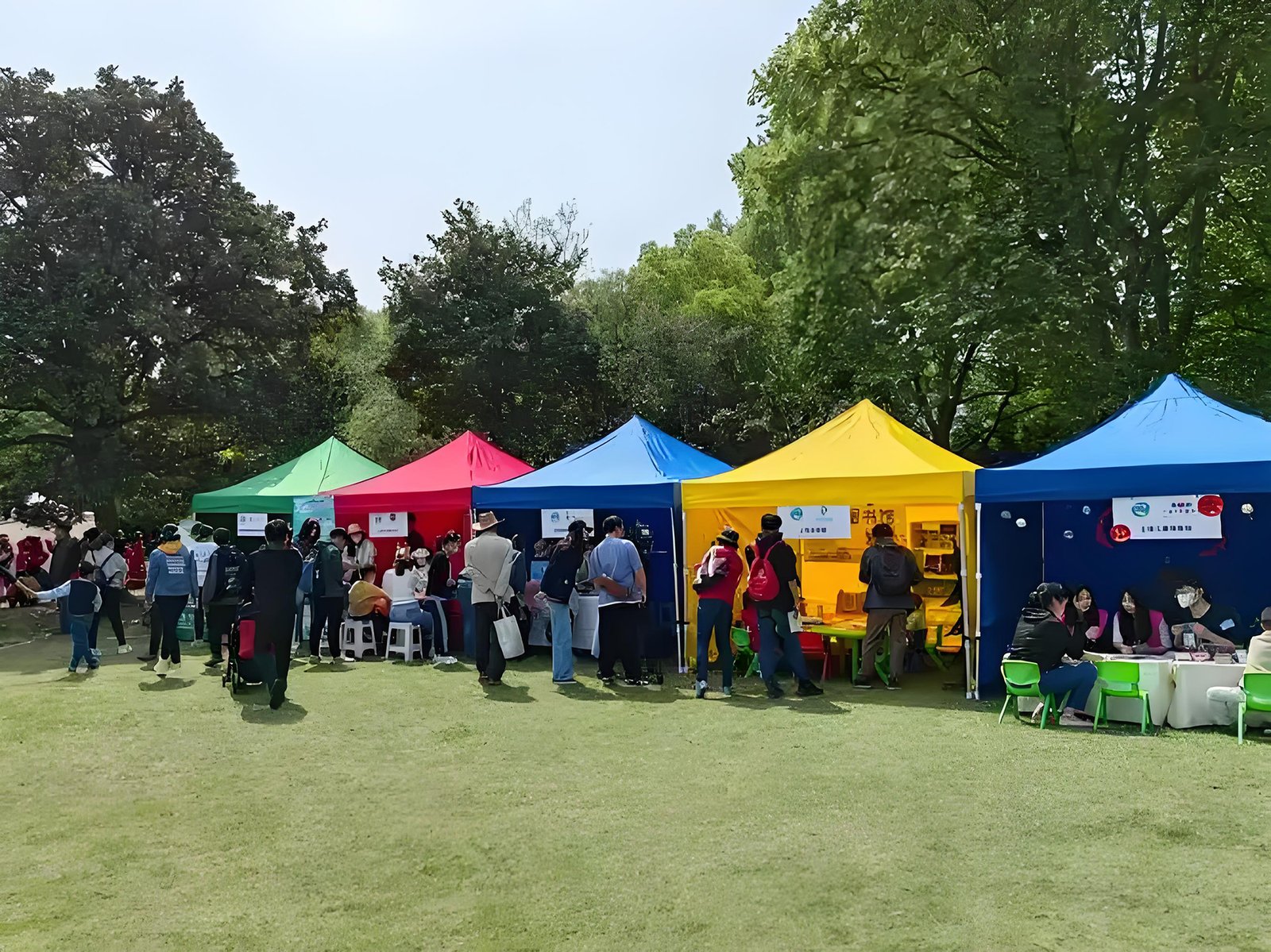
A pop up canopy is more than a temporary shelter. For many businesses, brands, event organizers, sports teams, retailers, and promotional agencies, it is a portable combination of shelter, display space, and mobile advertising.
A standard canopy can provide shade and basic weather protection, but a custom pop up canopy can be designed around a specific brand, application, footprint, frame structure, fabric specification, graphic requirement, and transportation method.
This makes the pop up canopy particularly valuable for businesses that participate in multiple outdoor events and need a branded structure that can be repeatedly transported, installed, dismantled, stored, and reused.
But how should a buyer choose the right configuration?
The answer depends on much more than size.
A professional buyer should evaluate at least ten dimensions, including:
- Application and use scenario
- Target user group
- Canopy size and usable space
- Frame construction
- Fabric and waterproof performance
- Printing and branding
- Sidewalls and enclosure configuration
- Accessories and transportation
- Safety and weather conditions
- Customization and OEM requirements
- Quality control and manufacturing consistency
- Supplier and factory selection
This comprehensive guide explains these factors from the perspective of a professional tent manufacturer and provides a practical framework for brands looking to develop a customized pop up canopy.
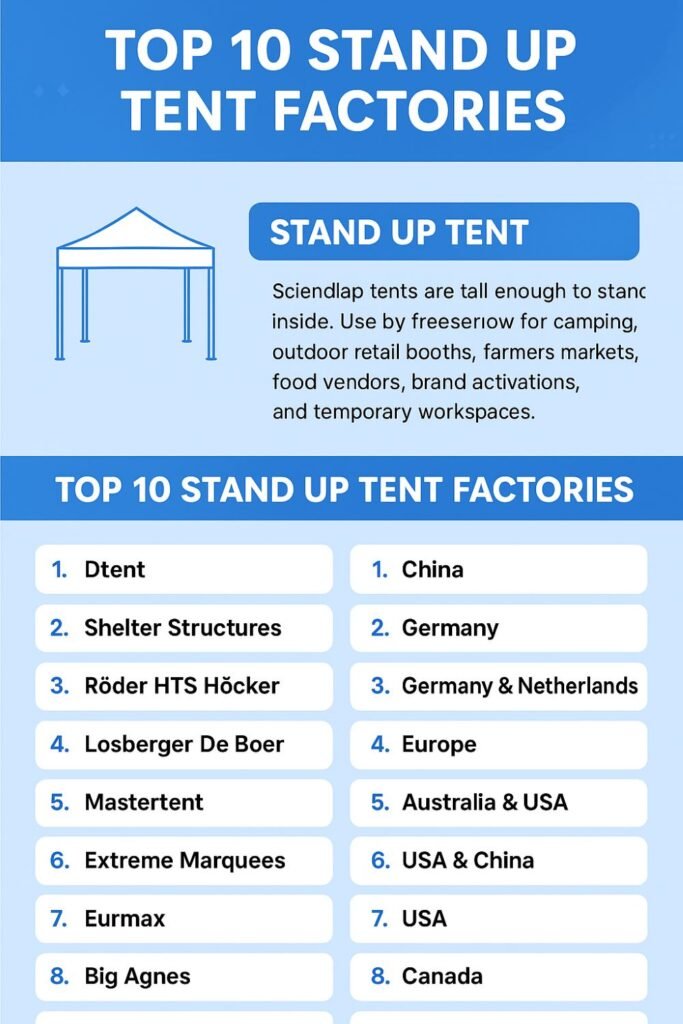
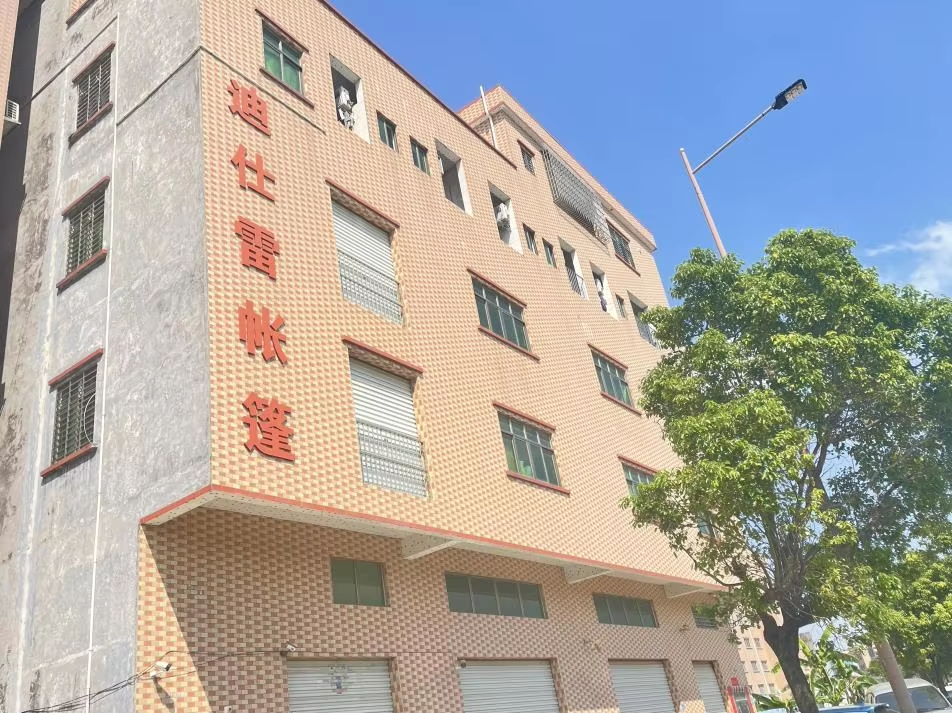
Dtent is a professional custom tent manufacturer with more than 10 years of manufacturing experience and a 6,000㎡ production facility. We provide OEM and customized tent solutions for international brands, including customized pop up canopies featuring customers’ own designs, logos, colors, graphics, sidewalls, accessories, and packaging.

1. What Is a Pop Up Canopy?
A pop up canopy is a portable folding tent that normally consists of a collapsible frame and a fabric roof.
The folding frame generally uses scissor-style truss bars. When the frame is expanded, the roof fabric is supported above the ground to create a temporary covered area. When the event is finished, the frame can be folded and packed for transportation and storage.
A commercial pop up canopy may consist of:
- Aluminum or steel frame
- Folding truss bars
- Telescoping legs
- Corner connectors
- Center hubs
- Roof fabric
- Sidewalls
- Backwalls
- Valances
- Zippers
- Hook-and-loop fasteners
- Foot pads
- Ground anchors
- Weight bags
- Carrying bags
- Roller bags
The exact configuration depends on the application.
For example, a sports team may prioritize portability and quick setup, while a promotional agency may prioritize full-color printing and large branding areas. A food vendor may need sidewalls and serving openings, while an exhibition company may require a modular system that can be reused across different events.
Therefore, there is no single “best” pop up canopy.
There is only the right pop up canopy for a specific application.
2. Why Choose a Custom Pop Up Canopy?
A standard canopy usually provides limited choices.
A customized pop up canopy allows a brand to control the product more comprehensively.
Customization can include:
- Canopy dimensions
- Frame material
- Frame profile
- Fabric
- Fabric color
- Roof design
- Sidewall configuration
- Printing
- Logo placement
- Valance design
- Entrance configuration
- Carrying bag
- Roller bag
- Weight system
- Packaging
- Product labeling
For brands, one of the biggest advantages is visual consistency.
Instead of using a generic white tent, a company can create an outdoor structure that follows its existing brand identity.
The roof, walls, valance, flags, banners, counters, and other accessories can be designed as one coordinated marketing system.
3. Pop Up Canopy Applications: Where Are They Used?
The first question when selecting a pop up canopy should be:
Where will it be used?
Different environments create different design requirements.
Common applications include:
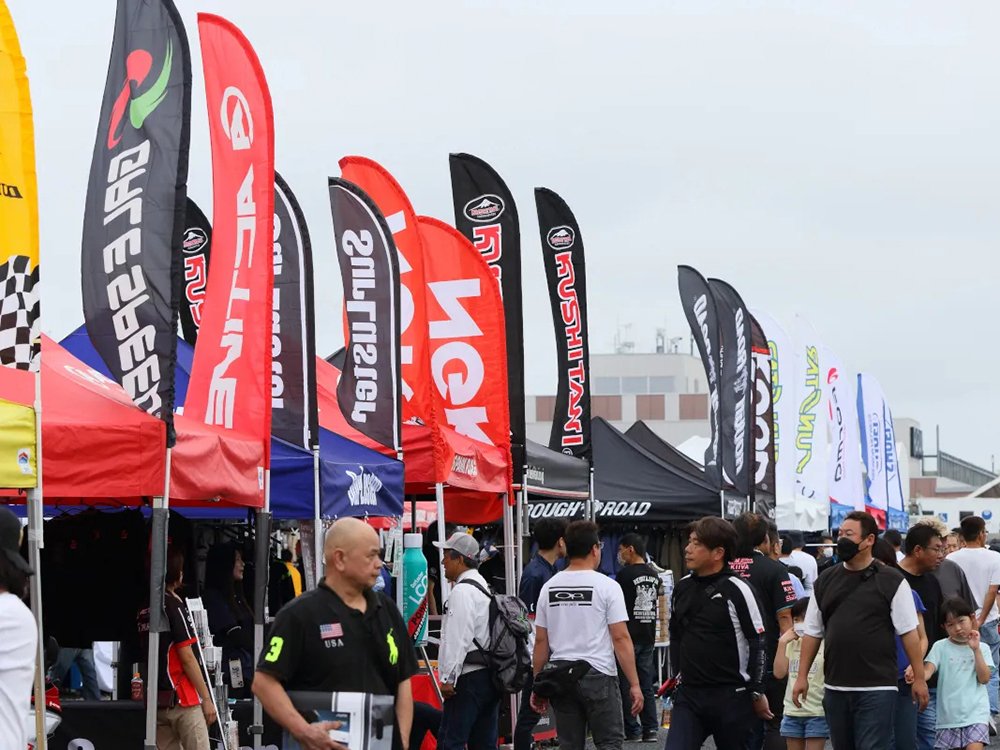
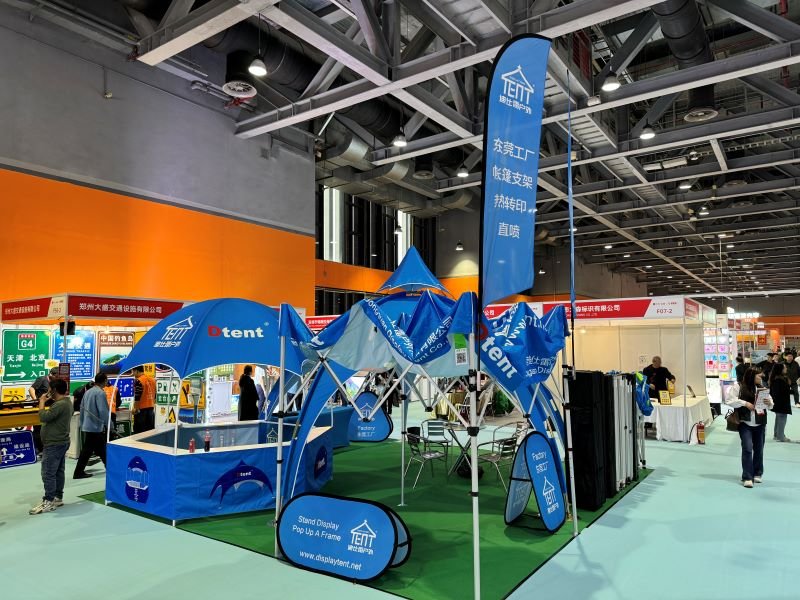
Trade Shows and Exhibitions
A branded pop up canopy can create a recognizable booth environment for:
- Product demonstrations
- Customer meetings
- Lead collection
- Product sampling
- Brand promotion
Sports Events
Sports teams and organizers use canopies for:
- Registration
- Team headquarters
- Merchandise
- Sponsor activation
- Athlete rest areas
- Equipment storage
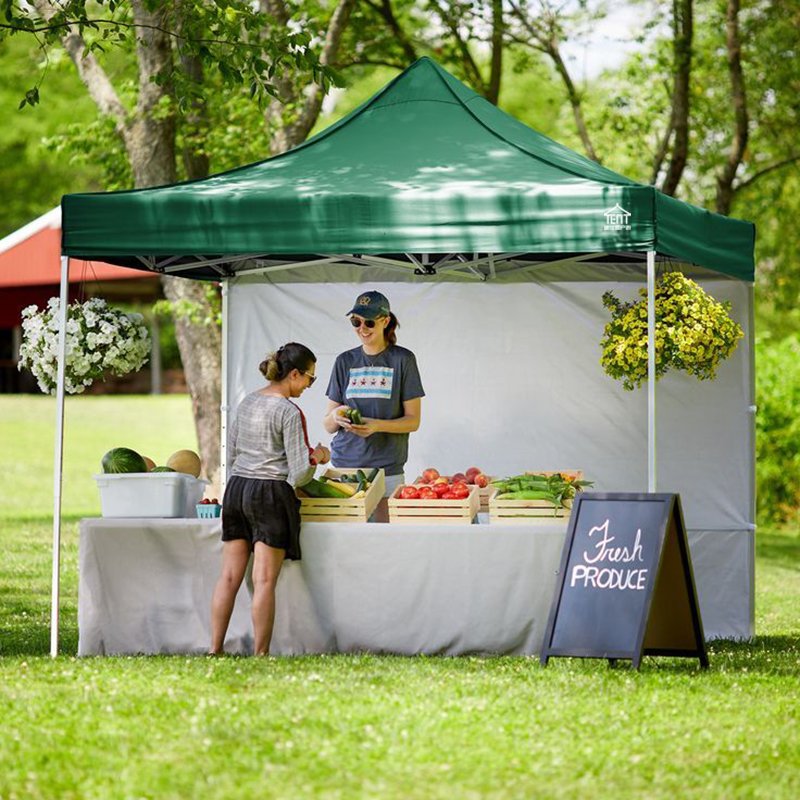
Farmers Markets
Vendors can use a pop up canopy to create a compact retail environment.
Festivals
Festivals often contain multiple temporary structures for:
- Food
- Beverages
- Merchandise
- Information desks
- Sponsors
Corporate Events
Companies can use branded canopies for:
- Employee activities
- Outdoor meetings
- Product launches
- Customer events
- Promotional campaigns
Automotive Events
Applications include:
- Car launches
- Motorsport
- Dealer events
- Test drives
- Automotive exhibitions
Food and Beverage
A canopy can create temporary serving and promotional space for:
- Catering
- Coffee brands
- Beverage companies
- Food trucks
- Food festivals
Construction and Industrial Sites
Commercial canopies can provide temporary covered areas for:
- Site information
- Check-in
- Staff areas
- Equipment protection
Schools and Universities
Schools use pop up canopies for:
- Sports days
- Graduation activities
- Fundraising
- Student events
- Campus promotions
Retail Promotions
Retailers can create temporary outdoor sales and marketing spaces around stores, shopping centers, and community events.
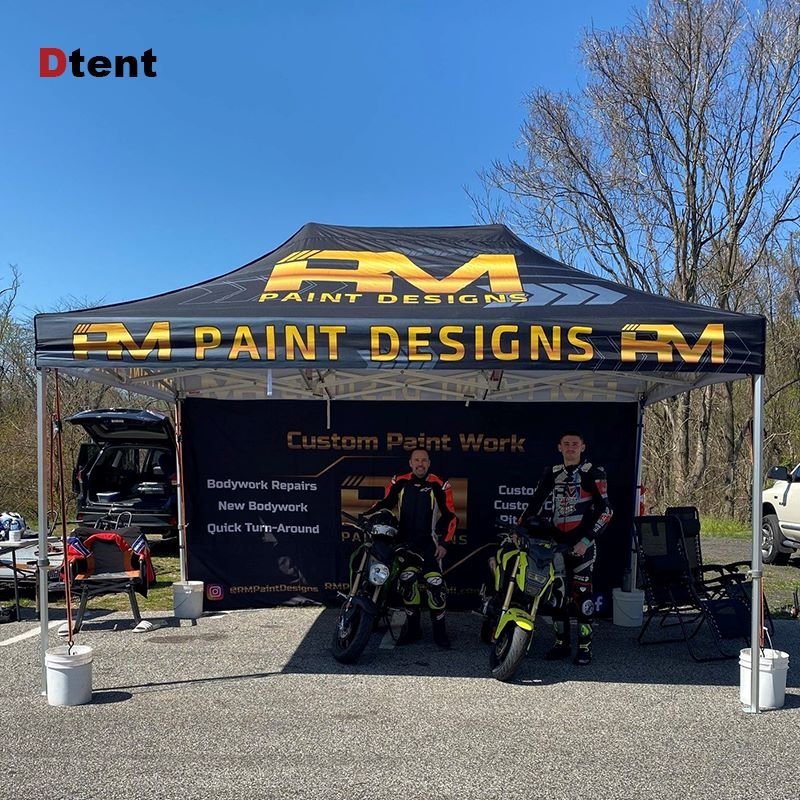
4. Pop Up Canopy User Groups
The second major decision is identifying who will use the structure.
A custom pop up canopy can serve many different customer groups.
Brands
Consumer brands often require customized canopies to create mobile marketing environments.
Their priorities may include:
- Strong branding
- Color consistency
- High-quality printing
- Professional appearance
- Repeatable production
Event Organizers
Event organizers need structures that can be installed repeatedly.
They often prioritize:
- Durability
- Fast setup
- Easy transportation
- Replacement parts
- Standardized dimensions
Marketing Agencies
Marketing agencies may purchase multiple customized canopies for different clients.
Their priorities often include:
- Custom graphics
- Flexible configurations
- Fast production
- OEM support
- Multiple sizes
Rental Companies
Rental companies require products designed for repeated use.
Important considerations include:
- Frame durability
- Fabric durability
- Replaceable components
- Easy cleaning
- Packaging
- Maintenance
Sports Teams
Sports teams typically prioritize:
- Team branding
- Sponsor logos
- Portability
- Quick setup
- Weather protection
Food Vendors
Food vendors require practical layouts and may need:
- Serving windows
- Sidewalls
- Easy-clean fabrics
- Additional ventilation
- Counter space
Government and Organizations
Public organizations may require standardized, durable structures for:
- Community events
- Emergency activities
- Public information
- Outdoor services
Understanding the user group allows the manufacturer to recommend the appropriate structure instead of simply selling a standard model.
5. Pop Up Canopy Size: How Big Should It Be?
Size is one of the most important purchasing decisions.
Common sizes include:
| Pop Up Canopy Size | Approximate Covered Area | Typical Applications |
|---|---|---|
| 5 × 5 ft | 25 sq ft | Small promotional station |
| 6 × 6 ft | 36 sq ft | Compact sampling |
| 8 × 8 ft | 64 sq ft | Small booth |
| 10 × 10 ft | 100 sq ft | Standard promotional booth |
| 10 × 15 ft | 150 sq ft | Medium display |
| 10 × 20 ft | 200 sq ft | Large commercial booth |
| 20 × 20 ft | 400 sq ft | Large event space |
Metric configurations such as 2 × 2 m, 3 × 3 m, 3 × 4.5 m, and 3 × 6 m are also common.
However, the correct size should not be selected based only on available product dimensions.
The buyer should first calculate the required functional area.
A useful formula is:
Required Canopy Area = People Area + Equipment Area + Display Area + Circulation Area
For example, if four staff members, two display tables, product samples, and a customer queue need to fit inside the structure, a 10 × 10 canopy may not provide the same usable space as it appears to on paper.
6. 10 × 10 Pop Up Canopy: The Most Versatile Configuration
The 10 × 10 pop up canopy is one of the most practical choices for general commercial use.
Its approximately 100-square-foot footprint works well for:
- Farmers markets
- Small trade show booths
- Sports teams
- Product sampling
- Brand activation
- Outdoor retail
- Community events
It offers a good balance between:
- Space
- Portability
- Branding
- Cost
- Storage
For brands that attend different events, the 10 × 10 configuration can be a strong starting point.
7. 10 × 20 Pop Up Canopy: When More Space Is Required
A 10 × 20 pop up canopy approximately doubles the footprint of a 10 × 10 model.
It is suitable for applications requiring:
- Multiple tables
- Product displays
- Large equipment
- Multiple staff members
- Customer seating
- Larger promotional areas
Typical applications include:
- Large brand activations
- Food service
- Automotive events
- Corporate events
- Sports competitions
- Product launches
However, larger size also means greater requirements for:
- Transportation
- Storage
- Setup labor
- Ballast
- Structural stability
Therefore, larger does not automatically mean better.


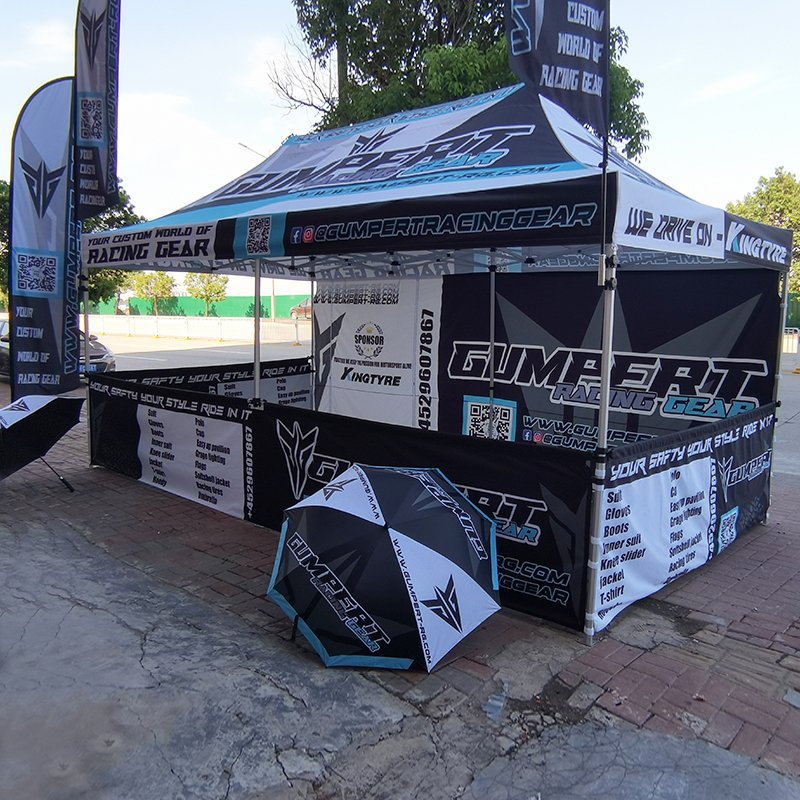
8. Pop Up Canopy Frame: The Structural Foundation
The frame is the skeleton of the entire pop up canopy.
A professional buyer should evaluate more than the frame’s appearance.
Important parameters include:
- Frame material
- Aluminum alloy
- Steel grade
- Leg profile
- Wall thickness
- Truss bar dimensions
- Connector design
- Hub design
- Fasteners
- Telescoping mechanism
- Surface treatment
Two canopies may look almost identical but have very different structural performance.
For commercial applications, the frame needs to survive repeated:
- Expansion
- Folding
- Transportation
- Setup
- Dismantling
This is why frame engineering is a critical part of OEM development.
9. Pop Up Canopy Leg Design
The legs are particularly important because they transfer loads from the roof and frame toward the ground.
Commercial pop up canopies may use:
- Hexagonal legs
- Square legs
- Other reinforced profiles
The key parameters are not simply shape.
A professional pop up canopy manufacturer should evaluate:
- Profile dimensions
- Aluminum alloy
- Wall thickness
- Reinforcement
- Connection points
- Telescoping mechanism
- Foot pad design
A thicker or more sophisticated frame can improve durability, but it may also increase weight.
Therefore, the frame should be selected according to the intended frequency and environment of use.
10. Pop Up Canopy Fabric Selection
Fabric affects both performance and appearance.
Common commercial canopy materials include:
- Polyester
- Oxford fabric
- PVC-coated polyester
- Other coated technical textiles
Important fabric properties include:
Waterproof Performance
Outdoor canopies should use fabrics and construction methods appropriate for the required level of rain protection.
UV Resistance
Repeated outdoor exposure can cause fading and material degradation.
Tear Resistance
Fabric must tolerate handling, folding, transportation, and installation.
Weight
Heavy fabrics can improve certain performance characteristics but also increase transportation and handling requirements.
Printing Compatibility
For customized branded canopies, the fabric must be compatible with the selected printing process.

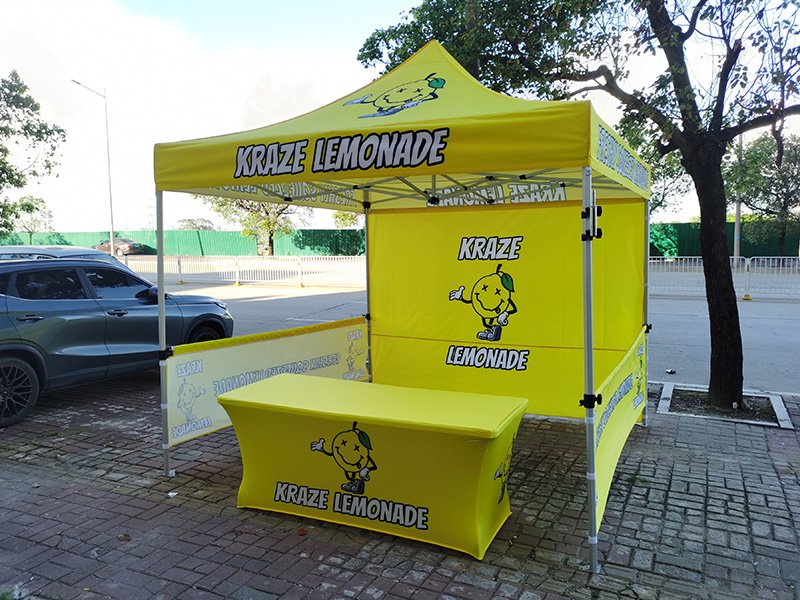
11. Pop Up Canopy Printing: Turning Shelter Into Advertising
One of the biggest advantages of a custom pop up canopy is its large printable surface.
Brands can print:
- Logos
- Slogans
- Product images
- Brand patterns
- Campaign graphics
- Sponsor logos
- QR codes
Common printable components include:
- Roof
- Valance
- Sidewalls
- Backwalls
- Door panels
- Banners
A professionally printed canopy can function as a large-format mobile advertising platform.
12. Full-Color Pop Up Canopy vs. Logo Printing
Different marketing strategies require different printing approaches.
Full-Color Printing
Full-color printing is suitable when the canopy itself is a major part of the visual campaign.
It can reproduce:
- Photographs
- Complex graphics
- Gradients
- Patterns
- Detailed branding
Logo-Only Printing
For companies that want a more minimalist appearance, logo printing may be sufficient.
For example:
- Logo on the roof
- Logo on the valance
- Logo on the sidewall
This approach can reduce visual complexity while maintaining brand recognition.
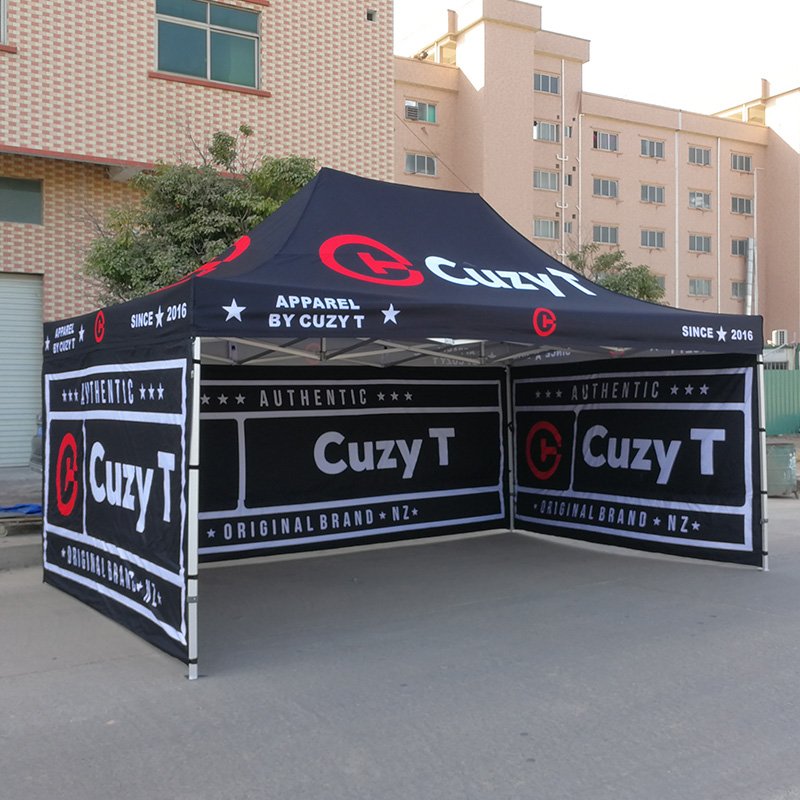
13. Pop Up Canopy Sidewalls and Enclosure Options
The roof provides overhead protection, but sidewalls determine how the interior space functions.
Possible configurations include:
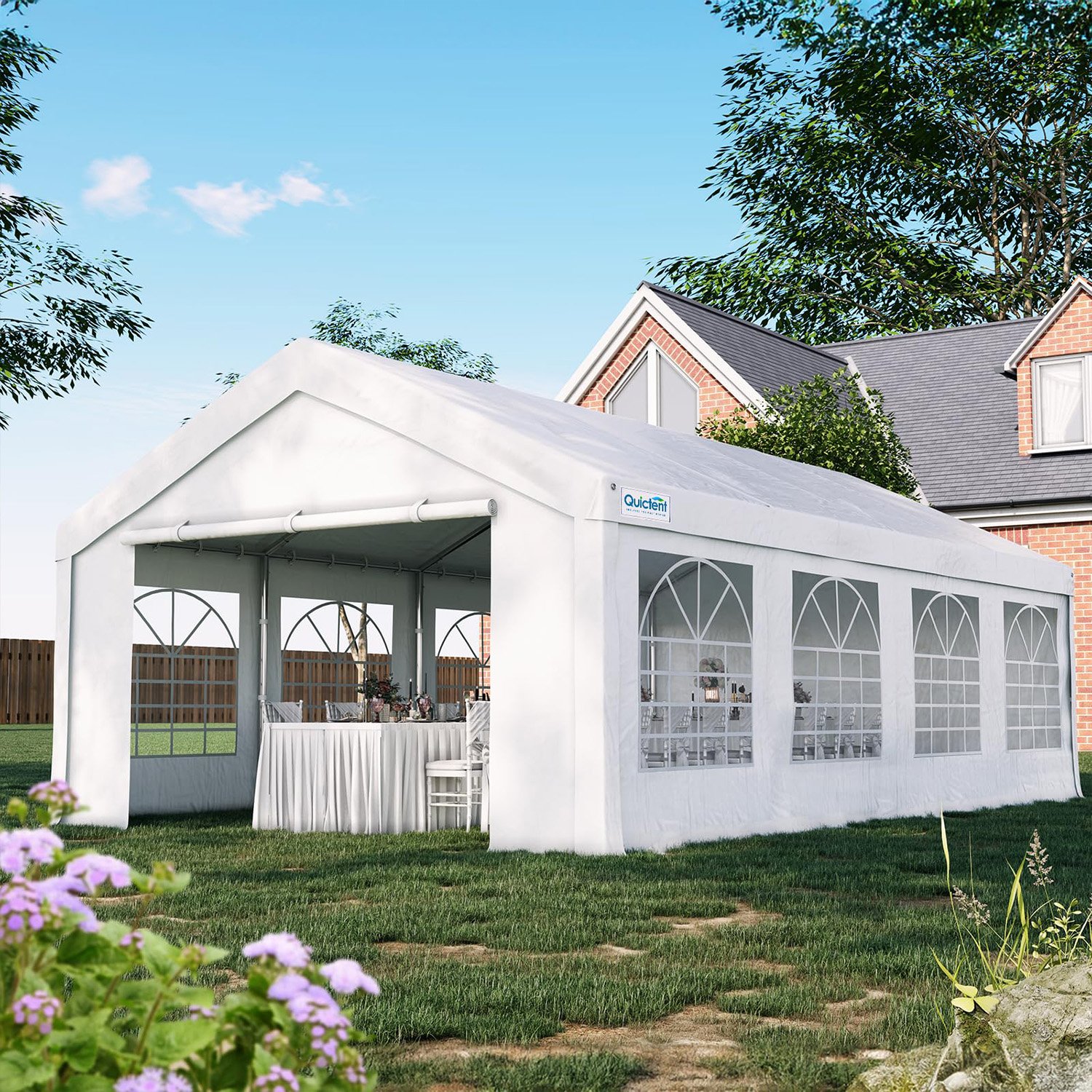
Open Canopy
All sides remain open.
Suitable for:
- Customer flow
- Outdoor markets
- Sports events
- Product sampling
Three-Side Enclosure
Three walls provide additional privacy and weather protection.
Full Enclosure
All four sides can be enclosed.
Suitable for:
- Storage
- Private meetings
- Equipment protection
- More controlled environments
Sidewall With Door
A zipper or opening can provide controlled access.
Sidewall With Window
Transparent or mesh sections can improve visibility and ventilation.
The correct configuration depends on the intended application.
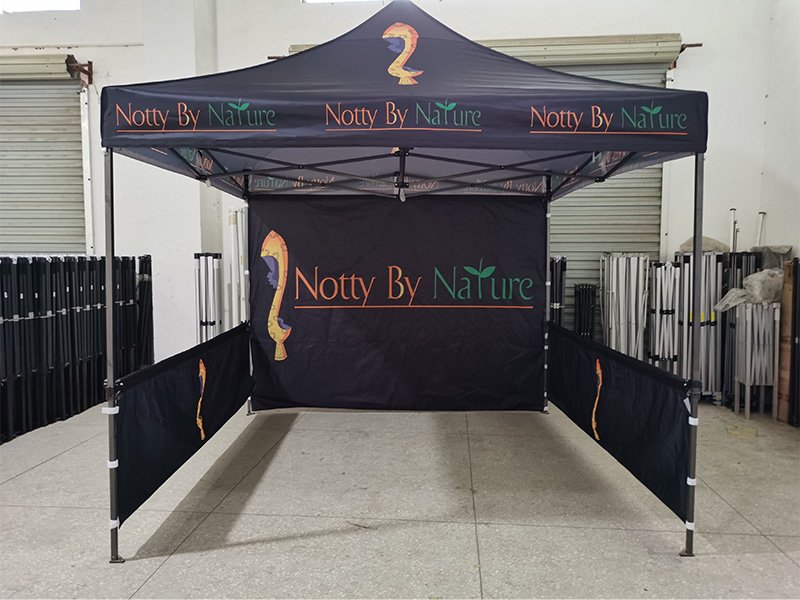
14. Pop Up Canopy Waterproofing
Waterproofing is not determined by fabric alone.
A reliable pop up canopy waterproofing system depends on several factors:
- Fabric coating
- Fabric construction
- Sewing quality
- Seam construction
- Roof tension
- Thread selection
- Seam sealing where required
- Panel design
- Roof geometry
A high-quality waterproof fabric can still experience leakage if seams are poorly manufactured.
Therefore, buyers should evaluate the complete roof system, not just the fabric specification.
15. Pop Up Canopy Color and Branding
Brand color consistency is important for commercial customers.
When a company provides a specific brand color, the manufacturer needs to understand whether the requirement applies to:
- Fabric color
- Printed graphics
- Frame coating
- Accessories
For printed canopies, artwork preparation should consider:
- Print resolution
- Bleed area
- Seam positions
- Panel dimensions
- Logo size
- Color management
- Graphic distortion
The design should be prepared around the actual fabric pattern rather than simply placing artwork inside a rectangular digital file.
16. Pop Up Canopy Artwork: Why Design Files Matter
A common mistake is submitting a logo and assuming the manufacturer can immediately print it.
For professional production, the artwork should ideally contain:
- Vector logos
- Correct dimensions
- High-resolution images
- Clearly defined colors
- Bleed areas
- Panel boundaries
The manufacturer should provide a production template showing where:
- Seams are located
- Zippers are located
- Hems are located
- Frame connections occur
This reduces the risk of logos being cut, distorted, or hidden.
17. Pop Up Canopy Accessories
The canopy structure is only one part of a complete commercial system.
Common accessories include:
- Roller bags
- Carry bags
- Weight bags
- Ground stakes
- Ropes
- Sidewalls
- Backwalls
- Flags
- Banner systems
- Tables
- Lighting
- Counter systems
For frequent users, a roller bag can significantly improve transportation efficiency.
For outdoor events, appropriate anchoring and ballast are essential considerations.
18. Pop Up Canopy Ballast and Ground Anchoring
A canopy should never be treated as a permanently stable structure simply because its frame is heavy.
Outdoor conditions can create significant wind loads.
Depending on the site, anchoring may involve:
- Ground stakes
- Ropes
- Sandbags
- Water weights
- Heavy-duty weight plates
- Other approved ballast systems
The appropriate system depends on:
- Canopy size
- Ground type
- Wind conditions
- Local regulations
- Manufacturer specifications
A professional pop up canopy factory should communicate these limitations clearly.
19. Pop Up Canopy Setup and Portability
The major advantage of the pop-up structure is its portability.
A well-designed system should make setup intuitive.
The basic process normally involves:
- Remove the folded frame.
- Position the frame.
- Expand the frame.
- Attach or secure the roof.
- Extend the legs.
- Install sidewalls if required.
- Install ballast or anchoring.
- Inspect all connections before use.
The exact procedure varies by model.
For commercial users who repeatedly install the canopy, small improvements in frame design can significantly reduce labor over the product’s lifetime.
20. Pop Up Canopy Durability: What Should Buyers Evaluate?
Durability is not one specification.
It is the combined result of:
Frame + fabric + connectors + sewing + hardware + printing + packaging + user handling.
Buyers should evaluate:
Frame Durability
Can the frame withstand repeated folding cycles?
Fabric Durability
Can the fabric tolerate outdoor exposure and repeated handling?
Connector Durability
Are hubs and joints properly engineered?
Sewing Quality
Are seams reinforced where required?
Hardware
Are rivets, bolts, springs, and fasteners appropriate for the application?
Packaging
Can the product survive international transportation?
21. Pop Up Canopy Customization for Different Industries
A major advantage of working with an OEM pop up canopy manufacturer is the ability to adapt the same basic concept to different industries.
For example:
Sports Brand
Team colors + sponsor logos + lightweight frame + roller bag.
Beverage Brand
Full-color roof + branded sidewalls + serving window.
Automotive Brand
Premium graphics + large footprint + meeting area + branded accessories.
Retail Brand
Logo roof + open sides + product display walls.
Event Company
Durable frame + replaceable graphics + standardized sizes.
This is why customization should begin with the application rather than the product catalog.
22. Pop Up Canopy OEM Manufacturing
For brands selling canopies under their own name, OEM manufacturing can provide greater control.
An OEM project may involve:
- Product concept
- Engineering
- Prototype
- Fabric selection
- Frame selection
- Graphic development
- Sample approval
- Packaging
- Production
- Quality control
A brand may provide:
- Logo
- Artwork
- Existing product dimensions
- Target price
- Application requirements
The manufacturer can then translate these requirements into production specifications.
23. How a Pop Up Canopy Factory Handles Custom Production
A professional pop up canopy factory should have a controlled manufacturing process.
A typical workflow includes:
Requirement Confirmation
Confirm size, application, materials, graphics, accessories, and quantity.
Engineering
Develop the frame and fabric structure.
Artwork Preparation
Prepare production files based on actual panel dimensions.
Prototype
Produce a physical sample.
Sample Evaluation
Check:
- Dimensions
- Frame operation
- Printing
- Sewing
- Assembly
- Appearance
Mass Production
Produce according to the approved specifications.
Quality Control
Inspect:
- Frame
- Fabric
- Printing
- Sewing
- Hardware
- Accessories
- Packaging
Final Packing
Ensure products are correctly packed for transportation and storage.
24. Pop Up Canopy Quality Control
Quality control should happen throughout manufacturing, not only at the end.
A professional manufacturer can establish checkpoints for:
Raw Materials
Check fabric, aluminum, steel, plastic components, and hardware.
Frame Production
Inspect dimensions, joints, telescoping mechanisms, and surface treatment.
Fabric Cutting
Verify panel dimensions and cutting accuracy.
Printing
Check:
- Color
- Position
- Resolution
- Graphic completeness
Sewing
Inspect:
- Stitching
- Seams
- Hems
- Reinforcement
- Zippers
Final Assembly
Confirm that the frame and fabric work together correctly.
This systematic approach helps improve batch-to-batch consistency.
25. How Much Does a Custom Pop Up Canopy Cost?
There is no universal price for a customized pop up canopy.
Cost depends on:
- Size
- Frame material
- Frame thickness
- Fabric
- Printing method
- Printing coverage
- Sidewalls
- Accessories
- Packaging
- Order quantity
- Custom engineering
- Shipping requirements
A low-cost canopy and a commercial heavy-duty canopy may look similar in photographs while having very different specifications.
Therefore, buyers should compare complete specifications, not only unit prices.
26. How to Choose a Pop Up Canopy Manufacturer
Choosing the right pop up canopy manufacturer is critical for brands planning long-term purchasing.
Consider these questions:
Does the supplier have its own factory?
Direct manufacturing can provide stronger control over production.
Does the manufacturer have OEM experience?
Custom development requires more capabilities than standard product assembly.
Can the factory customize the frame?
A true manufacturing partner should understand structural requirements.
Can the factory provide custom printing?
Ask about artwork templates, printing technology, and color management.
Can it make samples?
Prototype development is important before mass production.
Can it maintain consistent quality?
This is particularly important for repeat orders.
Can it provide replacement components?
Long-term commercial users may require spare parts.
Can it support international orders?
Export packaging and production management matter for global brands.
27. Why Dtent Is a Reliable Partner for Custom Pop Up Canopies
Dtent is a professional custom tent manufacturer with more than 10 years of experience and a 6,000㎡ factory.
Our manufacturing capabilities are focused on customized commercial tents and event structures.
For branded pop up canopy projects, Dtent can support customers with:
- Custom dimensions
- Frame customization
- Fabric selection
- Custom colors
- Logo printing
- Full-surface graphics
- Custom sidewalls
- Backwalls
- Accessories
- Roller bags
- Prototype development
- OEM production
- Bulk manufacturing
- Quality control
- Customized packaging
Our approach starts with the customer’s actual application.
For example, if a brand needs a canopy for repeated sports events, we can consider portability, durability, branding, and setup efficiency.
If a marketing agency needs a highly visual promotional structure, the design process can focus more heavily on full-color graphics and brand presentation.
If a retailer needs a canopy for outdoor promotions, we can focus on product display, customer access, sidewall configuration, and transport.
The goal is not simply to manufacture a tent.
The goal is to manufacture a pop up canopy that works for the customer’s specific business model.
28. A Practical Pop Up Canopy Customization Checklist
Before contacting a manufacturer, prepare the following information.
Application
Where will the canopy be used?
Users
Who will use it?
Size
What footprint is required?
Number of People
How many staff and customers need to occupy the space?
Equipment
What tables, displays, counters, or equipment will be placed underneath?
Frame
Do you require aluminum or steel?
Fabric
What level of durability and waterproofing is required?
Printing
Do you need:
- Logo only?
- Roof printing?
- Full-color printing?
- Full sidewall graphics?
Sidewalls
Do you need:
- Open sides?
- Partial walls?
- Full enclosure?
- Door?
- Window?
Accessories
Do you need:
- Roller bag?
- Weight bags?
- Ground stakes?
- Flags?
- Counter?
- Lighting?
Packaging
Do you require customized cartons, labels, or OEM packaging?
Quantity
What is the initial order quantity and expected annual demand?
Providing this information allows a pop up canopy factory to recommend a much more accurate solution.
29. The Most Common Pop Up Canopy Buying Mistakes
Mistake 1: Choosing Only by Price
The lowest unit price does not necessarily provide the lowest total cost of ownership.
Mistake 2: Choosing the Largest Size
More space also means more transportation, setup, and ballast requirements.
Mistake 3: Ignoring the Frame
Fabric receives most of the visual attention, but the frame determines much of the structural performance.
Mistake 4: Checking Fabric but Not Seams
Waterproof fabric does not automatically guarantee a waterproof finished canopy.
Mistake 5: Providing Low-Quality Artwork
Poor artwork can compromise the appearance of an otherwise high-quality canopy.
Mistake 6: Ignoring Transportation
A canopy that is excellent at the event but difficult to transport may not be commercially practical.
Mistake 7: Ignoring Replacement Parts
For long-term commercial use, replacement components can extend product service life.
30. Pop Up Canopy: A Complete Decision Framework
When selecting a customized canopy, use this sequence:
Application → Users → Space → Size → Frame → Fabric → Printing → Sidewalls → Accessories → Safety → Packaging → Manufacturer
This sequence is important.
For example, choosing the fabric before understanding the application may result in unnecessary cost.
Choosing the frame before determining the required size may create an unsuitable structural configuration.
Choosing the printing method before confirming the fabric can also cause production problems.
A professional manufacturer should therefore treat customization as a complete system.
Frequently Asked Questions About Custom Pop Up Canopy
What is a pop up canopy used for?
A pop up canopy is used for temporary outdoor shelter, marketing, exhibitions, sports events, retail promotions, food service, festivals, corporate events, and many other commercial applications.
What is the most popular pop up canopy size?
The 10 × 10 ft configuration is one of the most versatile sizes for general commercial and promotional applications.
Can a pop up canopy be fully customized?
Yes. Depending on the manufacturer’s capabilities, a custom pop up canopy can include customized dimensions, frame specifications, fabrics, colors, printing, sidewalls, accessories, packaging, and branding.
Can I print my company logo on a pop up canopy?
Yes. Logos and graphics can be printed on the roof, valance, sidewalls, backwalls, and other fabric components.
What is the difference between a standard and custom pop up canopy?
A standard canopy uses predefined specifications, while a custom canopy can be developed around the customer’s specific application, branding, dimensions, materials, and accessories.
How do I choose the right pop up canopy size?
Start by calculating the number of people, tables, displays, equipment, and circulation space required. Then compare the required area with the available event footprint.
Is a bigger pop up canopy better?
Not necessarily. The best size is the one that provides sufficient usable space while remaining practical for transportation, storage, setup, anchoring, and budget.
What should I ask a pop up canopy manufacturer?
Ask about factory capabilities, frame materials, fabric specifications, printing technology, OEM experience, sample development, quality control, replacement parts, packaging, and production capacity.
Why should brands work directly with a pop up canopy factory?
Working with a pop up canopy factory can provide greater control over product specifications, customization, production consistency, quality control, and OEM development.
The Right Custom Pop Up Canopy Starts With the Right Application
A pop up canopy can serve very different purposes depending on the customer.
For a sports team, it can become a mobile team headquarters.
For a retailer, it can become an outdoor sales booth.
For a beverage company, it can become a branded sampling station.
For an event organizer, it can become a reusable event infrastructure system.
For a marketing agency, it can become a mobile advertising platform.
For a brand, a customized pop up canopy can combine functionality, portability, weather protection, and visual branding in one reusable product.
The most important point is that customization should not start with the question, “Which standard canopy should I buy?”
It should start with:
“What do I need the canopy to accomplish?”
Once the application, user group, available space, operating environment, branding requirements, transportation method, and expected frequency of use are clear, the manufacturer can determine the appropriate size, frame, fabric, printing, sidewalls, accessories, and packaging.
For brands looking for an experienced pop up canopy manufacturer and pop up canopy factory, Dtent provides a complete OEM manufacturing approach. With more than 10 years of custom tent manufacturing experience and a 6,000㎡ factory, Dtent works with brands to develop customized canopies based on their own designs, logos, graphics, dimensions, and application requirements.
A successful custom canopy is not simply a printed tent.
It is a purpose-designed commercial product that combines structural engineering, textile manufacturing, printing technology, branding, portability, and real-world usability.
That is the standard brands should expect when selecting a long-term custom tent manufacturing partner.
Are you a Trading Company or Manufacturer?
We are a manufacturer specialized in Folding tents, Outdoor umbrellas, Beach flags, Advertising Banners
Can you do design for my ideas or drawing?
Yes, we have experienced designers and our own molding factory. According to your requirements, we can design or open mold which has a competitive price.
How long does sample take?
Sample will be ready within 5-7 days, depends on your printing and material requirements.
What is your advantage?
Cost effective; with low price; Time effective: we promise to make the mass delivery within 30 days Service effective: Our sales people promise to reply your enquiry within 12 hours.Contact whatsapp 86 180 3827 3926